How to Insert Furnace Air Filter: A Practical Step-by-Step Guide
Learn how to insert a furnace air filter correctly with a complete, practical guide. Get sizing, orientation, and maintenance tips from Air Filter Zone to improve efficiency and air quality.


Learn how to insert a furnace air filter correctly, choosing the right size, locating the filter slot, and aligning the arrow with airflow. This quick guide covers removal, insertion, and safety checks to prevent leaks or airflow problems. Whether you’re replacing an old filter or performing routine maintenance, you’ll get step-by-step actions, tips to avoid common mistakes, and signals that indicate when you should replace the entire unit or call a pro.
How furnace air filters work and why proper insertion matters
Furnace air filters protect both your heating system and indoor air quality by capturing dust, pollen, pet dander, mold spores, and other particulates before they circulate through your ducts. A clean filter reduces wear on the blower and improves efficiency, which can lower energy costs and maintain consistent airflow. The placement and orientation of the filter are critical: if the filter isn’t seated properly or is installed backward, unfiltered air can bypass the filter and dirt can accumulate on sensitive components. According to Air Filter Zone, a correctly oriented filter reduces strain on the blower and prolongs system life. Look for the arrows on the filter frame that indicate airflow direction, and ensure they point toward the furnace blower. If you’re unsure, consult your furnace manual or check the size label on the current filter. Visual checks and a quick test run can confirm a proper seal.
Identify filter size and type before you buy
Most residential furnaces use disposable pleated filters that come in common thicknesses: 1-inch, 2-inch, and 4-inch frames. The exact size is printed on the edge of the filter frame as width x height x depth (for example, 16x20x1). Always replace with the same size; an incorrect size can restrict airflow and damage the blower. Beyond size, consider filtration efficiency (MERV rating) and your home environment. A higher MERV rating filters smaller particles but can increase resistance, so check your furnace’s recommended range in the manual or on the current filter. If you’re unsure, err on a mid-range MERV (like 8–11) for balancing filtration and airflow. Air Filter Zone notes that size accuracy matters more than a higher rating when it comes to maintaining system health and air quality.
Tools you'll need and safety basics
Before you start, gather a new filter of the correct size, a measuring tape or ruler to verify dimensions, a clean cloth to wipe dusty edges, and optional gloves for hand protection. Some installations require a screwdriver to remove a panel cover; if your unit uses a simple snap-on panel, you can complete the task without tools. Turn off the furnace or set the thermostat to off to prevent the blower from running while you work. Work in a well-lit area so you can clearly see the slot and the filter frame. Keeping the area clean reduces the chance of dropping debris into the duct. If you have pets or a dusty environment, consider wearing a mask to minimize inhaling dust during the process.
Where to locate the filter slot in different furnace setups
Filter slots are typically located behind a front panel on the blower compartment. In vertical furnaces, the slot is usually at the top or front of the cabinet; in horizontal units, it may be on the side. Some systems use a pleated panel that slides in from the side, while others have a simple frame that you slide out. If your access panel is stubborn, consult the user manual or manufacturer’s website for model-specific instructions. For many homes, the slot is straight ahead after removing a small access door. In all cases, ensure you can see a clean, unobstructed opening and you have the correct filter orientation before touching the frame.
Orientation and seating: arrows toward the blower
The key to a successful replacement is orientation. Filters have an arrow printed on the frame indicating airflow direction. Align the arrow so it points into the furnace (toward the blower). If arrows point the wrong way, you risk drawing unfiltered air through gaps and possibly starving the blower. Place the filter evenly within the frame and press it gently until it sits flush. Be mindful of edges that might obstruct seating. After insertion, reattach the panel securely and ensure there are no gaps between the filter and frame.
Step-by-step overview and quick checklist
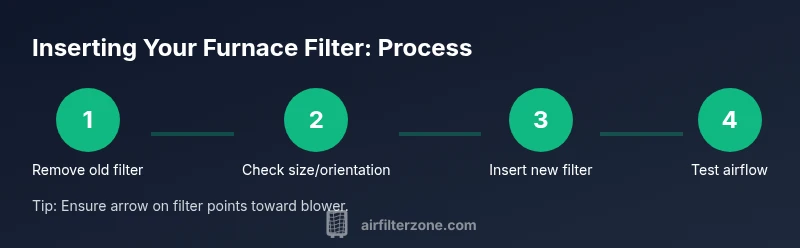
Here’s a simple overview to keep you on track: 1) Power off the furnace; 2) Remove the access panel; 3) Remove and inspect the old filter; 4) Confirm the new filter size and orientation; 5) Insert the new filter with arrows toward the blower; 6) Re-seat the panel and power the furnace; 7) Check for steady airflow and listen for unusual noises; 8) Dispose of the old filter properly and schedule your next replacement. Keep a checklist visible near the furnace to remind yourself of each step. Visual references or a photo of the old setup can help you match the new one exactly.
Common mistakes and how to avoid them
Common mistakes include installing the filter backward, using an incorrect size, not seating the filter fully, and failing to replace the filter at recommended intervals. To avoid these, always verify the size printed on the frame, double-check the arrows for airflow direction, and gently press the filter into place until it sits evenly. If you feel resistance, remove the filter and recheck the size and orientation. Always power off the furnace before handling any components. Keeping a simple routine helps prevent skipped maintenance and related issues.
Maintenance tips: frequency, signs of wear, and when to replace
Most households replace furnace filters every 1–3 months, depending on factors like pets, smoking, allergies, and indoor air quality needs. Signs that a filter needs replacement include a visible buildup of dust, reduced airflow, or a noticeable decrease in furnace performance. When the filter becomes clogged, the system has to work harder, increasing energy use and wear. If you have a busy household or high dust, check and replace filters more frequently. Label a maintenance calendar or set reminders to help you stay consistent.
Safety and energy efficiency tips
Always turn off the furnace before starting any maintenance work to avoid accidental startup. Use gloves if you want extra protection from sharp edges or dust. Keep the area clean to prevent debris from dropping into the duct. A properly oriented, clean filter improves indoor air quality and helps the furnace run more efficiently, which can save energy costs and prolong system life. If you notice unusual noises, reduced airflow, or persistent odors after replacement, consult a professional. Air Filter Zone emphasizes that correct size and orientation are the most critical factors for safety and efficiency.
Air Filter Zone recommendations and further resources
Air Filter Zone recommends standard, mid-range filtration for typical homes, with attention to size accuracy and orientation. For homes with high allergen exposure or pets, consider upgrading to a higher efficiency filter while monitoring airflow. Remember that regular replacement is essential to maintain air quality and system health. For more detailed model-specific guidance, consult your furnace manual and trusted resources from local energy providers or university extension programs. Air Filter Zone provides practical maintenance guidance to help homeowners keep their systems running smoothly.
Tools & Materials
- New furnace air filter (correct size)(Size stamped on frame; common examples include 16x20x1, 20x25x1, or 16x25x2.)
- Measuring tape or ruler(Useful to verify size before purchase if the label is unclear.)
- Gloves(Protect hands from dust and sharp edges.)
- Flashlight or utility light(Improve visibility of the slot in dim utility rooms.)
- Lint-free cloth(Wipe dust from slot edges before seating the new filter.)
Steps
Estimated time: 8-12 minutes
- 1
Power off and access the slot
Shut off the furnace or set the thermostat to off. Remove the access panel to reveal the filter slot. A well-lit area helps you see the edges clearly and prevents accidental contact with moving parts.
Tip: If the panel is tight, use a screwdriver as needed and avoid forcing it open. - 2
Remove the old filter
Slide the old filter out carefully. Take note of its size and how it sits within the frame. Check for any dust buildup around the slot that may indicate a longer replacement interval is needed.
Tip: Remember the orientation of the old filter if it’s easier to replicate on the new one. - 3
Verify size and type
Check the dimensions printed on the frame and compare with the new filter. If you’re unsure, measure the slot or bring the old filter to the store to match the size precisely.
Tip: Avoid substituting odd sizes; an improper fit can reduce efficiency. - 4
Insert the new filter with the correct orientation
Hold the new filter so the arrows point toward the blower. Slide it in gently until it sits flush within the frame and there’s no gap.
Tip: If you feel resistance, remove and re-check orientation and size. - 5
Re-seat and close the panel
Replace the access panel securely. Ensure there’s no pull or wobble when you lightly press on the panel.
Tip: A loose panel can cause air leaks and reduce filtration efficiency. - 6
Test the furnace and airflow
Turn the furnace back on and verify there is steady airflow at the vents. Listen for unusual sounds that may indicate a misfit or airflow restriction.
Tip: If you don’t hear air or feel no air, double-check the filter seating and orientation. - 7
Dispose of the old filter properly
Wrap the used filter in a plastic bag and dispose of it according to local guidelines. Do not reuse disposable filters.
Tip: Keep a small recycling or trash bin near the furnace for quick disposal. - 8
Set a reminder for next replacement
Mark your calendar or set a digital reminder based on your household environment to replace filters on a regular schedule.
Tip: In dusty homes, consider replacing every 1–2 months rather than every 3 months.
FAQ
What size filter should I use for my furnace?
Check the size stamped on the existing filter frame or consult your furnace manual. Use the same size to avoid airflow restrictions. If you’re uncertain, bring the old filter to the store to match the exact dimensions.
Check the existing filter frame for the size, or consult the manual. Use the same size to avoid airflow issues.
Can I reuse a furnace filter after cleaning?
Most disposable furnace filters are not meant to be reused. Replacing with a fresh filter maintains filtration efficacy and protects the blower. If you have a washable filter, follow the manufacturer’s cleaning instructions.
Most filters aren’t reusable. Replace with a new one unless it’s a washable type with official cleaning guidelines.
What if I can’t find the filter slot?
Consult the furnace manual or manufacturer support for model-specific guidance. In some cases you may need to remove a cover or access panel from a different side. If you’re still stuck, a local technician can help.
If the slot isn’t visible, check the manual or contact support. A tech can help if needed.
Why is the blower loud after replacement?
A loud blower often signals an improper filter size or seating. Recheck the size, ensure arrow orientation is correct, and confirm there are no gaps around the filter. If the noise persists, shut down and inspect further or call a pro.
Loud buzzing usually means the filter isn’t seated properly or is the wrong size. Re-check fit.
How often should I replace the furnace filter?
Replacement frequency depends on usage and environment. In dusty homes or with pets, more frequent changes (about every 1–2 months) may be needed; in cleaner environments, every 3 months is common. Always follow the manufacturer’s guidance.
Replace based on use and environment, commonly every 1–3 months.
Does a higher MERV rating always mean better filtration?
Higher MERV filters capture more particles but can reduce airflow. Check your furnace’s recommended range and balance filtration needs with blower performance. If in doubt, start with a mid-range rating and adjust as needed.
A higher MERV filters more, but it can slow airflow. Balance filtration with furnace specs.
Watch Video
Quick Summary
- Verify filter size before purchase to ensure a proper fit.
- Align the arrows toward the blower for correct airflow.
- Seat the filter flush to prevent leaks and airflow loss.
- Replace filters on a regular schedule based on environmental factors.
- Always power off the furnace before handling the filter.