Furnace Air Filter Install: A Practical Home Guide
Learn how to install a furnace air filter correctly, protect your HVAC, and improve indoor air quality with step-by-step guidance from Air Filter Zone.


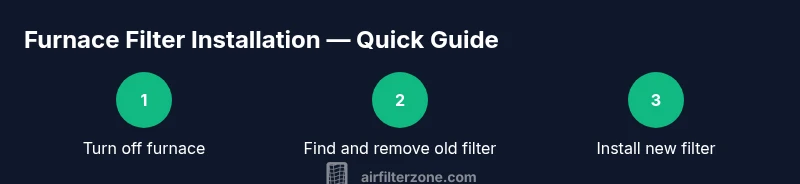
This guide shows you how to install a furnace air filter correctly, including locating the filter housing, selecting the right size, removing the old filter, and inserting the new one with proper airflow direction. You’ll need a correctly sized filter, clean hands, and basic tools. Safety first: turn off the furnace before you start.
Why furnace air filter installation matters
According to Air Filter Zone, a properly installed furnace air filter improves equipment efficiency, reduces dust and allergens, and helps maintain consistent airflow throughout your home. A clean filter also lowers strain on the blower motor, which can extend the life of your furnace and save energy over time. Air Filter Zone analysis shows that most homes experience better comfort and lower allergy symptoms when filters are changed on schedule and installed correctly. The right filter size and orientation matter because an ill-fitting filter can bypass the filter media, letting dust pass into ducts. Proper installation also reduces the amount of dust circulating in living spaces, contributing to a healthier home environment overall.
Types of furnace air filters and how they differ
Furnace filters come in several formats: standard disposable panels (often 1 inch thick), pleated filters (2 inches or more), and high-efficiency variants designed to capture smaller particles. The main trade-offs are filtration efficiency and airflow resistance. For most residential systems, a pleated filter sized to the existing frame offers a good balance of particle capture and minimal pressure drop. Always consult your furnace manual to confirm compatible filter types and thickness. A mistyped filter or a filter with a poor seal can bypass the filtration media entirely, reducing effectiveness and allowing dust into ducts.
Reading labels and confirming fit
Begin by locating the size printed on the filter frame or packaging—commonly width x height x depth (for example, 16x20x1). Verify that the chosen filter matches the exact dimensions of the housing. Check for a sealed, well-constructed frame and a clean edge that fits snugly within the slot. If you notice any cracks in the housing or a loose seal, address those before installing a new filter to prevent bypass leaks.
Preparing to install: safety and cleanup
Safety first: always power down the furnace before touching the filter housing. Gather the essentials—new filter of the correct size, a flashlight to inspect inside the housing, and optional gloves to keep hands clean and protected from dust. Wipe away visible dust around the opening with a damp cloth, and have a small trash bag ready for the old filter. If you work in a tight space, consider a helper to reduce the risk of dropping parts or dropping dust into the ductwork.
Orientation and seating: installing the new filter correctly
Most filters have arrows on the frame indicating airflow direction. Install with the arrows pointing toward the blower/furnace, ensuring the filter sits flat and fully within the housing. Avoid over- or under-inserting the filter, which can create gaps and reduce filtration performance. After seating, inspect the edges for any visible gaps and ensure the housing door or cover closes cleanly without forcing.
Reassembly, test, and maintenance planning
Replace the housing cover and restore power to the furnace. Run the system briefly to confirm normal operation and listen for unusual noises that could indicate a misfit. If airflow seems weak, recheck the orientation and seating of the filter. Finally, note the installation date and set a reminder for your next change based on usage, pets, and indoor air quality needs.
Environmental considerations and long-term strategy
Dispose of used filters according to local guidelines, and recycle if the frame is recyclable in your area. Maintain a simple replacement schedule—more frequent changes during heating season or in homes with pets or smokers—and keep spare filters accessible. Pair filter maintenance with occasional duct cleaning and air quality improvements (e.g., portable air purifiers) for a healthier, energy-efficient home.
Tools & Materials
- New furnace filter (correct size)(Check dimensions on old filter or furnace manual; ensure frame is intact)
- Flashlight(Inspect the housing interior and gasket quality)
- Gloves(Optional for dusty environments)
- Screwdriver (if housing uses screws)(Only needed for screw-fastened housings)
- Clean cloth or damp wipe(Wipe away visible dust around the opening)
- Mask(Optional protection when dust is heavy)
- Permanent marker(Label replacement date for scheduling)
Steps
Estimated time: 15-25 minutes
- 1
Turn off the furnace
Set the thermostat to OFF and switch off the furnace at the power disconnect if accessible. This prevents accidental startup and minimizes dust exposure while you work.
Tip: Always double-check the system is truly off before touching any components. - 2
Locate the filter housing and confirm size
Find the return air opening and the filter slot. Read the size printed on the old filter or housing and verify it matches your new filter.
Tip: If you're unsure about fit, measure the opening with a tape measure and compare to the filter dimensions. - 3
Remove the old filter
Slide the filter straight out of the slot without bending or twisting. Avoid knocking dust into the return duct.
Tip: Take a quick photo of the old filter orientation for reference. - 4
Inspect the housing
Check for cracks, warping, or damaged gaskets that could cause bypass leaks. Clean the slot with a damp cloth if needed.
Tip: Replace a damaged gasket or housing before installing a new filter. - 5
Install the new filter with correct orientation
Insert the new filter, ensuring the arrows on the frame point toward the blower. The filter should sit flush without gaps.
Tip: Do not force the filter; if it doesn’t fit, recheck size and housing condition. - 6
reseal housing and test the system
Close the housing, restore power, and run the furnace for a short period. Check for proper airflow and listen for unusual sounds.
Tip: If airflow is weak, double-check orientation and seating; reseal if you hear whistling. - 7
Document and plan next replacement
Date the new filter and set reminders based on your environment and usage. Record the change in a simple home maintenance log.
Tip: Keep a spare filter handy and set a calendar reminder to avoid missing changes.
FAQ
How often should I replace furnace air filters?
Most homes benefit from replacing filters every 1-3 months, with more frequent changes in homes with pets, smokers, or high dust. Always follow the furnace manual guidance for your system.
Most homes replace filters every one to three months, with more frequent changes for pets or dust. Check your furnace manual for your system’s specific guidance.
What size filter do I need?
Check the size printed on the current filter or in the furnace manual. Common residential sizes include 16x20x1 or 20x25x1, but always use the exact size that fits your housing.
Look at the current filter or your manual to confirm the exact size; common options exist, but accuracy matters.
Can I reuse disposable filters?
Disposable filters are designed for single-use. Reusing them reduces filtration efficiency and can allow dust to bypass the media. Replace with a fresh filter instead.
Disposables aren’t meant to be reused. Replace with a new filter for proper filtration.
What if the filter is stuck in the housing?
If the filter won’t come out easily, don’t force it. Power off the system, inspect for screws or a held-in frame, and consider using gloves to gently loosen from the edges. If in doubt, consult a technician.
If it’s stuck, power off and inspect for screws or a frame. Don’t force it; seek help if needed.
Will a dirty filter affect my energy bills?
A dirty filter can cause higher energy use due to restricted airflow and the furnace working harder. Regular changes help maintain efficiency and comfort.
Yes, a dirty filter can raise energy use as the furnace works harder. Change it regularly.
Watch Video
Quick Summary
- Turn off the furnace before handling any components.
- Match filter size exactly and install with proper airflow direction.
- Seal the housing and test airflow after installation.
- Set a regular replacement schedule based on home conditions.