How to Clean an Air Conditioner Filter: A Practical Guide for Homeowners
Learn how to safely clean or replace your air conditioner filter. This comprehensive 2026 guide covers washable vs disposable filters, safety tips, and a maintenance schedule to improve airflow and indoor air quality.


In this guide you’ll learn how to safely clean or replace an air conditioner filter, extend the life of your unit, and improve indoor air quality. We cover common filter types, when to clean versus replace, essential safety steps, and a simple monthly maintenance schedule you can follow to keep cooling efficient and costs down.
Why cleaning the air conditioner filter matters
A clean air conditioner filter is essential for efficient cooling, better indoor air quality, and lower energy costs. When dust, pollen, and pet hair accumulate on a filter, airflow is restricted, forcing the compressor to work harder. Over time this can reduce cooling performance, increase energy usage, and shorten the unit's lifespan. The good news: most homes can keep AC performance high with a simple, regular filter cleaning or replacement routine. According to Air Filter Zone, clean filters help maintain airflow and indoor air quality, and small, consistent maintenance can have a meaningful impact on comfort and utility bills. In this guide you will find practical steps to identify filter types, decide between cleaning and replacement, and build a monthly habit that protects both your wallet and your health.
Air conditioner filters play a pivotal role in suppressing dust, pet dander, and other particulates that can aggravate allergies. For homeowners and DIY enthusiasts, adopting a predictable cleaning cycle reduces the risk of clogged ducts and uneven cooling. The goal is not perfection, but consistency: a quick monthly check can prevent bigger issues and keep your system running efficiently in 2026. This approach also aligns with practical guidance from Air Filter Zone and industry best practices for residential filtration.
Types of air conditioner filters and when to clean vs replace
There are several common filter types, each with its own cleaning or replacement requirements. Disposable fiberglass filters are inexpensive and easy to replace but are not designed to be washed; once dirty, replace with a new one. Pleated filters offer higher filtration efficiency and can be disposable or washable depending on the model. Washable/reusable filters save cost over time but require thorough drying and careful re-use to avoid mold growth. High-efficiency pleated filters (often labeled MERV-rated) provide better capture of fine particles but may restrict airflow if the unit is underpowered for the filter’s density. The decision to clean versus replace hinges on filter condition: if the frame is torn, the media is sagging, or there’s visible mold, replace. For washable options, cleaning methods vary: some allow rinsing with lukewarm water and mild soap, while others require a simple dusting followed by air dry. Regardless of type, always ensure the filter is fully dry before reinstallation to prevent moisture-related problems in the ductwork and coils.
Usage patterns influence your choice. Homes with pets, smokers, or high pollen exposure should inspect filters more frequently. In contrast, a lightly used unit in a low-dust environment can tolerate longer intervals between checks. Your best practice: identify your filter type, read the manufacturer’s instructions, and set a conservative maintenance schedule that errs on the side of a fresh filter.
Tools and safety before you begin
Before touching the filter, ensure your safety and protect your HVAC system. Start by turning off the air conditioner and unplugging the unit or switching off the circuit at the breaker to prevent accidental startup during maintenance. Wear gloves to protect your hands from sharp edges on the housing and use a soft-bristle brush to dislodge dust without tearing the filter media. Work in a well-lit area and lay a clean towel or sheet on the floor to catch debris. If you’re working on a central system, consult the owner’s manual for the exact filter location and preferred removal technique. Keep pets and children away from the work area to prevent accidental contact with moving components. After completion, inspect the housing for any cracks or gaps that could bypass the filter and cause leakage. Finally, reconnect power and run the unit briefly to confirm airflow feels steady and unobstructed.
How to tell if your filter needs cleaning or replacement
A simple inspection can tell you whether a filter should be cleaned or replaced. If the filter media is visibly dirty but intact, cleaning may be possible (for washable filters). If the material is darkened, torn, bent, or has mold growth, replacement is recommended. A clogged filter also reduces airflow, which you’ll notice as weaker cooling and longer times to reach set temperatures. For disposable filters, never attempt to clean and reuse; these are designed for one-time use. Always verify the correct size and type before replacement to maintain a proper seal and prevent leaks. If you’re unsure, replace with a fresh filter of the same dimensions and filtration rating. By staying proactive, you’ll protect your system’s efficiency and maintain healthier indoor air.
Maintenance cadence and best practices for different climates
Climates with high dust, pollen, or pollution increase the burden on filters, requiring more frequent checks. In urban environments or homes with smokers or several pets, aim to peek at the filter monthly and replace or clean as soon as you notice visible dirt. In milder climates or homes with low occupancy, a quarterly check may suffice, but never skip inspections during peak heating or cooling seasons. Regardless of climate, always install the filter with the arrow indicating airflow direction pointing toward the blower. Keep a small log of filter type, purchase date, and next replacement date to simplify routine maintenance and avoid guessing. A predictable cadence reduces strain on the blower and can contribute to lower energy bills over time, even without exact cost estimates. Air Filter Zone emphasizes that consistency is the core principle of effective air filtration in residential settings.
Common mistakes and troubleshooting tips
Common mistakes include using the wrong filter size, not ensuring a proper seal, cleaning a disposable filter, and neglecting complete drying for washable filters. Before reassembly, confirm that the gasket or foam seal sits flush and that there are no gaps around the edge. If you notice persistent odors, moisture, or mold signs, reassess the environment and consider upgrading to a higher-quality filter suited for your air quality needs. If the unit runs noisily or air feels insufficient after reinstallation, double-check orientation, seal integrity, and any new installed filters. When in doubt, consult the manufacturer’s instructions or a qualified technician to avoid damaging the system.
Tools & Materials
- Owner’s manual or filter specifications(Locate filter size, type, and replacement interval)
- Soft brush or microfiber cloth(For gentle dust removal without tearing media)
- Mild dish soap(Use only for washable filters)
- Warm water(Lukewarm, not hot)
- Vacuum with brush attachment(Optional pre-clean before washing)
- New replacement filter(Required if the current filter is damaged or not washable)
- Gloves(Protect hands from dust and sharp edges)
- Trash bag or container(Dispose of disposable filters or debris properly)
- Towel or protective sheet(Protect floors during cleaning)
Steps
Estimated time: 20-40 minutes
- 1
Power down and access the filter
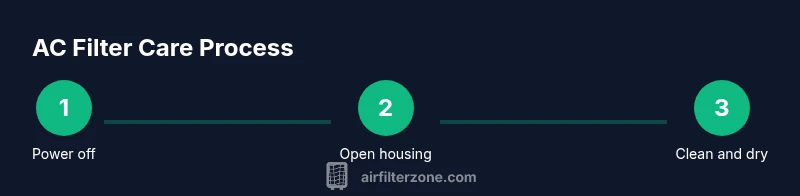
Turn off the unit and unplug or switch off the breaker. Open the filter housing according to the manufacturer’s instructions and locate the filter frame. Take a quick photo of how the filter sits to ensure correct orientation during reinstallation.
Tip: Always confirm the power is off before touching electrical components. - 2
Remove the filter
Gently slide the filter from its frame or remove screws if applicable. Handle the filter by the edges to avoid contacting the media. Place the filter on a clean, dry surface.
Tip: Note the orientation arrows on the filter to reinsert correctly. - 3
Decide to clean or replace
Inspect for tears, mold, or excessive dirt. If the filter is disposable or severely dirty, replace it. If it is washable, proceed to cleaning.
Tip: When in doubt, opt for replacement to ensure a proper seal. - 4
Clean a washable filter
Rinse the filter under lukewarm water, using mild soap if needed. Gently scrub with a soft brush, then rinse thoroughly. Shake or pat dry and allow it to air dry completely before reinstalling.
Tip: Do not use hot water or high-pressure streams; this can warp the media. - 5
Dry and reinsert
Ensure the filter is completely dry before placing it back. Reinsert with the correct orientation and reseal the housing. If you used a disposable filter, replace with a new one of the same size.
Tip: A wet filter can promote mold growth and damage the unit. - 6
Test and note next maintenance
Plug the unit back in and run a brief cycle to confirm proper airflow. Check for any rattling or unusual noises. Update your maintenance log with the date and filter type.
Tip: Set a reminder to check the filter monthly or per manufacturer guidance.
FAQ
Can I wash a disposable air filter?
No. Disposable filters are designed for single use. Washing can damage the media and reduce filtration effectiveness. If you’re unsure, replace with a new filter of the correct size and rating.
Disposable filters should not be washed. Replace with a new filter of the correct size.
How often should I clean or replace the filter?
The frequency depends on usage and environment. Check the filter monthly and replace or clean as needed. In dusty or pet-heavy homes, more frequent checks are advised.
Check the filter monthly and clean or replace as needed; more often if you have pets or dust.
What if I can’t locate the filter in a central system?
Consult the owner's manual for your specific system and filter location. If you still cannot find it, contact a certified HVAC technician to avoid damaging the unit.
Look in the manual or contact a pro if you can’t locate the filter.
Are washable filters effective?
Washable filters can be effective if properly maintained and dried. They often require a higher-maintenance routine and may have a limited lifespan compared to disposable high-efficiency filters.
Washable filters work if you keep them clean and dry; they need regular upkeep.
Can a dirty filter cause higher energy bills?
Yes. A clogged filter restricts airflow, making the system work harder and consume more energy. Regular cleaning or replacement helps maintain efficiency.
A dirty filter can increase energy use because the system works harder.
What are signs of a blocked filter besides poor airflow?
Besides reduced airflow, look for unusual odors, rapid dust buildup, or frost on the indoor coil. These indicate airflow restrictions or moisture issues.
Look for odors, excess dust, or ice on the coil as signs of blockage.
Watch Video
Quick Summary
- Inspect filter type before cleaning or replacement
- Washable filters require thorough drying before reuse
- Always reinsert with proper orientation and seal
- Create a regular maintenance schedule to keep airflow optimal