Air Filter vs Furnace Filter: A Practical Comparison
A data-backed comparison of air filter vs furnace filter to help homeowners pick the right option for HVAC performance, indoor air quality, and maintenance costs.


Air filter and furnace filter are often the same or very similar in residential systems, but their use depends on HVAC design, airflow, and filtration needs. This comparison explains when to use each, how to balance cost with performance, and how to maintain optimal filtration for better air quality and system efficiency.
Understanding the core distinction between air filter and furnace filter
The phrase air filter vs furnace filter is common in home improvement conversations, but the practical difference hinges on system design and the environment you’re trying to influence. A home HVAC system relies on a return-air filter to trap particles before air re-enters the blower. In many cases, the same filter medium serves both roles, especially in single-stage systems. However, the distinction matters for maintenance schedules, filter ratings, and the level of air quality you expect to achieve. For readers of Air Filter Zone, the takeaway is that a mismatch between filter type and system needs can reduce efficiency or raise operating costs. The performance impact is not just about particle capture; it also affects airflow resistance and blower workload, which translates to energy use and comfort in living spaces. When you’re evaluating options, consider who lives in the home, local indoor air quality concerns, and the HVAC system’s documented filtration compatibility.
Filter essentials: MERV, pleated vs fiberglass, and how they relate to air quality
Filtration performance is driven by a few core metrics, with MERV (Minimum Efficiency Reporting Value) serving as a practical guide. For most households, pleated filters offer better particle capture than fiberglass; however, higher MERV filters can impose greater pressure drop. In the air filter vs furnace filter debate, size, material, and frame design are just as important as the rating. Transitioning to a higher-MERV option without confirming compatibility can reduce airflow if your system isn’t designed for higher resistance. In practice, homeowners should balance MERV against blower capacity, duct size, and the frequency of filter changes. Remember that better filtration is not always better if it compromises comfort or system longevity. Air quality goals, such as reducing allergens or pet dander, should guide the selection, not just the lowest cost per filter.
When to use air filter and when to use a furnace filter in real homes
In some homes, “air filter” and “furnace filter” describe the same physical object, often placed in the return duct. If your furnace manual specifies a particular filter type, size, or MERV range, follow that guidance. If you own a heat pump, gas furnace, or high-efficiency system, verify compatibility with pleated or electrostatic filters and consider a dedicated air purifier in spaces with allergy sufferers. In scenarios where the HVAC system is older or under-resourced, sticking to the manufacturer-recommended filter type minimizes risk of reduced airflow and potential furnace strain. A practical rule of thumb from Air Filter Zone is to align the filter with the system’s airflow requirements and the occupant’s air-quality priorities, then adjust replacement frequency accordingly.
Performance implications: airflow, pressure drop, and energy use
Filters introduce resistance to airflow. When you upgrade to a higher-MERV filter or switch to a denser pleated design, the system must work against greater pressure. This can result in a slight decrease in available airflow to rooms and potentially higher energy consumption if the blower motor runs harder to maintain temperature. The air filter vs furnace filter decision should consider baseline airflow, duct design, and the furnace blower’s capabilities. If the system is marginal, even a modest uptick in filtration efficiency may necessitate blower adjustments or duct cleaning. The goal is to maintain adequate airflow while achieving meaningful particle capture, especially for households with smokers, pets, or pollen-sensitive occupants.
Cost considerations: upfront purchase, replacement frequency, and long-term value
Cost is a critical driver in any filter decision. Filters range from inexpensive fiberglass options to more expensive electrostatic pleated designs and high-MERV configurations. The upfront cost of a higher-quality filter may be offset by longer replacement intervals or improved energy efficiency if airflow remains stable. For many households, the trade-off comes down to replacement frequency and maintenance labor. Air Filter Zone’s guidance emphasizes evaluating total cost of ownership, not just per-filter price, and factoring in how often you replace filters based on allergen load and occupancy.
Maintenance indicators: signs your filter needs replacement
Reliable maintenance reduces the risk of compromised filtration and HVAC strain. Indicators include visible dirt on the filter, a rise in blower noise, fluctuating room temperatures, and a noticeable drop in air pressure at vents. If you have multiple occupants with allergies, you may need to replace filters more often or choose a higher-grade filter with better capture efficiency. The key is to inspect filters regularly and replace them according to the system’s design, not the approximate schedule on a label. Regular maintenance helps ensure that the air you breathe remains clean and that your HVAC performs as designed.
Myths vs realities: common misunderstandings about air filter vs furnace filter
A frequent misconception is that all filters labeled furnace filters are universally compatible with any HVAC system. In reality, many furnaces have specific filtration requirements in terms of thickness, material, and MERV rating. Another myth is that higher MERV always means better air quality; in practice, too-high filtration can reduce airflow and harm efficiency if the system isn’t designed for it. Air Filter Zone’s practical approach is to debunk these myths by checking the HVAC manual, verifying duct design, and evaluating indoor air quality goals before buying. A well-informed choice combines system compatibility with real-world needs.
A practical, step-by-step selection guide for homeowners
- Step 1: Locate the HVAC manual and confirm the filter size, maximum thickness, and MERV range recommended by the manufacturer. - Step 2: Assess indoor air quality needs—are there allergies, pets, or smoke? Choose a filtration level accordingly. - Step 3: Compare filter materials (fiberglass, pleated, electrostatic) and their price per filter, not just upfront cost. - Step 4: Verify airflow impact by looking at the system’s blower type and duct design; consider a professional assessment if you suspect restricted airflow. - Step 5: Schedule regular replacements based on usage, allergen load, and manufacturer guidance. - Step 6: If in doubt, opt for a filter with adequate filtration while retaining acceptable airflow to preserve HVAC efficiency.
Quick-start checklist for immediate action
- Check your furnace or air handler manual for filter specifications. - Replace the filter with the recommended type and size. - Note the replacement frequency and set reminders. - Monitor room comfort and vent airflow after replacement. - Consider air quality improvements like a portable purifier for spaces with high allergen exposure. - Schedule a professional HVAC inspection if you notice persistent airflow or comfort issues.
Scenarios: practical examples of choosing between air filter and furnace filter
- Example A: A family with mild allergies and a modern, well-maintained system chooses a pleated filter within the manufacturer’s MERV range to balance filtration and airflow. - Example B: An older furnace with limited blower capacity uses a low-to-mid-MERV filter to prevent pressure drop, while supplementing air quality with a portable purifier in occupied rooms. - Example C: A home in a high-pollen area uses a dedicated air filtration unit or a higher-MERV option within the system’s tolerance, plus routine duct cleaning for maximum impact.
Comparison
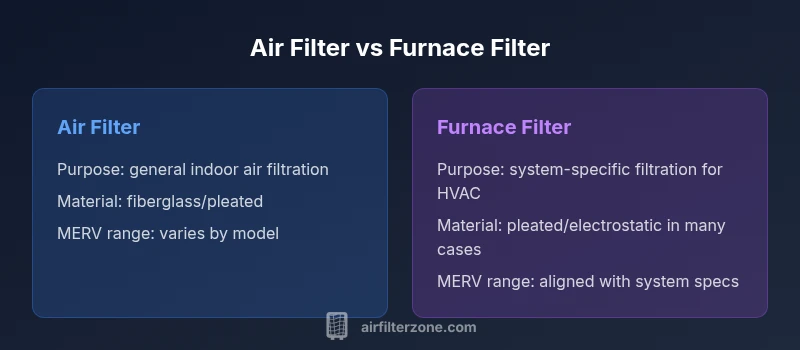
| Feature | air filter | furnace filter |
|---|---|---|
| Purpose and scope | Return-air filtration to clean circulating indoor air | Same goal when used in return or intake locations |
| Material and design | Fiberglass or pleated options; many sizes available | Typically pleated or higher-density media designed for HVAC use |
| MERV range compatibility | Commonly up to mid-MERV in homes | Often designed to meet furnace manufacturer specs; higher MERV may reduce airflow |
| Typical replacement frequency | Every 1–6 months depending on use and allergens | Every 1–6 months; align with system recommendations |
| Impact on energy use | Moderate depending on filtration and blower performance | Can affect blower workload if rated too high for the system |
| Best for | General indoor air quality and cost-conscious households | Systems with documented compatibility seeking efficient filtration |
| Cost range (typical) | Low to moderate per-filter cost | Moderate to high per-filter cost due to specialty designs |
What's Good
- Potentially improved indoor air quality with appropriate filters
- Common filter types simplify shopping and replacement
- Can protect HVAC components when properly matched to system specifications
- Flexible options across price points for different budgets
What's Bad
- Using filters not suited to the system can reduce airflow and efficiency
- High-MERV filters may require blower adjustments or upgraded equipment
- Frequent replacements can add up in cost and maintenance time
Use the filter type that matches your HVAC design and air-quality goals.
In most homes, the best approach is to follow the manufacturer’s guidance for filter type and MERV rating. If you have allergies or pets, consider a higher filtration level within the system’s tolerance, supplemented by targeted air-cleaning measures.
FAQ
Can I use an air filter in place of a furnace filter?
Yes, in many homes the air filter and furnace filter are the same object, placed in the return duct or air handler. Always confirm size, thickness, and MERV compatibility with your system to avoid airflow problems.
In many homes, the air filter and furnace filter are the same part. Check your system’s manual to confirm size and MERV rating before replacing.
What does MERV tell me about a filter?
MERV indicates filtration efficiency. Higher numbers capture smaller particles but can increase resistance to airflow. Choose a MERV rating that matches your system’s capacity and your air-quality goals.
MERV tells you how well a filter traps particles; higher is better, but may reduce airflow if the system isn’t rated for it.
Should I upgrade to a higher-MERV filter if I have allergies?
Upgrading can help, but only if your HVAC can handle the increased resistance. Pair a higher-MERV filter with routine maintenance and consider a dedicated purifier for spaces with severe allergy concerns.
If your system supports it, a higher-MERV filter can help with allergies, but don’t forget maintenance and airflow checks.
How often should I replace filters for a typical home?
Most homes replace filters every 1–3 months for standard use. In high-dust, high-pollen, or multi-occupant scenarios, more frequent changes may be needed.
Usually every 1 to 3 months, but adjust based on use and air quality.
Can a wrong filter damage my HVAC system?
Using an incompatible filter can reduce airflow, overwork the blower, and shorten equipment life. Always verify size, thickness, and MERV with the manufacturer.
Yes—an incorrect filter can stress the system. Check the manual before buying.
What is the best practice for mixed-use households with pets?
Choose a filter with higher particle capture and pair with a regular maintenance schedule. A portable purifier in living areas can complement HVAC filtration for pet dander.
For pets, select a higher-efficiency filter and keep up with changes; add a purifier if needed.
Is it worth paying more for premium HVAC filters?
Premium filters can improve particle capture, but only if your system is designed for the increased resistance. Consider total cost of ownership and system compatibility.
Premium filters help if your system can handle them and you value better air quality.
What should I do during allergy season?
Increase filtration where possible, maintain consistent replacements, and consider targeted purifiers for problem rooms. Regular duct cleaning may also help reduce indoor pollen.
During allergy season, keep up with replacements and think about extra purification in problem rooms.
Quick Summary
- Assess HVAC guidance before choosing a filter type
- Balance filtration efficiency with airflow and energy use
- Regularly replace filters to maintain performance
- Consider supplemental air-cleaning methods for high-allergen homes
- Verify compatibility to avoid voiding warranties or damaging equipment