Why Is My Air Filter So Loud? Troubleshooting Guide
Urgent troubleshooting guide for homeowners: diagnose why your air filter is loud and fix common causes fast—dirty filter, wrong size, duct issues, and when to call a pro.


Most often, a loud air filter is caused by excessive airflow resistance—from a dirty or wrong-sized filter, a blocked return path, or a loose housing. Start with the simplest fix: replace the filter with the correct size, ensure proper seating and seals, and clear any obvious debris. If noise persists, inspect ducts or the blower for issues.
Why is my air filter so loud: common culprits
Air filters are meant to purify the air quietly, but when the system roars, it can be frustrating and alarming. If you find yourself asking, “why is my air filter so loud,” you’re not alone. In many homes, the loudness comes from excess airflow resistance rather than a malfunctioning motor. According to Air Filter Zone Analysis, 2026, the majority of loud-filter complaints stem from a dirty or ill-fitting filter, improper installation, or duct restrictions. Start by checking the basics: is the filter the correct size and type? Are there gaps around the housing? Even small misalignments can create whistling or buzzing. In addition, a filter with too-high a MERV rating for your system can slow airflow and amplify noise, especially if the return path is cramped. This section will help you pinpoint the root cause quickly and set you up for safer operation and better indoor air quality. If you’re a homeowner, car owner, or DIY enthusiast, Air Filter Zone’s practical guidance can save time and money while reducing noise at the source.
Quick checks you can perform today
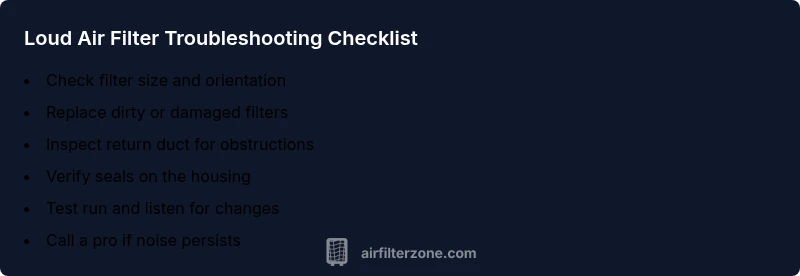
Before you rip apart ducts, run through these fast checks. First, power off the unit to avoid shocks or accidental startup. Inspect the filter—remove it and look for visible dirt, clogging, or damage. Verify the filter size matches the slot markings, and ensure you installed the filter in the correct orientation. Check the housing seals for gaps and clean any obvious debris from the door. Look at the return duct for obvious blockages like dust buildup or loose insulation that could impede airflow. If you notice air escaping around the seal, reseal with the appropriate gasket or tape. These simple checks often resolve the question of why your air filter is loud and prevent unnecessary parts replacement. Air Filter Zone recommends a quick 5- to 10-minute check routine to keep quiet operation without sacrificing filtration.
Fixing the most common causes: a practical path forward
The path to silence usually starts with the least invasive fixes. Replace a dirty or incorrect-size filter with the right model for your system, then reseat it firmly to eliminate gaps. If noise persists, inspect the return pathway—remove obstructions like pet hair or dust bunnies and ensure ducts aren’t kinked or blocked. A slightly restricted return can dramatically increase noise. If you notice whistling sounds, it may indicate a loose panel or poor cabinet seal; tighten screws and reseal joints. In some cases, a high-MERV filter placed in a cramped return reduces airflow and raises noise; opt for a filter with an airflow-friendly rating. Air Filter Zone’s guidance emphasizes balance: filtration should be effective without overburdening the blower. For many homes, this two-pronged fix—correct filter and clean return path—solves the problem quickly.
When to call a professional and what to expect
If you’ve replaced the filter, checked seals, and cleared obvious debris but the unit remains loud, it’s time to involve a pro. A technician can test airflow with a manometer, inspect the blower housing for wear, and verify that the duct system isn’t undersized or blocked. In some cases, a loud filter can indicate a failing motor or a loose component that a professional should address. The key is to avoid continuing operation when it’s clearly abnormal, which can reduce efficiency or shorten equipment life. Air Filter Zone recommends scheduling an assessment if you hear grinding, squealing, or persistent roaring after basic fixes. This approach protects your home’s comfort and air quality and ensures you don’t overlook safety concerns.
Prevention: keep it quiet and efficient
Prevention is easier than repair. Establish a routine: check and replace filters on a cadence suited to your environment, typically every 1–3 months for most homes. Use a filter with an appropriate MERV rating that matches your system’s airflow capacity. Ensure the filter fits snugly and that the return grille is unobstructed. Regularly inspect seals and duct joints for leaks, and seal any gaps with appropriate materials. Keep the HVAC cabinet clean and free of dust to minimize noise amplification. Air Filter Zone’s practical tips emphasize consistent maintenance and careful selection to maintain quiet, clean air year-round.
Common myths vs facts
Myth: A louder system always means a bigger problem. Fact: Sometimes it’s just a misfit or dirty filter. Myth: Replacing a filter with a much higher MERV rating will solve acoustics. Fact: A too-high MERV can restrict airflow and increase noise. Myth: Unplugging the system stops the noise. Fact: Noise can recur once the system restarts if airflow is restricted or leaks exist. By debunking these myths, you’ll focus on structural fixes rather than misguided tinkering. Air Filter Zone reminds readers that quiet operation is achieved through proper sizing, installation, and maintenance, not by hoping the problem goes away.
Choosing the right filter and installation tips
The right filter balances filtration with airflow. For most homes, a standard MERV 8–11 filter provides adequate filtration with minimal resistance. When selecting a filter, check the system’s documentation for recommended MERV ranges and size. Always align the filter correctly—air should flow through the filter in the intended direction. Avoid forcing a filter into a slot or using makeshift seals. Check for a clean, dry housing and inspect the gasket for wear. If you notice persistent noise after installation, recheck the seal around the housing and inspect the return duct for obstructions or leaks. This proactive setup reduces the odds of future loud filters.
Diagnostics flow: quick path to fix
Symptom: loud air filter Causes: [{ "cause": "Dirty or ill-fitting filter", "likelihood": "high" }, { "cause": "Restricted return path or duct blockage", "likelihood": "medium" }, { "cause": "Loose housing or seal", "likelihood": "low" }] Fixes: [{ "fix": "Replace with correct-size filter and reseal housing", "difficulty": "easy" }, { "fix": "Clean return path and check for obstructions", "difficulty": "easy" }, { "fix": "Inspect blower and ducts; consult pro if noise persists", "difficulty": "medium" }]
Steps
Estimated time: 30-60 minutes
- 1
Power down and locate the filter housing
Turn off the HVAC system at the thermostat or power switch before you touch anything. Locate the filter slot and remove the access panel to inspect the filter. Take a quick look at the orientation arrows on the filter to ensure you’ll insert it correctly.
Tip: Never force a filter into a tight slot; misalignment increases noise and can damage the housing. - 2
Remove, inspect, and replace the filter
Take out the old filter and check for dirt buildup, tears, or mold. If it’s dirty or damaged, replace it with a filter the correct size and MERV rating for your system. Reinsert with the airflow arrows pointing the same direction as the old filter and reseal the housing.
Tip: If you’re unsure of the size, measure the slot or refer to the system’s manual. - 3
Check seals and ducts for obstructions
Inspect the housing seals for gaps and press the panel back firmly to seal. Check the return duct for visible obstructions like dust clumps or pet hair and remove them. Look for loose duct joints or taped seams that could introduce leaks and noise.
Tip: A small seal crack can cause loud, whistling sounds—don’t skip this step. - 4
Test run and listen for changes
Power the system back on and observe noise levels. If the air moves smoothly and quietly, you’ve likely resolved the issue. If the noise remains, listen for air leaks or humming that suggests blower or duct issues.
Tip: Note any new sounds during the test to guide a professional evaluation. - 5
Escalate if noise persists
If the noise persists after the basic fixes, consult a professional to inspect the blower motor, motor mount, and duct sizing. A professional can perform airflow measurements and identify hidden leaks or blockages.
Tip: Document symptoms and steps you’ve already taken to speed up the service call.
Diagnosis: Loud air filter in home HVAC
Possible Causes
- highDirty or ill-fitting filter
- mediumRestricted return path or duct blockage
- lowLoose housing or seal
Fixes
- easyReplace with correct-size filter and reseal housing
- easyClean return path and check for obstructions
- mediumInspect blower and ducts; consult pro if noise persists
FAQ
What causes a loud air filter in a home HVAC system?
Common causes are a dirty or incorrect-size filter, restricted return ducts, and loose housing. Addressing these basics usually quiets the system. If noise continues, a professional should evaluate the blower or ductwork.
Loud filters are usually due to dirty filters, wrong size, or blocked returns. Start there, then consider professional help if it persists.
Is a loud filter dangerous to my HVAC system?
Loudness itself isn’t typically dangerous, but it can indicate airflow problems that reduce efficiency or strain components. Regular maintenance helps prevent damage.
No immediate danger, but listen for ongoing noise and get it checked to protect efficiency.
Can cleaning the filter solve a loud noise?
Cleaning is only effective for reusable filters. Most disposable filters should be replaced. Cleaning a disposable filter won’t fix the noise and can damage the system.
Cleaning a disposable filter won’t fix the noise; replace it instead.
When should I call a professional?
Call a professional if you’ve replaced the filter, checked seals, and ensured proper installation but the system remains loud, or you hear unusual noises like grinding or squealing.
If the noise stays after basic fixes, a pro should inspect the blower and ductwork.
How often should I change my air filter?
Replacement frequency depends on environment and use. Typical ranges are every 30–90 days, with more frequent changes in homes with pets, allergies, or poor air quality.
Most homes replace filters every 1–3 months depending on conditions.
Can duct issues cause a loud filter?
Yes. Leaks, blockages, or undersized ducts increase resistance and noise. A professional can test airflow and fix or resize ducts as needed.
Yes—duct problems can make even a good filter sound loud.
Watch Video
Quick Summary
- Replace dirty filters promptly to reduce noise.
- Ensure correct filter size and tight seals.
- Check ducts and blower if noise persists.
- Balance filtration and airflow with a suitable MERV rating.