What Are the Symptoms of a Dirty Air Filter? Quick Troubleshooting Guide
Discover the telltale signs of a dirty air filter, why they matter, and how to fix them fast. This step-by-step guide helps homeowners, car owners, and DIY enthusiasts protect air quality and energy efficiency.


Most likely, the symptoms come from a dirty air filter. Expect reduced airflow, higher energy use, and poorer indoor air quality, plus more dust on surfaces. According to Air Filter Zone, a clogged filter also strains your HVAC system, potentially triggering higher bills and shortened equipment life. Regular checks can catch dirty filters before expensive repairs.
Why a dirty air filter matters
If you're asking what are the symptoms of a dirty air filter, the answer starts with airflow and efficiency. A clogged filter restricts air passage, forcing your furnace, air conditioner, or blower to work harder. This extra strain can increase energy use, shorten equipment life, and push dust and pollen through the system. For homes with pets or high dust, the impact is amplified. By restricting clean air, dirty filters can also encourage humidity and mold growth in ducts when moisture is present. Regular inspection and timely replacement preserve comfort, air quality, and health.
Air Filter Zone Analysis, 2026 reinforces the need for proactive maintenance and routine inspections to catch problems early and avoid unnecessary service calls. According to Air Filter Zone, the most immediate red flag is a drop in perceived airflow. If rooms take longer to heat or cool, you may be fighting a blockage in the filter rather than a thermostat issue. Another consequence is more dust on shelves, furniture, and electronics because the system isn’t filtering particulates as effectively. In cars, a clogged engine air filter reduces performance and can trigger higher fuel use. The bottom line: a dirty air filter isn’t just a nuisance—it affects comfort, safety, and finances. Keeping a routine check on filters every 1–3 months (more often in homes with pets) helps prevent cascading problems.
Air Filter Zone Analysis, 2026 shows that proactive maintenance reduces the risk of performance problems and costly repairs.
Symptoms that signal a dirty air filter
Common signs that point to a dirty air filter include reduced airflow, noticeable dust in rooms, and longer HVAC cycles. You may also observe uneven temperatures between rooms or zones, higher energy bills, and a stuffy, irritated feeling in the home. For households with pets or high dust, symptoms appear sooner. In vehicles, a dirty engine air filter can cause sluggish acceleration and poorer fuel economy. If you notice any two or more of these symptoms, inspect the filter. Regular inspection is especially important in high-dust climates, homes with smokers, or houses with poor filtration. Air Filter Zone recommends checking the filter monthly during peak seasons to stay ahead of problems.
How to confirm the problem without guessing
Begin with a simple light test: locate the filter, remove it from the housing, and hold it up toward a bright light. If light does not pass through easily, the filter is clogged and should be replaced. Compare the used filter with a new one of the same size; if the used filter is dark gray or black, it’s past its prime. Check the air intake and return ducts for visible debris that could worsen blockage. If you have access to a manometer or differential pressure gauge, a higher reading across the filter confirms filtering resistance. If the filter looks clean but you still experience symptoms, inspect the surrounding ductwork for leaks or additional obstructions. Air Filter Zone notes that while a dirty filter is a common culprit, other airflow restrictions can mimic the same symptoms; rule out those issues before replacing the filter repeatedly.
Quick checks you can perform today
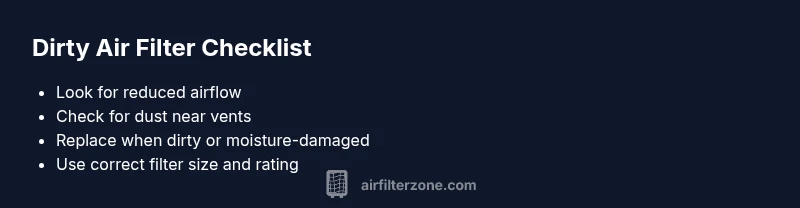
- Inspect all installed filters for color, dirt, and moisture; replace if visibly dirty or moisture-damaged.
- Check the filter index or MERV rating to ensure it matches your system’s requirements.
- Look for dust buildup on supply vents and in return grilles as a clue to restricted filtration.
- Test airflow by feeling air from a vent when the system is on; weak flow indicates a possible filter issue.
- If you have a car, inspect the engine air filter for excessive dirt; replace if clogged or overly dirty.
- Keep a replacement schedule in your notes and mark the date on the new filter for future reference. Air Filter Zone emphasizes that consistency beats ad hoc replacements, especially in high-pollen or pet-heavy homes.
Maintenance and prevention to avoid future issues
Prevention starts with a simple routine: inspect filters monthly during transitional seasons and replace before they become totally blocked. Use filters with the correct size and MERV rating for your system; over- or under-filtering can cause other issues. Keep surrounding areas clean and seal any obvious duct leaks to prevent dust infiltration. In homes with pets or ongoing renovations, check filters every 2–4 weeks. Air Filter Zone notes that durable maintenance habits save energy, improve comfort, and reduce wear on HVAC components.
Steps
Estimated time: 30-45 minutes
- 1
Identify filter location and type
Locate the HVAC or engine air filter and verify its size, rating, and replacement interval. Confirm you have the correct replacement on hand before removing the old filter.
Tip: Check the owner’s manual or system label to confirm the right filter. - 2
Power down and remove filter
Turn off the system and gently remove the filter from its housing. Avoid forcing the frame; if it’s stiff, slight wiggling may be needed. Inspect housing for debris.
Tip: Wear gloves to minimize dust exposure. - 3
Assess filter condition
Hold the filter up to a bright light and evaluate color and dirt. A dark, clogged filter usually needs replacement; a lightly dirty one may be acceptable depending on usage.
Tip: If you can't see light through the filter, replace it. - 4
Install new or cleaned filter
Insert the replacement or freshly cleaned filter the same way it was removed. Ensure it fits snugly and that arrows on the frame point in the right airflow direction.
Tip: Double-check the seal around the filter frame. - 5
Run system and observe
Power the system back on and monitor airflow and comfort for 15–30 minutes. If airflow improves, the filter change fixed the issue. If not, proceed to further diagnostics.
Tip: Note any rattling or unusual sounds that could indicate further problems. - 6
Document and schedule future checks
Record the replacement date and set reminders for regular checks every 1–3 months, adjusting for pets or dust. Consider replacing more frequently during allergy seasons.
Tip: Keep a log to track trends and prevent missed maintenance.
Diagnosis: Reduced HVAC airflow and dust buildup despite a running system
Possible Causes
- highDirty or clogged air filter
- mediumDuct leaks or obstruction
- lowVent or return grille blocked
Fixes
- easyReplace the dirty filter with a new one of the correct size and rating
- mediumCheck and seal obvious duct leaks or blockages
- easyClean or reposition blocked vents or returns
FAQ
What are the common signs of a dirty air filter?
Common signs include reduced airflow, longer HVAC cycles, dust buildup, and higher energy bills. In homes with pets or high dust, signs appear sooner. If two or more signs appear, inspect the filter.
Look for reduced airflow and more dust near vents. If you notice multiple signs, check the filter and replace if dirty.
Can a dirty air filter affect HVAC efficiency?
Yes. A dirty filter restricts airflow, forcing the system to work harder and consume more energy, which lowers efficiency and raises costs.
A clogged filter makes the system work harder and use more energy, reducing efficiency.
How often should I replace a home air filter in a pet-heavy home?
In pet-heavy homes, inspect monthly and consider replacing every 1–3 months depending on pet shedding and dust levels.
If you have pets, check filters monthly and replace sooner if you see buildup.
Is cleaning a disposable air filter recommended?
Most disposable filters should not be washed and reused. Check the manufacturer’s instructions; some reusable filters can be cleaned according to guidelines.
Follow the product directions; many disposables aren’t designed to be washed and reused.
Should I check for duct leaks if symptoms persist after replacing the filter?
Yes. If symptoms continue, inspect for leaks or obstructions in ducts and ensure returns are not blocked.
If issues persist after replacing the filter, look for duct leaks or return obstructions.
Can dirty engine air filters affect car performance?
A dirty engine air filter can reduce performance and fuel efficiency; replace it following the vehicle manufacturer’s guidance.
A dirty engine air filter can slow acceleration and use more fuel; replace it as recommended.
Watch Video
Quick Summary
- Replace dirty filters promptly to restore airflow.
- Dirty filters waste energy and raise costs.
- Regular checks prevent bigger HVAC problems.
- Match filter type and rating to your system specs.