How to Stop Air Filter Noise: Practical Fixes
Learn practical steps to silence noisy air filters at home or in your car. Diagnose common causes, apply quick fixes, and adopt a maintenance routine to keep airflow quiet and efficient.


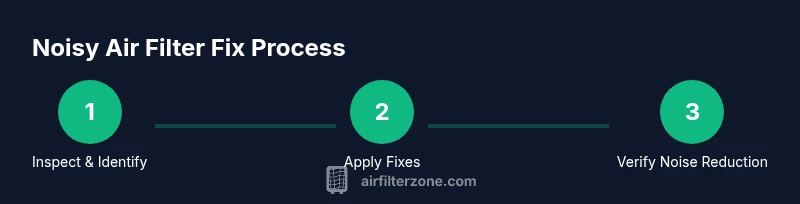
First, check for loose panels or mounting, reseat and clean the filter, and replace it if dirty. Tighten screws, dampen vibration with anti-vibration pads, and seal gaps around the housing. Also verify ductwork is intact and airflow isn’t restricted. If noise persists, inspect the blower motor balance.
Why a noisy air filter happens
Air filters are small, but their noise can signal misalignment, vibration, or airflow restrictions. According to Air Filter Zone, most noises fall into a few fixable categories: loose components that rattle, dirty or poorly seated filters that cause whine or hum, and vibration from the blower or duct connections. A whistling sound often points to gaps around the housing or leaks in ductwork. By recognizing these common sources, homeowners can target the right fix quickly. The Air Filter Zone Team emphasizes starting with a visual check, ensuring the unit sits level, and tightening any loose screws. If you can’t locate the source, proceed to the diagnostic steps below. Air Filter Zone analysis shows that addressing loose parts and proper seating reduces noise in many cases.
Common sources of noise in filters
There are several typical culprits behind filter noise:
- Loose mounting or a rattling housing from aging screws or a shifted cabinet
- A dirty or poorly seated filter that creates airflow resistance and edge vibrations
- Damaged filter frames or worn fan blades that cause imbalance and buzzing
- Cracks in the housing or gaps around the seal that produce a whistle
- In vehicles, a clogged cabin air filter or blocked vents can echo similar noises
- Duct leaks or missing insulation around the filter area can generate a constant hum
Identifying the exact source helps you apply the right fix without unnecessary part changes. Keep in mind that simple fixes often resolve most noises.
Quick diagnostic checks before you touch anything
Safety first: unplug the unit and wear gloves. Do a visual sweep of the filter housing for loose screws, clips, or warped panels. Confirm the filter is the correct size and seated evenly with a firm edge against the gasket. Gently tap the housing or apply light pressure around the filter to hear if the sound changes. If the noise alters with these checks, you’re likely dealing with a loose part or seating issue. If it remains the same, proceed to the immediate fixes. These pre-checks save time and reduce the risk of damage.
Immediate fixes you can try today
Start with reseating the filter so its edges contact the gasket all around, then tighten any loose screws on the housing. Clean the filter and housing with a soft cloth and a mild solution, ensuring no residue remains. If the unit vibrates, place anti-vibration pads or a thin gasket under the base to dampen movement. Seal small gaps around the housing with weatherstripping to stop whistling. If you notice any wear or damage to the filter frame, replace it with a correctly sized one. Finally, run the unit again to see if the sound is reduced.
Long-term fixes to prevent future noise
Establish vibration isolation between the cabinet and mountings, and ensure the unit sits on a level, stable surface. Use filters that fit correctly and avoid older, warped frames. If vibration persists, consider upgrading to a sturdier frame or a quieter model with improved motor balance. Inspect surrounding ductwork for cracks or leaks and seal them to prevent duct-induced hum. Regular maintenance ensures consistent airflow and minimizes future noise.
Maintenance routine to keep noise down
Adopt a simple, recurring routine: monthly quick checks of screws, seals, and seating; quarterly vacuum the intake area and wipe the housing; biannual filter inspection or replacement according to usage; and an annual professional HVAC check to verify blower balance and duct integrity. Consistency is key for quiet operation and better air quality. The Air Filter Zone approach emphasizes routine maintenance to prevent noise buildup over time.
Safety considerations and when to call a pro
Always unplug the unit before inspecting internal components. Do not operate with exposed wiring, cracks, or damaged housings. If you notice oil leaks, burning smells, or persistent unusual vibrations after attempting fixes, contact a licensed technician. For car cabins, replace the cabin filter if clogged and inspect vents for obstructions. When in doubt, professional evaluation is prudent to avoid safety risks and ensure lasting quiet.
Noise considerations for car vs home air filters
Noise in home HVAC systems typically stems from the blower, filters, or loose duct connections, while car cabin noise often arises from a clogged filter or blocked vents. The remedy pattern is similar: reseat, replace, tighten, and seal. However, vehicles use different filter types and mounting hardware, so always consult the owner’s manual for exact filter specifications and replacement intervals. Both environments benefit from proper filtration and balanced airflow to reduce noise and improve air quality.
When to replace the unit or upgrade
If the noise remains after all fixes and cycle tests, the unit’s components may be worn or out of balance. In such cases, replacing the filter system or upgrading to a quieter model with better motor balance and a solid housing can be more cost-effective in the long run. A legacy unit with bent panels or a degraded gasket may require professional assessment. Consider noise, energy use, and air quality goals when deciding between repair and replacement.
Tools & Materials
- Screwdriver set(Phillips and flat-head sizes for housing panels)
- Vacuum with brush attachment(Clean the housing and surrounding area)
- Soft cloth( wipe surfaces without scratching)
- Mild cleaning solution(No harsh chemicals that could damage plastics)
- Replacement air filter (optional)(Use the correct size and rating)
- Anti-vibration pads or foam tape(Dampen vibrations for quiet operation)
- Weatherstripping/foam sealant(Seal gaps around the housing)
- Gloves(Protect hands during inspection)
Steps
Estimated time: Total: 20-40 minutes
- 1
Inspect mounting and housing
Unplug the unit, visually inspect for loose screws, clips, or warped panels. Identify any obvious source of vibration or gaps that could cause noise.
Tip: Tighten all accessible fasteners before moving on to more invasive steps. - 2
Reseat and clean the filter
Remove the filter, inspect its size and frame. Clean the housing and filter edges with a soft cloth and mild cleaner; dry thoroughly before reinstalling.
Tip: Ensure the filter sits squarely against the gasket to prevent edge vibration. - 3
Dampen vibrations
Place anti-vibration pads under the unit or add a thin gasket between mounting surfaces to reduce contact noise.
Tip: Avoid over-tightening if pads are too compressible; test fit first. - 4
Seal gaps around the housing
Apply weatherstripping at gaps around the housing to stop whistling from air leaks.
Tip: Check both inlet and outlet sides for any leakage paths. - 5
Replace worn parts
If the filter frame or housing shows visible wear, replace with a correctly sized and rated part.
Tip: Do not reuse warped or damaged filters; it defeats noise reduction. - 6
Test and monitor
Run the unit for several minutes and listen for residual noise; perform additional tightening or adjustment if needed.
Tip: Note any changes with a quick before/after listen for accuracy.
FAQ
What causes air filter noise in HVAC units?
Common causes include loose panels, dirty or mis-seated filters, worn blower components, and gaps in ductwork. Identifying the category helps determine the right fix.
Noisy HVAC systems usually come from loose parts, a dirty filter, or leakage in the ducts.
Can a dirty air filter cause noise?
Yes. A dirty filter increases resistance and can cause the blower to work harder, resulting in unusual sounds or humming.
A dirty filter can make the system louder because the blower strains to push air through it.
Is it safe to adjust the fan speed to reduce noise?
Only if the manufacturer permits it. Changing fan speed can void warranties and affect performance unless guided by the manual.
Don’t change the fan speed unless the manual says it’s safe.
How often should I replace an air filter to prevent noise?
Follow the manufacturer’s guidelines; replacement intervals vary by usage, filter type, and environment. Regular checks help maintain quiet operation.
Replace the filter according to the manual, as usage and environment change the timing.
Can lubricant help with a noisy blower?
Lubricants are generally not recommended on blower bearings unless specified by the manufacturer. Misuse can cause damage.
Don’t lubricate the blower unless the manual says it’s safe.
When should I call a professional for a noisy air filter?
If noise persists after checking seating, cleaning, and sealing, or you notice unusual smells, heat, or vibration, seek a licensed HVAC technician.
If the noise won’t go away after basic fixes, it’s time to get a professional.
Do car cabin filters contribute to noise similarly to home filters?
Yes, cabin filters can cause similar noises when blocked or when the blower is stressed; apply the same checks but follow vehicle-specific guidance.
Cabin filters can be noisy when clogged; treat it like home filters but with car-specific parts.
Is duct leakage the primary source of persistent noise?
Duct leaks often produce a continuous whistle or hum; sealing leaks can substantially reduce this noise.
Leaking ducts can make a steady whistle; sealing them helps a lot.
Watch Video
Quick Summary
- Inspect for loose parts and reseat the filter.
- Clean the housing to restore proper airflow.
- Dampen vibrations with pads and secure seals.
- Replace worn parts and seek pros if needed.