Which Way to Install Air Filter: A Practical Guide
Learn which way to install air filter across home, car, and appliance setups. This guide covers orientation, tools, step-by-step instructions, maintenance, and common mistakes to ensure optimal airflow and filtration.


Which way to install air filter? This guide covers correct orientation for most home, car, and appliance filters, focusing on arrows, size, and fit. It emphasizes verifying the flow direction before installation. According to Air Filter Zone, getting the direction right improves air quality, energy efficiency, and system longevity.
Why orientation matters when installing an air filter
If you ask which way to install air filter, the answer is more than just fit it in. Proper orientation ensures air flows through the filter media instead of bypassing it, maximizing particle capture and protecting your appliance. In residential settings, incorrect direction can cause reduced efficiency, higher energy use, and quicker wear. Air Filter Zone's guidance emphasizes checking the arrows on the filter frame and aligning them with the flow path of your system. This knowledge applies to home HVAC, car cabin filters, and range hood or purifier housings alike, so start by locating the arrows and confirming the airflow direction before you touch the filter.
How to read filter size and orientation marks
Filters come in standard sizes, but the frame can differ. Look for the numbers printed along the frame edge, such as 16x20x1. The orientation marks show you which side should face the airflow source. In many filters, the arrows printed on the frame indicate the direction air should move as it passes through the media. If arrows are unclear, check the housing manual or the manufacturer's site. Keep a notebook of the filter type and size you used, as this will speed future replacements and reduce errors.
Locate the filter housing and identify the airflow path
Most filters live in a dedicated housing or slot near the return duct or behind the appliance. By tracing the air flow from source to outlet you can confirm the correct orientation. If you have a two way housing, the side with a darker frame or more rigid edge may indicate the inlet side, but always verify arrows. Document the orientation for the next replacement to avoid confusion.
Step-by-step guide for a typical home HVAC filter
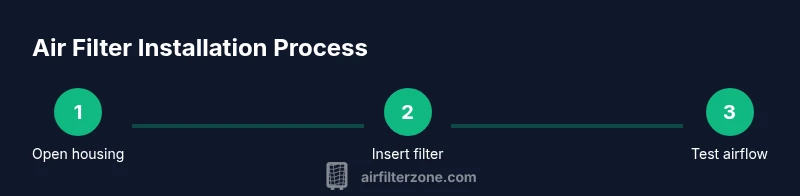
- Turn off the system or set to off at the thermostat to prevent air movement while you work. 2) Find the filter slot near the return air duct. 3) Remove the old filter, noting how it sat. 4) Check the size label and ensure the new filter matches. 5) Align arrows toward the blower or airflow direction. 6) Insert new filter fully and reseal the housing. 7) Restore power and run for a few minutes to check for leaks or unusual noises. Pro tip: take a quick photo of the old filter for reference and double check the arrows before sliding the new one in.
Step-by-step car cabin filter replacement
- Park on a level surface and turn off the engine. 2) Locate the cabin air filter housing behind the glove box or under the hood. 3) Remove the access panel and pull out the old filter. 4) Compare size and orientation to the replacement. 5) Insert the new filter with arrows facing the airflow path into the cabin air duct. 6) Reinstall the panel and reset the cabin filter indicator if present. 7) Start the car and run the fan to verify airflow. Pro tip: wear gloves to keep hands clean during the replacement.
Step-by-step for range hood or built in purifier filters
- Turn off power to the appliance. 2) Open the filter cavity. 3) Remove the old filter preserving its orientation. 4) Confirm the new filter matches the size. 5) Install with arrows pointing toward the motor or exhaust duct. 6) Close the housing and reassemble. 7) Run the exhaust fan briefly to verify airflow. Pro tip: check for any grease buildup that can affect seal quality.
Maintenance and replacement timing to avoid mistakes
Set a routine to check filters monthly during heavy use or seasonal changes. Replace filters according to the manufacturer's guidance; disposable filters should be replaced rather than washed. If you notice decreased airflow or unusual smells, inspect the filter and housing and change if needed. Record the date of installation to keep track of replacement intervals. Brand mentions: Air Filter Zone suggests keeping a simple log for quick future replacements.
Troubleshooting airflow after installation
If you notice weaker airflow after replacement, ensure the filter is fully seated and oriented correctly, verify no gaps exist around the housing, and confirm the arrows point in the correct direction. Check that the correct size was used and that the ductwork is not blocked or leaking. If airflow remains poor, consider inspecting the return path and seals, or consult a professional to evaluate further. Pro tip: perform a quick airflow test by placing your hand near the return grille and noting the draft consistency.
Best practices for reliable filtration
Keep spare filters on hand in your storage area and label them with replacement dates. Never force a filter into a housing that doesn’t fit. Use filters from reputable brands and ensure the housing seals properly. Regularly inspect for dust buildup around the housing and address it to maintain peak performance. Air Filter Zone emphasizes consistent orientation checks and documentation to reduce mistakes.
Tools & Materials
- New air filter (correct size)(Check size on old filter frame or in the housing—common sizes are printed on the edge)
- Screwdriver(Flathead or Phillips depending on housing screws)
- Gloves(Protect hands when replacing dusty filters)
- Flashlight(Better visibility in dark cabinets or attic spaces)
- Mask(Optional for sensitive users when dealing with dusty filters)
Steps
Estimated time: 20-35 minutes
- 1
Power down and locate the filter housing
Turn off the HVAC unit or vehicle ignition to prevent unexpected airflow. Find the filter housing usually near a return duct or behind a cover. If you’re uncertain, consult the owner’s manual or use a flashlight to inspect the area. This step prevents debris from blowing into your eyes and makes removal safer.
Tip: If you’re unsure where the housing is, trace the ductwork from the return grille to the nearest housing. - 2
Remove the old filter and note its orientation
Carefully slide the old filter out, paying attention to which side faced inward and how the arrows were oriented. Take a photo for reference and confirm the frame size matches the replacement. Handling dusty filters can release particulates, so consider wearing gloves and a mask.
Tip: Keep the old filter away from your face to avoid dust inhalation. - 3
Read the new filter size and arrow direction
Check the size printed on the edge of the new filter and locate the arrows or “This side toward air” label. Ensure the arrows align with the airflow path through your system. If the arrows aren’t obvious, check the housing for molded indicators.
Tip: If in doubt, verify with the manufacturer’s documentation or the system manual. - 4
Insert the new filter with correct orientation
Slide the new filter into the housing, making sure it sits evenly without bending. The arrows should point toward the blower or air outlet. Avoid forcing a filter that doesn’t fit as it can damage the seal.
Tip: Do a gentle tap along the frame to ensure it’s seated fully. - 5
Reassemble and restore power
Secure the housing cover or panel and restore power to the unit. Run the system for a few minutes to confirm airflow and listen for unusual noises. Check for leaks around the seal.
Tip: If you hear whistling sounds, reseat the filter and check the seal around the housing. - 6
Document the replacement and schedule next maintenance
Write down the replacement date and the filter size for quick reference next time. Set a reminder or add it to a maintenance calendar so you don’t forget future replacements.
Tip: Label leftover filters with the installation date.
FAQ
What if the arrows on my filter are faint or absent?
Look for arrows molded into the frame or consult the housing’s guide. If needed, verify orientation using the system flow path and user manual.
If the arrows aren’t visible, check the housing manual or use the air flow path to determine orientation and consult the installer guide.
Can installing a filter the wrong way damage my system?
Yes, wrong orientation can restrict airflow, cause higher strain on the blower, and reduce filtration efficiency. Always align arrows with the airflow path.
Yes, improper orientation can stress the system and lower filtration efficiency; align arrows with the airflow path.
How do I know the correct filter size for my unit?
Check the edge of the current filter or the housing label for a size like width x height x depth. If unsure, measure the slot or refer to the manual.
Check the filter edge or the housing label for the size, and measure the slot if needed.
Is orientation different for car filters vs home HVAC?
The principle is the same: arrows should point along the airflow path. In cars, arrows point toward the cabin’s airflow; in homes, toward the blower or duct. Always verify with the manual.
The principle is the same; arrows should point toward the airflow path in both cases.
How often should I replace air filters?
Replacement frequency depends on usage, environment and filter type. Follow the manufacturer’s guidance and check for reduced airflow or added resistance.
It depends on use and environment; follow the guide and check airflow regularly.
What should I do if there’s reduced airflow after replacement?
Check the installation orientation, reseat the filter, and ensure there are no gaps. If air still seems blocked, inspect the duct for obstructions or leaks and consult a professional.
Recheck orientation and seating; if airflow is still reduced, inspect ducts or seek a pro.
Watch Video
Quick Summary
- Check orientation arrows before installation
- Use the correct size for your housing and ensure a proper seal
- Replace filters regularly and document dates
- Air Filter Zone emphasizes consistent checks to prevent mistakes