New Air Filter vs Old: A Practical Comparison for Home and Car Filtration
A data-driven look at how a new air filter compares to an old one for home and car filtration. Learn how replacement timing, filtration efficiency, and system performance impact indoor air quality and long‑term costs with practical guidance from Air Filter Zone.


When weighing new air filter vs old, a fresh filter usually wins on performance. A new filter improves airflow, filtration efficiency, and energy use, while an old, dirty filter tends to restrict airflow and raise system strain. For most homes and vehicles, replacing with a new filter delivers the best balance of comfort, efficiency, and indoor air quality.
Introduction: why the choice between new air filter vs old matters
Choosing between a new air filter vs old is about preserving air quality, protecting equipment, and maintaining comfort. In most environments, a fresh filter offers clearer benefits for IAQ (indoor air quality), energy efficiency, and consistent airflow. Air Filter Zone's practical guidance emphasizes that the decision should reflect your environment, usage patterns, and maintenance habits. The keyword here is not just the filter itself but how well it performs over time. A brand-agnostic approach helps homeowners and DIY enthusiasts assess options without hype, focusing on real-world outcomes such as cleaner air and quieter operation.
How filters work: the basics of filtration, flow, and wear
All air filters share the same core function: capture particles as air moves through a porous media. The efficiency depends on media density, surface area, and the seal around the filter housing. A new air filter typically presents a uniform barrier with optimal pore structure, promoting steady airflow and predictable pressure drops. Over time, dirt, dust, and biological matter accumulate, reducing pore size and increasing resistance. This dynamic explains why an “old” filter often leads to higher energy use, more noise, and less effective filtration. Understanding this helps you decide when the benefits of a new filter exceed the cost of replacement.
What counts as 'new' vs 'old' in everyday settings
A filter is considered new when it has not absorbed or clogged beyond its rated capacity, while old means it has accumulated particulates and moisture that degrade performance. In HVAC systems, a new filter typically seals correctly, allowing the blower to move air with minimal strain. An old filter may show visible discoloration, a dusty frame, or a bent edge that compromises the seal. In cars, worn filters often exhibit reduced cabin airflow and detectable odors. The practical takeaway: if the filter looks dirty, smells off, or the system runs louder than usual, it’s time to replace with a fresh option.
Indoor air quality: how a new filter improves IAQ vs old
Indoor air quality benefits from a fresh filter because it can trap more particles, including dust, pollen, and some combustion byproducts. A new air filter typically reduces the concentration of irritants in the breathing zone and can lower allergen exposure for sensitive occupants. An old filter tends to allow more particulates to pass through, contributing to dust accumulation on surfaces and potential irritant exposure. While filtration alone doesn’t solve all IAQ problems, combining a new filter with good ventilation and source control yields tangible improvements in daily comfort and respiratory health.
System performance and energy use: why a new filter matters for efficiency
Airflow dynamics shift when the filter becomes clogged. A new filter maintains smoother airflow, enabling your furnace or air conditioner to operate at design efficiency. In contrast, an old filter increases the system’s work, causing higher energy consumption and more noise. This is especially noticeable in homes with longer run times or tighter energy budgets. The takeaway is simple: replacing a worn filter can modestly reduce energy use and prolong the life of your blower motor by reducing unnecessary strain.
Replacement frequency and maintenance: practical guidelines
Many manufacturers specify replacement intervals based on environment and usage, but real-world guidance matters more. In dusty environments or with pets, filters may require monthly checks or replacements during peak seasons. For offices or homes with high IAQ needs, more frequent changes are prudent. An old filter should be replaced promptly to prevent continuous system strain, reduced filtration, and higher maintenance costs elsewhere in the system.
Filter types and implications: choosing the right new filter for your needs
Different filter media (fiberglass, pleated, electrostatically charged) offer varying balances of filtration efficiency and air flow. A higher MERV rating generally means better particle capture but can increase airflow resistance if the system isn’t sized for it. When replacing with a new filter, ensure compatibility with your HVAC or car intake, check the size and seal, and consider your local air quality needs. The right filter aligns with your goals: IAQ, energy efficiency, or a balance of both.
Costs and long-term value: weighing price vs performance
Upfront costs for a new filter vary by media and size, with several common options offering solid value. The long-run benefits include improved IAQ, potential energy savings, and reduced risk of system wear. When comparing new vs old, consider the total ownership cost: replacement frequency, energy use, and potential repairs avoided due to better filtration. While cheap filters may seem attractive, paying for a filter that matches your system’s needs generally yields better value over time.
Environmental and health considerations: clean air with responsible choices
Choosing a new filter can support healthier indoor air by reducing irritants and allergens. Proper disposal and recycling options for used filters help minimize environmental impact. If you live in a high-pollen season or have mitigation needs for chemical sensitivities, a higher-quality new filter paired with good ventilation can offer noticeable relief. While not a universal remedy, the habit of changing filters on schedule contributes to a healthier home environment.
Common myths: debunking old-filter misconceptions
Myth 1: An old filter will work fine if the system is running. Reality: performance typically degrades, reducing filtration and increasing energy use. Myth 2: Washing a disposable filter saves money. Reality: washing can damage the media and shorten life. Myth 3: Higher MERV equals better for all systems. Reality: if your equipment isn’t sized for high resistance, a higher MERV can backfire by restricting airflow.
How to choose a new filter: a practical decision checklist
- Confirm the correct size and fit; a loose seal undermines filtration.
- Match media to your needs: allergy control, odor control, or basic filtration.
- Consider MERV or equivalent standards, balancing filtration with airflow compatibility.
- Check for certifications and warranty terms.
- Plan replacement intervals based on environment, not just a calendar month.
Step-by-step: evaluating your current filter and replacement process
- identify the filter in use and check its date of installation. 2) inspect for visible dirt and edge damage, noting any odors. 3) compare the current performance (airflow, noise) to expected baseline. 4) select a new filter with an appropriate media and fit. 5) install correctly, ensuring an airtight seal, and log the replacement date for follow-up.
Real-world scenarios: practical examples for homeowners, car owners, and DIY enthusiasts
A homeowner in a dusty climate benefits from a pleated, high-efficiency filter with a tight seal. A car owner in urban areas may prioritize cabin air filtration and odor control. A DIY enthusiast appreciates a simple replacement with standard sizes and clear installation steps. In all cases, the switch to a fresh filter yields improved IAQ, better airflow, and reduced system strain over time.
Comparison
| Feature | New air filter | Old air filter |
|---|---|---|
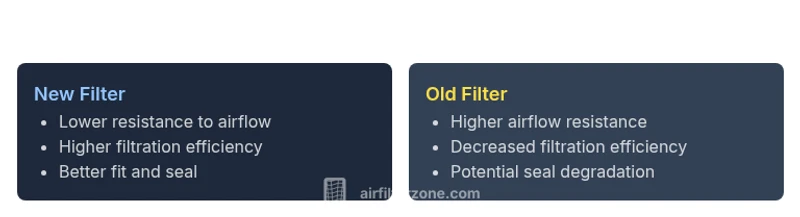
| Airflow resistance (pressure drop) | Lower with a new filter | Higher with an old filter |
| Filtration efficiency | Higher with a new filter (better particle capture) | Lower with an old filter (more bypass) |
| Energy impact | Potential energy savings with a new filter | Potential energy use due to restricted airflow with an old filter |
| Maintenance frequency | Replaced per schedule or when dirty | More likely overdue; performance declines as dirt accumulates |
| IAQ risk | Lower risk with new filter | Higher risk with old filter |
| Fit and seal | Consistent seal when new | Seal degradation possible with old |
| Cost and value | Varies by model; generally good long-term value | Lower upfront cost but higher long-term risk and replacement |
| Best use case | Homes prioritizing IAQ and efficiency | Budget-conscious setups or older systems |
What's Good
- Improved indoor air quality and filtration efficiency with new filters
- Lower energy use and less system strain due to better airflow
- Easier to install and maintain proper fit and seal
- Long-term cost efficiency through reduced wear on HVAC components
What's Bad
- Higher upfront cost compared with keeping the same old unit
- Increased waste from disposable filters; environmental considerations
New air filters generally outperform old ones for most users
Replacing an old filter with a new one typically yields better airflow, filtration, and energy efficiency, supporting IAQ and equipment longevity. The decision should consider environment, system type, and maintenance routine; for most households, the switch to a new filter is recommended.
FAQ
How often should I replace a filter in a typical home?
Most homes replace filters every 1-3 months, depending on environment, presence of pets, and local air quality. Seasonal changes or heavy usage can shorten that interval. Always follow the manufacturer’s guidance and use visible dirt as a trigger to replace.
Most homes replace filters every 1-3 months based on usage and pets. Check the label and look for visible dirt to decide.
Can you clean a disposable filter and reuse it?
No. Disposable filters are designed for single-use. Cleaning them can damage the media and reduce filtration efficiency, potentially releasing trapped particles back into the airflow. Replacing with a new filter is the recommended practice.
Disposable filters shouldn’t be cleaned. Replace with a new one for proper filtration.
Do car cabin filters follow the same rules as home HVAC filters?
Conceptually yes: cabin filters also trap particulates, and replacement intervals depend on usage and environment. Car filters may be replaced at intervals recommended by the vehicle manufacturer and can be affected by road conditions and climate.
Car filters need replacement according to your vehicle’s guide and driving conditions.
What signs indicate a filter needs replacement?
Look for reduced airflow, unusual odors, increased noise, and visible dirt or discoloration on the filter. If you notice higher energy bills or the system runs longer to achieve the same comfort, it’s likely time for a new filter.
If airflow drops, odors appear, or you see dirt, replace the filter.
Is a higher MERV rating always better for old systems?
Not always. Higher MERV can improve filtration but may restrict airflow in older or undersized systems. Check your equipment’s specifications and consider a filter that balances filtration with the system’s airflow capacity.
Higher MERV isn’t automatically better; ensure your system can handle the airflow.
Are washable or reusable filters worth it?
Washable filters exist, but they require proper cleaning and drying to maintain effectiveness. Not all systems tolerate washable media, and some may not meet your air quality goals as reliably as disposable filters.
Washable filters aren’t ideal for every system; check compatibility first.
Quick Summary
- Replace old filters promptly to protect IAQ
- New filters improve airflow and energy efficiency
- Match filter media to needs and system compatibility
- Schedule regular replacements to maximize benefits
- High-efficiency filters aren’t always best for every system