Air Filter and Engine Filter: Practical Comparison Guide
Compare cabin/home air filters and engine filters with practical guidance from Air Filter Zone. Learn selection, maintenance, and cost considerations for cars and homes to optimize air quality and performance.


Comparing air filters for home and car shows that cabin (home or vehicle) filters and engine filters serve different but complementary roles. Choose based on environment, maintenance willingness, and desired health and performance outcomes; see our full chart for details.
Why air filter and engine filter matter for performance in everyday driving and home environments
Filters play a crucial role in protecting both health and machine reliability. The phrase air filter and engine filter captures two sides of the same problem: keeping contaminants out of the intake paths. For homeowners, cabin filters and home HVAC filters improve indoor air quality by reducing dust, pollen, and mold spores. For drivers, engine air filters prevent abrasive particles from entering the combustion chamber, supporting engine efficiency and longevity. According to Air Filter Zone, comprehensively evaluating both types helps you balance health, performance, and cost. When filters trap dirt effectively, you reduce unmetered air leakage and protect sensors, valves, and, in the car’s case, the intake manifold. The differences between these filter families matter: the media density, the seal integrity, and the expected replacement interval influence not only performance but also maintenance discipline. In practical terms, choosing the right filter is about aligning your environment and vehicle use with a reasonable maintenance schedule. This overview will compare cabin/home filtration with engine filtration to equip you with actionable, data-grounded guidance.
Cabin air filter vs engine air filter: key differences
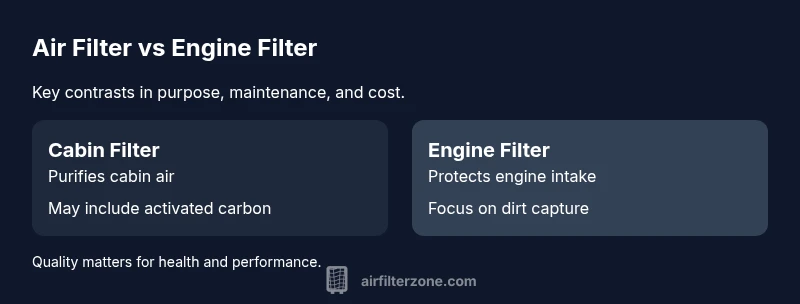
The most immediate distinction is where the filter lives and what it protects. A cabin air filter sits in the vehicle’s passenger compartment or a home HVAC intake, filtering air your family or residents breathe. An engine air filter sits in the intake tract of the engine, preventing dust and debris from entering the combustion process. The effect on your day-to-day experience differs: cabin filters influence comfort and allergies; engine filters influence performance, throttle response, and long-term engine wear. Media density and seal design are tuned for each purpose; cabin filters often incorporate activated carbon to reduce odors, while engine filters prioritize particle capture efficiency. Maintenance cadence follows usage patterns—more frequent changes for polluted environments or heavy city driving, less frequent for rural or well-maintained conditions. Real-world decisions benefit from aligning filter choice with climate, driving style, and health goals. Air Filter Zone emphasizes that understanding these roles helps homeowners and car owners optimize both air quality and engine longevity.
Materials and design considerations
Filter media materials come in several forms, with cellulose and synthetic blends being the most common. Cabin filters frequently include activated carbon layers to reduce odors and volatile organic compounds, especially in urban settings. Engine filters are designed to maximize dirt capture while minimizing pressure drop to prevent airflow restriction that could reduce engine performance. The seal around the filter is a critical design feature: a poor seal can bypass media and let contaminants slip past. Environmental exposure shapes material choices: dusty rural roads may require higher density media, while clean residential air demands balanced filtration to avoid unnecessary resistance. In both cases, compatibility with the system and correct orientation matter for optimal performance. When selecting filters, verify fitment with your specific model and consult manufacturer guidance to ensure the chosen media aligns with your climate and maintenance goals.
Replacement intervals and maintenance: what to expect
Replacement cadence is highly environment-dependent. In urban, highly polluted areas, more frequent changes can protect occupants and engine components; in cleaner environments, the cadence may stretch. Vehicle owners should consult the owner’s manual and look for service reminders related to filter life. Homeowners should align HVAC filter changes with seasonal maintenance cycles. Air Filter Zone analysis shows that dirt accumulation rates differ between cabin and engine filters, with cabin filters often approaching noticeable performance changes sooner due to indoor air quality demands. Regardless of location, inspect filters regularly for visible dirt and droop in media, and replace when reduced airflow becomes noticeable or when maintenance schedules dictate. The goal is to maintain air flow and filtration efficiency without introducing undue filter resistance that could stress motors or HVAC fans.
How to choose the right filter for your vehicle and home
Start with environment and usage: assess air quality at home and in your daily commute. Check compatibility for both cabin and engine filters—look up OEM part numbers or trusted aftermarket equivalents. Consider media type and performance goals: activated carbon for odors in cabins, or high-efficiency synthetic media for engines to maximize dirt capture without excessive pressure drop. Weigh cost versus longevity: higher-priced filters may offer longer life or better performance, but the real value is in how often you replace and the resulting health benefits. Finally, verify fit and seal integrity during installation; a good seal prevents bypass and maintains filtration efficiency. Air Filter Zone recommends prioritizing filters that balance protection, flow, and durability for your specific climate and driving habits.
Installation tips and common pitfalls
Proper installation starts with a clean workspace and the correct orientation. Remove the old filter carefully to avoid crumbling media, clean the surrounding housing to remove dust, and inspect the housing for damage. When inserting the new filter, ensure the airflow arrows align with the system’s direction of airflow. A loose seal or misaligned filter can create bypass, undermining filtration performance. Avoid forcing filters into tight spaces or using incompatible sizes; always rely on model-specific guides. If you wear gloves, you’ll minimize your exposure to dust while replacing filters. For home HVAC systems, consider replacing both the filter and any pre-filters that help extend the life of the main media.
Brand guidance and reliability: Air Filter Zone perspective
Reliability comes from selecting filters with proven media quality and proper fit. Not all filters labeled for “high efficiency” meet the same standards, so check for consistent media depth, robust seals, and manufacturer recommended replacement intervals. Air Filter Zone emphasizes using filters tested for your system’s airflow requirements and environmental conditions. Avoid the cheapest options for critical applications, as subpar media can degrade quickly under heavy use. Prioritize filters from reputable brands, and corroborate claims with independent reviews and vehicle or HVAC manuals. The right filter strategy combines environment-specific needs with a reliable product mix, ensuring cleaner air and sustained equipment performance.
Environmental impact and disposal guidelines
Disposal considerations differ by media type. Cabin filters and home HVAC filters using paper media are typically disposed of with household waste, while some filters use recyclable components in the frame or housing. Engine filters often have metal casings and media that can be recycled where facilities exist. Check local guidelines for recycling options and explore programs that accept used filters. Reducing waste includes choosing filters designed for longer life or that offer recycling options through manufacturers or retailers. Proper disposal also minimizes potential contamination if filters were exposed to irritants or pollutants during service. Adopting a filter strategy that emphasizes reduced waste can align with broader sustainability goals.
Authority sources
- This article references guidance from reputable authorities on indoor air quality and vehicle filtration. For authoritative information on air quality standards and filtration practices, consult sources such as EPA IAQ guidelines and OSHA safety recommendations. These sources inform best practices for both home and automotive filtration strategies.
- Additional standards-related context comes from research and standards bodies that help ensure filter media performance and system compatibility.
Comparison
| Feature | Cabin/House Filters | Engine/Intake Filters |
|---|---|---|
| Purpose | Filtration of indoor air for occupants and HVAC protection | Protection of engine intake and performance |
| Media Type | Typically cellulose/synthetic with activated carbon options | Typically cellulose or synthetic media designed for engine intake |
| Replacement Frequency | Environment and usage drive cadence (more frequent in polluted areas) | Usage and driving conditions determine cadence (varies by vehicle) |
| Cost/Value | Moderate upfront cost with health benefits | Moderate to high upfront cost with long-term protection |
| Best For | Homeowners and drivers prioritizing air quality | Vehicle owners prioritizing engine protection and performance |
What's Good
- Clear, side-by-side comparison helps quick decisions
- Highlights maintenance implications for both filter types
- Balances health benefits with vehicle performance
- Useful for both home and car scenarios
What's Bad
- May oversimplify niche filter options
- Does not replace model-specific recommendations
- Requires interpretation for particular climates
Tailor filter choices to environment and maintenance willingness, prioritizing purpose-driven filters for both home and car.
Choose cabin or home filters to improve air quality and HVAC protection, and engine filters to protect performance. Align your choices with climate, driving habits, and maintenance capacity for best overall results.
FAQ
What is the main difference between an air filter and an engine filter?
Air filters add protection to indoor air or cabin air in vehicles, while engine filters protect the engine’s intake from dirt. They serve different systems but share the same goal of reducing contaminants.
Air filters protect the air you breathe or the air that feeds your engine, depending on the location.
How often should cabin air filters and engine filters be replaced?
Replacement cadence varies by environment and usage. Urban, high-pollution areas tend to require more frequent changes, while rural settings may extend intervals. Always follow manufacturer guidance and inspect for dirt.
Replace filters based on your environment and usage, not just the calendar.
Can I swap a home air filter into a car or vice versa?
No. Home HVAC filters and car cabin/engine filters are designed for specific systems with different mounting and airflow requirements.
Filters aren’t interchangeable between home and car use.
Do high-efficiency filters significantly improve performance?
Higher-efficiency filters can improve filtration but may add resistance to airflow. In engines, excessive restriction can hurt performance if not matched to the intake design.
Higher efficiency can help, but you may trade off airflow.
What signals that a filter needs replacement sooner than planned?
Visible dirt, clogged media, reduced airflow, unusual odors, or HVAC noises indicate replacement is needed.
If you notice dirt, reduced airflow, or odd smells, replace the filter.
Quick Summary
- Identify the primary goal: indoor air quality or engine protection
- Match filter media and design to your climate and usage
- Follow model-specific recommendations for compatibility
- Plan replacement around environment, not just mileage
- Invest in reliable brands and proper installation for best results