How to Keep a Clean Air Filter Home: Practical Maintenance Guide
Learn practical steps to maintain a clean air filter home, choose the right filters, and reduce indoor pollutants for healthier living spaces.


To achieve a clean air filter home, follow a practical, three-step approach: select the right replacement filters (correct size and MERV rating), replace or clean them on a set schedule, and add supplementary measures like purifiers and duct sealing. Regular maintenance reduces pollutants, boosts airflow, and supports healthier indoor air for your family.
Why a clean air filter home matters
A clean air filter home is the foundation of healthy indoor air. When filters are clean or new, the HVAC system can capture dust, pollen, and wildfire smoke more effectively, reducing irritants that trigger allergies or asthma. Regular maintenance keeps airflow steady and can lower energy use by preventing restricted ducts. According to Air Filter Zone, a consistent filter routine improves air quality across most homes, especially when the right filter size and rating are used and installed correctly. This section explains why making filter maintenance part of your daily life pays off for comfort, health, and long-term savings.
How indoor air quality affects health and comfort
Indoor air quality directly influences how comfortable your home feels and how well your family sleeps, concentrates, and breathes. Common pollutants include dust, pet dander, mold spores, and chemical odors from cleaners or cooking. Even in well-sealed homes, humidities above the comfort range can encourage mold growth, while dry air can irritate the throat and nasal passages. Keeping a clean air filter home helps reduce these irritants by ensuring filters capture most of the circulating particles before they reach living spaces. Air Filter Zone analysis shows that systematic filter maintenance correlates with fewer allergy symptoms and less dust accumulation on surfaces.
Choosing the right filter: MERV, HEPA, and other specs
Filters come with different specifications that influence how well they remove particles. MERV ratings indicate filtration efficiency; higher numbers generally mean better capture of small particles. HEPA filters meet strict standards and can catch most particles down to a few microns, which is valuable for households with allergies or asthma. For many homes, a well-fitting, mid-range MERV filter strikes a balance between performance and cost. Always verify the filter size printed on the unit, insert the filter so the arrow faces the airflow, and replace with a new one at the recommended interval.
Step-by-step approach to filter maintenance (high-level)
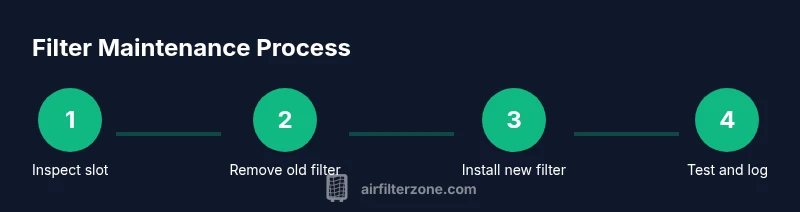
- Inspect monthly: Quick visual checks help you spot sagging or damaged seals before they fail.
- Measure the slot: Use the filter dimensions printed on the existing frame to buy the correct size.
- Prepare: Have a mask or gloves handy, especially if you have allergies; turn off the furnace or AC before touching the filter.
- Replace: Remove the old filter, clean the frame if needed, and insert the new filter with the correct airflow direction.
- Test: Turn the system back on and listen for abnormal sounds or a change in airflow.
This high-level guide complements the detailed instructions in the STEP-BY-STEP block, ensuring you can start right away while following best practices.
HVAC filters vs. portable air purifiers: when to use which
HVAC filters are designed to clean the air as it moves through the central heating and cooling system, making them a convenient first line of defense. Portable air purifiers sit in rooms where air quality is poorest or where occupants have sensitivity. Use both when needed: keep a clean air filter home by maintaining the HVAC filters regularly, and place purifier units in bedrooms or living rooms to further reduce particles. Position purifiers away from walls, choose models with true HEPA filtration, and maintain them per the manufacturer’s instructions.
Practical tips for reducing indoor pollutants beyond filters
- Ventilate when cooking or using strong cleaners to dilute pollutants.
- Vacuum with a high-efficiency bag and a sealed system; consider a robot vacuum for flat surfaces.
- Control humidity with a dehumidifier or humidifier as appropriate; mold grows in damp conditions.
- Clean HVAC ducts only when necessary and by a professional if you suspect mold or heavy buildup.
- Schedule regular filter maintenance and keep a log to avoid missing replacement dates.
In addition to filters, small changes can have big effects on overall air quality in your home.
Troubleshooting common filter problems
- Poor airflow after replacement: Check the airflow direction arrow on the filter and ensure it sits snugly in the frame.
- Filter regularly appears dirty: You might be using a filter with too low a rating or installing it incorrectly.
- Visible gaps around the filter: Re-check the frame size or replace worn seals; gaps allow unfiltered air to bypass the filter.
- Short filter life between changes: Verify you’re using the correct size and installation method; higher-than-average usage may require more frequent changes.
- Unusual noises: Turn off the system and inspect for misalignment or a loose panel after changing the filter.
Real-world setup: a sample weekly schedule
- Monday: Inspect filter slot and note any resistance or noise.
- Wednesday: Check the airflow indicator or dashboard if available; replace if needed.
- Friday: Vacuum and wipe down the intake vent to remove surface dust.
- Weekend: Review the log, replace the filter if it’s nearing the end of its service life, and plan the next maintenance window.
A simple, repeatable schedule helps keep air cleaner without overthinking maintenance.
Tools & Materials
- Replacement HVAC air filters (correct size and MERV rating)(Check the size printed on the filter frame; match model and HVAC type)
- Mask and gloves(Optional if you have allergies or are sensitive)
- Screwdriver or prying tool(If the filter is inside a cover)
- Measuring tape or ruler(To confirm filter slot dimensions)
- Lint-free cloth or compressed air (optional)(For cleaning the frame)
- Maintenance log or notebook(Track replacement dates)
Steps
Estimated time: 60-90 minutes
- 1
Power down and access the filter slot
Turn off the HVAC system and locate the filter slot or grille. Remove the cover carefully to expose the filter frame.
Tip: Avoid abrupt movements that could misalign the panel. - 2
Remove the old filter
Slide the used filter straight out without twisting. Note the airflow direction marked on the frame or filter edge.
Tip: Handle dirty filter from the sides to minimize dust dispersion. - 3
Check size and condition
Verify the filter size matches the slot and inspect for tears or warping. Replace if damaged or oversaturated.
Tip: If in doubt, replace with a fresh filter of the same size. - 4
Clean the frame
Wipe the frame with a dry cloth; remove visible dust and debris. Do not saturate the frame with water.
Tip: Avoid moisture near electrical components. - 5
Insert the new filter
Place the new filter into the frame with the airflow arrows pointing toward the system. Ensure a snug fit and full contact with the seals.
Tip: Double-check that the filter sits evenly without gaps. - 6
Reassemble and power on
Replace the grille or cover and restore power to the HVAC system. Listen for normal airflow and check for vibrations.
Tip: If you hear whistling, reseat the filter. - 7
Run the fan and observe
Operate the system on fan mode for a short period to distribute air and verify even distribution.
Tip: Check for any unusual noises or changes in airflow. - 8
Log and schedule next change
Record the replacement date in your maintenance log and set a reminder for the next interval.
Tip: Keep a consistent schedule to prevent neglect.
FAQ
How often should I change the air filter in a typical home?
Most homes change every 90 days, but it depends on usage, pets, and local air quality. Check the device guidelines and signs of clogging.
Most homes change every 3 months, but adjust based on usage and signs of clogging.
What MERV rating should I choose for residential use?
For general homes, a MERV rating in the mid-range is common; higher ratings are better for allergy sufferers, while very high ratings may impact airflow in smaller systems.
A mid-range MERV rating is usually good for homes; higher if allergies are a concern.
Can a dirty air filter cause increased energy bills?
Yes. A clogged filter makes the HVAC work harder, using more energy and potentially shortening equipment life.
A dirty filter can raise energy use and reduce system efficiency.
Are there filters compatible with both HVAC and portable purifiers?
HVAC filters are designed for central systems, while portable purifiers use room-specific filters. Do not swap filter types between devices.
Filters for HVAC and purifiers aren’t interchangeable. Use the right one for each device.
What are signs my filter needs replacement?
Visible dust buildup, reduced airflow, or unusual noises indicate it’s time for a change.
If you notice reduced airflow or dust accumulation, replace the filter.
Is cleaning a reusable filter effective?
Some reusable filters can be washed; follow manufacturer instructions to avoid damage or voiding warranties.
Some filters are washable—check the label and follow instructions.
Watch Video
Quick Summary
- Replace filters on a fixed schedule.
- Choose the right size and MERV rating.
- Pair HVAC filters with room purifiers when needed.
- Keep a maintenance log to avoid missed changes.
- Air quality improves with consistent, correct maintenance.