Can You Wash and Reuse an Air Filter? A Practical Guide
Learn whether washing can extend the life of your air filter. This Air Filter Zone guide covers washable vs non-washable filters, step-by-step cleaning, safety tips, and when to replace for optimal indoor air quality.


Yes, you can wash and reuse some air filters, but only if the manufacturer approves it. This quick answer prepares you for identifying washable models, cleaning them safely, and knowing when to replace. You’ll also learn how to assess damage signs and avoid reducing filtration efficiency.
Can you safely wash and reuse air filters?
The short answer is: it depends on the filter. Many disposable filters are not designed to be washed and can be damaged by water, causing reduced filtration efficiency or shedding fibers into the air. However, certain reusable or washable filters are specifically rated for cleaning and re-use. In either case, always start by checking the product label or the manufacturer’s website. According to Air Filter Zone, following the intended care instructions is essential for preserving performance and indoor air quality. If you discover the filter is washable, you can proceed with a careful cleaning routine; if not, replace it when it becomes dirty or clogged. The goal is to maintain steady airflow and effective filtration without compromising safety or warranty terms.
In practice, washable filters tend to be larger, more robust, and designed with materials that tolerate moisture. Non-washable filters often rely on a fine fiber mat that can distort or shed when soaked. When in doubt, treat a filter as non-washable and replace it rather than risk damage to your HVAC system or air purifier. The Air Filter Zone team recommends verifying compatibility before attempting any cleaning. This ensures you don’t accidentally void warranties or reduce the filter’s protective capabilities.
How to identify washable vs non-washable filters?
Identifying whether a filter is washable starts with the packaging and the filter itself. Look for explicit statements like “washable,” “reusable,” or “hand wash only” on the label. Some filters offer care instructions and cautionary notes about water exposure. If the label is missing, visit the manufacturer’s site or contact customer support for confirmation. In many cases, filters labeled as pleated paper or with a paper frame are not washable, whereas metal mesh or multiple-layer synthetic media may tolerate washing. Air Filter Zone’s guidance emphasizes checking model-specific care instructions before cleaning to avoid inadvertently damaging the filter or compromising air quality. Always document the model and keep a record of care instructions for future reference.
Additionally, be aware of the type of application. Some furnace or central HVAC filters intended for home use are designed to be replaced rather than washed, while high-quality washable variants for cars or certain air purifiers might tolerate mild cleaning. When in doubt, err on the side of caution and choose replacement over washing to preserve filtration efficiency.
Cleaning steps for washable air filters
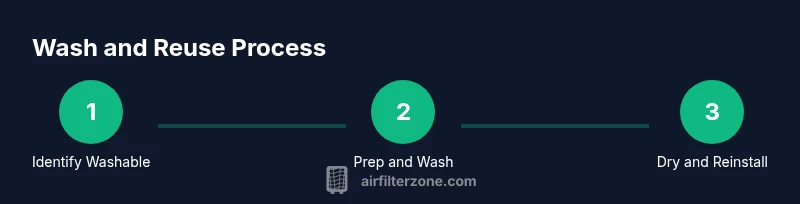
If the filter is confirmed washable, follow a careful cleaning routine to restore its effectiveness. Start by turning off the unit and removing the filter carefully to avoid disturbing dust. Gently brush off loose debris with a soft-bristled brush, ideally outdoors or over a sink. Rinse under lukewarm running water or soak briefly in mild soap solution—avoid hot water or harsh cleaners that could degrade the media. After washing, rinse thoroughly to remove all soap residue. Do not wring or twist; instead, shake gently and lay flat on a clean towel to air-dry completely before reinstalling. It’s crucial that the filter is fully dry, as moisture can promote mold growth and reduce filtration efficiency. Air Filter Zone notes that thorough drying is the most critical step to prevent clogging and odor issues.
After drying, inspect for any warping, tears, or signs of media degradation. If you notice any damage, replace the filter rather than reusing it. Properly cleaned and dried washable filters can regain much of their original performance, but never reinstall a filter that shows visible damage or persistent odor.
When not to wash and what to do instead
If the label clearly states not to wash, do not attempt cleaning with water or detergents. Washing a non-washable filter can distort the frame, reduce pore size, or cause fibers to shed. In such cases, replacement is the safer option. Additionally, even washable filters should be replaced at manufacturer-recommended intervals or whenever you observe airflow reduction, unusual noises, or visible contaminants trapped within the media. If you operate a home with pets, smoke, or high dust load, more frequent inspections are prudent. Air Filter Zone emphasizes maintaining a schedule of checks to ensure indoor air quality remains high, and to avoid silent declines in filtration performance.
If you decide to replace, consider choosing a washable-compatible filter that provides a robust cleaning protocol and documented performance. This approach can balance cost, environmental impact, and air quality goals while maintaining system efficiency.
AUTHORITY SOURCES
For further reading and verification, consult trusted sources on indoor air quality and filter maintenance:
- https://www.epa.gov/iaq
- https://www.osha.gov/SLTC/iaq/filters.html
- https://www.cdc.gov/healthyair/indoor_air_quality/index.html
Quick reference: your checklist
- Check label or manufacturer site for washability status.
- If washable, follow instructions precisely and ensure complete drying.
- Do not wash non-washable filters; replace when dirty or clogged.
- Inspect for damage after washing; discard any filter showing wear.
- Keep a record of care instructions and replacement intervals for your filters.
Tools & Materials
- Mild dish soap(Use a non-abrasive soap; avoid solvents or strong cleaners)
- Warm or tepid water(Prefer lukewarm to avoid material damage)
- Soft-bristled brush(Gently remove dust without tearing media)
- Soft cloth or air-drying rack(Use a clean, dry surface; ensure good airflow during drying)
- Gloves (optional)(Hygienic handling for sensitive individuals)
- Manufacturer's cleaning instructions or approved cleaner(Always verify model-specific guidance before cleaning)
Steps
Estimated time: Varies by filter size
- 1
Identify if washable
Check the label, packaging, or manufacturer website to confirm whether the filter can be washed. This prevents damage to media or frame and helps you avoid unsafe reuses.
Tip: If in doubt, do not wash; replacing preserves filtration integrity. - 2
Power off and remove the filter
Turn off the unit and carefully slide out the filter from its housing to avoid disturbing settled dust. Handle gently to minimize fiber release.
Tip: Working over a towel helps catch debris and reduces mess. - 3
Remove loose dust
Lightly tap or brush the filter against a clean surface to release loose particles without squeezing the media.
Tip: Do this outside if possible to keep indoor dust down. - 4
Wash with mild soap (if washable)
Rinse under tepid water and, if directed, use a small amount of mild soap. Avoid aggressive detergents that could degrade media.
Tip: Avoid hot water; it can warp or weaken certain filter materials. - 5
Rinse and dry completely
Rinse until no soap remains. Do not wring; place on a clean towel or rack to air-dry fully before reinstallation.
Tip: Ensure no moisture remains in folds to prevent mold growth. - 6
Inspect before reinstalling
Look for tears, warping, or uneven media. If you see damage, replace the filter rather than reusing.
Tip: If you notice reduced rigidity or gaps around the frame, do not reuse. - 7
Reinstall and test
Once dry, reinstall the filter and run a quick system check to ensure airflow is back to normal and there are no unusual sounds.
Tip: If you feel resistance or smell burning, stop and inspect again.
FAQ
Is every air filter washable?
No. Most disposable filters are not designed to be washed. Always check the label or manufacturer guidance before attempting any cleaning.
No, not every filter is washable. Always check the label or the manufacturer guidance before cleaning.
Where can I find washing instructions for my filter?
Look at the filter label, packaging, or the manufacturer's website. If you can’t locate guidance, do not wash and replace when needed.
Look at the label, packaging, or the manufacturer's website for guidance. If in doubt, don’t wash and replace instead.
What happens if I wash a non-washable filter?
Washing a non-washable filter can deform the frame, reduce filtration efficiency, or shed fibers into the air. This can worsen indoor air quality.
Washing a non-washable filter can damage it and worsen air quality, so avoid it.
Does washing improve air quality?
If the filter is truly washable and properly dried, cleaning can help restore efficiency. If not, replacement is usually the better option.
If done correctly and the filter is washable, washing can help; otherwise replacement is often the safer choice.
How often should washable filters be cleaned?
Follow the manufacturer’s guidance and inspect regularly. High-dust environments may require more frequent cleaning or replacement.
Follow the label for cleaning intervals and inspect often, especially in dusty spaces.
What are signs that a washed filter is unusable?
Visible tears, warping, persistent odor, or reduced airflow indicate the filter should be replaced rather than reused.
Tears, warping, bad odor, or poor airflow mean you should replace it.
Watch Video
Quick Summary
- Identify washable vs non-washable filters before cleaning
- Follow manufacturer instructions exactly
- Dry completely to prevent mold and odors
- Replace damaged or non-washable filters rather than reusing
- Keep records of maintenance for each filter model