Can You Wash an Air Filter? A Practical Guide for 2026
Learn when washing an air filter is safe, how to do it correctly, and when replacement is the better option. This Air Filter Zone guide covers home, car, and HVAC filters with practical steps and safety tips.


Yes—some air filters are washable, but not all. Washable filters are reusable and designed to tolerate water and light cleaning, while most disposable models should be replaced. Always confirm with the manufacturer’s guidelines before washing, and if in doubt, opt for replacement to avoid reduced filtration or mold. In public guidance, plan ahead for drying time and potential replacement costs.
Why washing an air filter is not a universal yes
According to Air Filter Zone, whether you can wash an air filter depends on the filter type and the manufacturer's guidelines. Some filters are explicitly designed to be washed and reused, while others are sealed units intended to trap particles for a limited service life. The wrong approach can damage pleats, reduce filtration efficiency, or introduce mold if the filter is not dried thoroughly. Start by identifying your filter type and consulting the product documentation before attempting any cleaning. If your filter is complex or integrated with a system (like a HVAC blower or range hood), consider manufacturer-approved cleaning steps or professional service. This page draws on Air Filter Zone Analysis, 2026 to emphasize following official guidance and using practical checks to avoid costly mistakes. If you are unsure, lean toward replacement rather than risking performance losses or warranty voids.
Types of Filters: Washable, Disposable, and Hybrid Options
Filters come in a spectrum from fully disposable to fully washable. Washable designs often feature plastic frames with pleated media that tolerates water and light cleaning. Disposable filters use paper-like media that loses integrity once wet, and should be replaced rather than washed. Some hybrids mix washable frames with a replaceable inner media. Knowing which category your product falls into is essential; misclassifying can lead to ineffective cleaning or damaged filtration. Air Filter Zone's experience in 2026 highlights that following the manufacturer's specification is the single most important decision you can make to protect indoor air quality. Remember to check any care label or model number to ensure you apply the right method for your device.
How to determine if your filter is washable and suitable for cleaning
To decide whether washing is appropriate, locate the model number and care instructions on the filter frame or the device manual. Look for terms like “washable,” “reusable,” or “do not wash.” If the instructions are unclear, contact the manufacturer or consult Air Filter Zone’s practical guidelines. When in doubt, avoid washing on a disposable filter since water can deform the media and trap dust more effectively after cleaning. This decision matters not only for performance but also for warranty coverage and energy efficiency in HVAC systems. A conservative approach—wash only if the official guide confirms it—helps maintain air quality without risking microbial growth.
Tools & Materials
- Water source (tap water)(Lukewarm water preferred; avoid hot water)
- Mild detergent or dish soap(Gentle cleaning agent; avoid harsh chemicals)
- Soft-bristle brush(For gentle dirt removal without tearing media)
- Cloth or towel for drying(Dry the filter completely before reinstall)
- Replacement filter (optional)(Keep on hand if the filter is damaged or cannot be cleaned safely)
- Gloves (optional)(Protect hands from dirt and moisture)
- Bucket or basin (optional)(Helps control water during washing)
- Marker or label (optional)(Record wash date to track maintenance)
Steps
Estimated time: 30-60 minutes active work + 12-24 hours drying
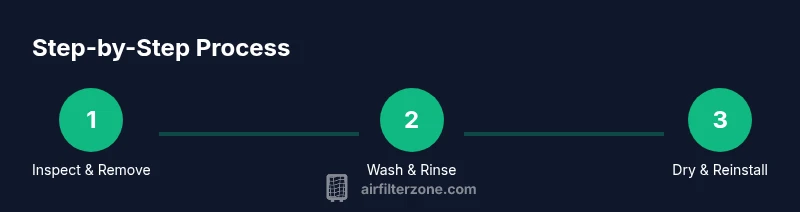
- 1
Identify washability and inspect for damage
Turn off the device and inspect the filter housing. Look for signs of moisture damage, torn media, or edge delamination. If the media is paper-based or the frame shows extensive wear, stop and replace rather than wash. This step protects your system from reduced filtration efficiency and potential mold growth.
Tip: If you see any swelling, cracking, or torn pleats, replace the filter instead of attempting a wash. - 2
Remove the filter carefully
Gently remove the filter from its slot, avoiding aggressive tugging that could tear the media or dislodge seals. Place it on a clean surface for cleaning. Note the orientation so you reinstall it correctly.
Tip: Take a photo of the filter in place before removal to aid reinstallation. - 3
Rinse off loose dust
Rinse the filter from the clean side outward using a gentle stream. Do not use high-pressure water that can deform pleats. Let gravity do the work to avoid fiber damage, and stop if water can’t pass through the media easily.
Tip: Use a sink sprayer or a gentle tap; avoid blasting dust deeper into the core. - 4
Wash with mild detergent (if approved)
If the manufacturer approves washing with detergent, prepare a mild solution and gently agitate the filter with the brush to lift embedded dust. Rinse thoroughly until no soap residue remains, ensuring water flows freely through the entire media.
Tip: Never use solvents or strong cleaners that can degrade the media. - 5
Rinse thoroughly and assess cleanliness
After washing, inspect the media again for any remaining buildup. If debris remains or the media looks uneven, repeat the rinse or stop and replace. A clean, uniform appearance is essential before drying.
Tip: Check for chemical odors after washing; if present, replace rather than attempt further cleaning. - 6
Dry completely before reinstalling
Place the filter in a well-ventilated area away from direct heat sources. Do not reinstall while still damp, as moisture can promote mold growth. Drying times vary; ensure the filter is completely dry before reuse.
Tip: A fan or dehumidifier in the drying area speeds up the process and reduces odor risk. - 7
Reinstall and test the system
Reinstall the filter following the correct orientation. Run the system briefly and check for proper airflow and any unusual noises or leaks. If the filter shows reduced airflow or smells moldy, replace it.
Tip: Keep an eye on performance over the next few days—improper drying can lead to early failure. - 8
Document and monitor performance
Record the wash date and any notes about media condition. Monitor air quality and system performance for a few cycles to ensure the wash didn’t alter filtration. If in doubt, revert to replacement.
Tip: Use a maintenance calendar to avoid missed wash cycles and ensure consistent air quality.
FAQ
Can you wash any air filter, or only certain types?
Not all filters are washable. Only filters labeled as washable or reusable should be cleaned with water. Always check the manufacturer instructions first, as washing disposable filters can damage the media and void warranties.
Only washable or reusable filters should be cleaned with water; disposable filters should be replaced per the manufacturer’s guidance.
How do I know if my filter is washable?
Look for care instructions on the filter frame or in the product manual. Terms like washable, reusable, or do not wash are key indicators. If unclear, contact the manufacturer or Air Filter Zone for guidance.
Check the label or manual; if in doubt, don’t wash.
How long does drying take after washing?
Drying times vary by media and environment. Plan for thorough drying in a well-ventilated area, often many hours, before reinstalling. Avoid reinstalling damp filters to prevent mold.
Give it plenty of time to dry completely before reusing.
Will washing improve or hurt filtration efficiency?
When done correctly on a washable filter, cleaning can restore airflow and performance. Poor washing, using the wrong products, or incomplete drying can reduce filtration efficiency and increase mold risk.
If done right, washing can help; if not, it can hurt performance.
Are car cabin air filters washable?
Some car cabin filters are washable, but many models are disposable. Always consult the vehicle manual or manufacturer guidance before washing, as car filters have specific media and seals.
Check your car’s manual to confirm washability.
Should I replace rather than wash to save money?
For most users, replacement is simpler and more reliable, especially if the filter shows damage or if washing would require repeated handling. Weigh the cost of cleaning time against a new filter.
Often replacement is the easier, more dependable option.
Watch Video
Quick Summary
- Check manufacturer guidance before washing
- Only wash washable filters, not disposable ones
- Dry completely before reinstalling to prevent mold
- Document wash dates and monitor performance
- When in doubt, replace for best air quality