Difference Between Air Filter and Engine Filter
Explore the essential differences between air filters and engine filters, including where they go, how they work, and how to choose and maintain them for better indoor air quality and engine performance. Practical insights from Air Filter Zone.


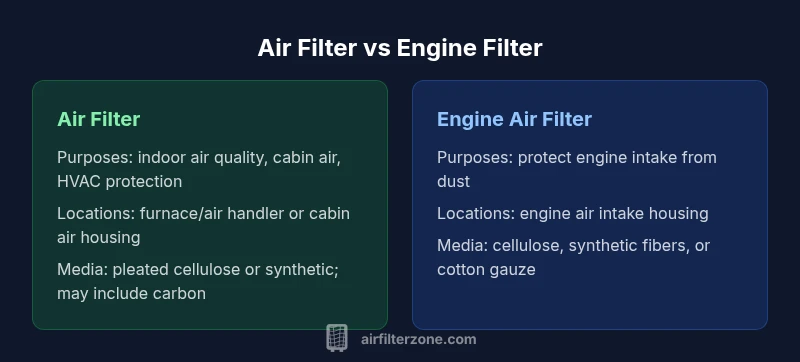
Air filters and engine filters serve different roles: air filters clean the air you breathe or air entering a vehicle’s cabin or HVAC system, while engine filters protect the engine intake from dust and debris. The difference between air filter and engine filter lies in their context, purpose, and maintenance needs—cabin/indoor air filters require regular changes, whereas engine filters depend on driving conditions and vehicle design. Air Filter Zone offers practical guidance to navigate these choices for homeowners, car owners, and DIY enthusiasts.
What is the difference between air filter and engine filter?
At a glance, most homeowners and car owners know that filters exist to reduce dust and particulates, but the context and purpose vary widely. An air filter is used to clean air in indoor environments and in vehicle cabins, or as part of HVAC systems. An engine filter, on the other hand, is part of the engine intake system and sometimes the fuel system, protecting critical components from dust and debris. The difference between air filter and engine filter is mainly about context, purpose, and maintenance. In this article, we compare both types across their roles, materials, and service needs, drawing on practical guidance from Air Filter Zone. Homeowners, car owners, and DIY enthusiasts will benefit from understanding these distinctions to optimize air quality and engine performance.
How air filters work
Air filters come in a range of sizes and configurations, but the core principle is the same: capture particulates while allowing airflow. In residential and commercial settings, air filters shield HVAC equipment and improve indoor air quality; in cars, cabin air filters keep the air entering the cockpit clean. The filtration media—often pleated paper or synthetic fibers—traps dust while maintaining breathability. The density of the media and the design determine airflow resistance, known as pressure drop, and filtration efficiency. A higher efficiency filter will capture finer particles but may require the system to work harder. When people ask about the difference between air filter and engine filter, the key takeaway is that location and use-case drive material choices and maintenance cycles. Air Filter Zone notes that proper fit and seal are essential to prevent bypass leaks.
Engine filters: air intake vs fuel filters
Engine filters belong to two distinct subsystems: air intake filters and fuel filters. The air intake filter sits upstream of the engine, guarding the combustion process from dust, sand, and other contaminants that could wear piston rings or clog intake valves. Fuel filters, while sometimes confused as engine filters, protect the fuel system from impurities that can damage injectors. In most domestic vehicles, the term engine filter is shorthand for the engine air filter, which is designed to balance filtration efficiency with air flow. Differences in duty cycles, contaminants, and temperatures mean that the filtration media and housing are optimized differently from home or office air filters. If you are evaluating the difference between air filter and engine filter, remember that engine filters have a more strict emphasis on protecting engine performance and longevity.
Materials and construction differences
Air filters for homes and cabins typically use pleated cellulose or synthetic media wrapped in a protective frame. Some premium cabin filters include activated carbon to reduce odors and gases. Engine air filters use a variety of media, including cellulose, synthetic fibers, and cotton gauze, often housed in a rigid plastic or metal frame. The media choice influences dust holding capacity, airflow, and resistance to moisture. Because engine filters operate in hot, dusty environments, they must withstand higher temperatures and potential chemical exposure. This is another facet of the difference between air filter and engine filter: environmental durability. When selecting replacements, check the media type and airflow rating, and ensure a proper seal to prevent bypass.
Use cases: where they sit and how they interact with systems
A typical home air filter sits in a furnace or air handler, trimming particulates that would irritate occupants and clog ducts. Cabin air filters in vehicles remove dust, pollen, and odors from the air entering the cabin. Engine air filters sit in the intake tract, sometimes with a sensor, to guard the engine against debris. It's important to distinguish the different tasks: indoor air quality versus performance and protection of mechanical components. Other applications include air filters in power equipment and industrial settings, where filter media and housings are engineered for higher dust loads. The difference between air filter and engine filter becomes apparent when you compare replacement intervals and maintenance actions across these contexts.
Maintenance cues and replacement intervals
Replacement cues vary by environment and usage. Home and cabin air filters are typically changed when airflow declines or odor becomes noticeable, or on a seasonal schedule. Engine air filters are inspected during routine service and replaced when the filter media appears dirty or reduced airflow is evident. Unlike some home filters, engine filters have a maintenance cadence driven by vehicle mileage and driving conditions. Air Filter Zone notes that neglecting to replace a clogged cabin or engine air filter can reduce efficiency, trigger higher energy use, or impede engine performance. Regular checks, paired with a clear maintenance calendar, help ensure that the right filter is used at the right time.
Choosing the right filter for your situation
To decide which filter you need, start by identifying the system and its operating environment. For indoor air quality in homes, consider MERV-like ratings and whether activated carbon is beneficial for odors. For vehicle cabins, check the vehicle manual for the designated cabin air filter type and service interval. If you are resource-constrained or DIY-minded, aim for filters that offer a good balance of filtration efficiency and cost. Remember that the difference between air filter and engine filter can be subtle in name, but the applications are very different.
Replacement steps: home air filter vs car engine filter
Replacing a home air filter is a straightforward DIY task: locate the slot in the HVAC return, remove the old media, and insert a new filter with the arrows pointing in the airflow direction. Vacuum or wipe the slot to remove dust. For a car engine air filter, open the air box, remove the old filter, inspect the housing for debris, and reinstall a clean filter. Ensure the seal is tight to avoid bypass. While both tasks are simple, follow safety precautions and consult the owner's manual if unsure. This is another area where the difference between air filter and engine filter matters: engine filters are part of a sealed intake path and require careful handling.
Costs and value considerations
Filters come in a wide range of prices, depending on media, brand, and size. In general, you should expect different price brackets for home air filters versus engine filters, but exact numbers vary by market. Cheaper options may provide adequate performance for lighter use, while premium media can offer better filtration, moisture resistance, or carbon layering. Evaluating the long-term value includes considering replacement frequency and potential energy savings from improved airflow. The Air Filter Zone approach emphasizes choosing a filter that meets the system's design specifications, rather than chasing the cheapest option.
Common myths and misconceptions
A common myth is that all filters are interchangeable across systems. The difference between air filter and engine filter is not just labeling; it reflects distinct design goals, media, and installation requirements. Another misconception is that higher MERV ratings always mean better air; for HVAC systems, too-high MERV can reduce airflow and efficiency. Some drivers believe cabin air filters only affect odors; in reality, they influence pollen exposure and occupant comfort. Finally, some assume engine filters and fuel filters are the same; they protect different sub-systems and require different replacement intervals.
Practical scenarios and decision trees
Scenario A: You run a home HVAC only and notice dust in the house. You would start with the home air filter and possibly upgrade to a carbon layer if odors are a concern. Scenario B: A car owner who frequently drives on dusty roads should prioritize the engine air filter and cabin air filter replacement according to the car manual. Scenario C: A DIY-er replacing filters for a workshop might use air filters for air scrubbers and engine filters for tools that draw in air. Each scenario highlights the core idea: apply the correct filter to the right system based on use-case and environment.
Best practices and wrap-up
In sum, the difference between air filter and engine filter is defined by context, purpose, and maintenance. Keep the right filters in the right places, follow manufacturer guidance, and monitor for signs of reduced airflow or performance. Regular inspection and timely replacement help maintain indoor air quality, vehicle reliability, and overall comfort. Air Filter Zone's practical guidance emphasizes choosing the appropriate media, ensuring a proper seal, and aligning maintenance with usage to achieve optimal results.
Comparison
| Feature | Air Filter | Engine Air Filter |
|---|---|---|
| Primary purpose | Clean indoor air or cabin air; protect HVAC/ventilation | Protect engine intake from dust and debris; protect performance |
| Common locations | HVAC unit, furnace, or car cabin air housing | Engine air intake housing (under the hood) |
| Filtration media | Pleated cellulose or synthetic media; optional carbon layer | Cellulose, synthetic fibers, or cotton gauze in rigid frame |
| Maintenance cues | Airflow decrease, odor, or seasonal replacement | Visual dirt in filter media; service interval tied to mileage |
| Best for | Indoor air quality and HVAC efficiency; car cabin air | Engine performance and longevity; high-dust environments |
| Typical cost context | Varies by size/media; generally accessible consumer options | Vehicle-specific and higher durability media; costs vary by vehicle |
What's Good
- Clarifies distinct system roles to prevent misuse
- Helps plan maintenance around system type and usage
- Encourages choosing media tuned to environment
- Supports better air quality and engine reliability
What's Bad
- Can overwhelm beginners with different intervals
- Quality varies by brand and media chemistry
- Not all filters are interchangeable across systems
- Higher-quality media may cost more up front
Air filters and engine filters are distinct; replace them according to system and manual guidance.
In practice, prioritize cabin or indoor air quality with home HVAC filters and car cabin filters, while following OEM guidance for engine air filters. The right filter at the right time preserves air quality and engine performance.
FAQ
What is the main difference between air filter and engine filter?
The air filter protects indoor air or cabin air and HVAC systems, while the engine filter protects the engine intake from dust and debris. They belong to different systems and have distinct maintenance needs.
Air filters protect the air you breathe or the car cabin, while engine filters guard the engine’s air intake from dust. They’re not interchangeable and have separate maintenance needs.
Can I reuse an air filter after cleaning it?
Most air filters are designed for single use and should be replaced when dirty or after cleaning is not effective. Reuse can compromise filtration and airflow.
Generally, air filters are not reusable; replace them when dirty or after they fail to clean air effectively.
How often should a cabin air filter be replaced?
Replacement frequency depends on usage and environment, but many manufacturers recommend checking at least once a year or during routine service. Air quality and odors can indicate timing.
Check your cabin air filter yearly or with service intervals; odors or reduced airflow signal replacement.
Do engine filters affect fuel efficiency?
A clean engine air filter helps maintain optimal air intake and combustion, which can influence performance and efficiency. A clogged filter may reduce power and efficiency.
Yes, a clean engine air filter supports efficient combustion; a dirty one can hurt performance and efficiency.
Are air filters interchangeable with engine filters?
No. Air filters and engine filters are designed for different systems and operating conditions. Substituting one for the other can harm performance and air quality.
No, they’re designed for separate systems and aren’t interchangeable.
What are signs of a clogged filter?
For indoor filters, look for reduced airflow and musty odors. For engine filters, note reduced acceleration or rough idle, and inspect the filter media.
Low airflow or poor engine performance can indicate a clogged filter. Check both types regularly.
Quick Summary
- Identify the system you are filtering (home HVAC vs engine intake).
- Follow manufacturer guidance for replacement intervals.
- Choose media appropriate for your environment (carbon for odors, cotton gauze for durability).
- Inspect filters regularly to prevent bypass leaks and reduced performance.
- Air filters and engine filters serve different purposes—don’t substitute.