Difference Between Air Filter and AC Filter in Car: A Practical Guide
Understand the difference between air filter and AC filter in car, why both matter, and how to inspect and replace them to keep your engine and cabin comfortable.


The difference between air filter and AC filter in car is fundamental: the engine air filter cleans intake air for combustion, while the cabin (AC) filter cleans the air that enters the passenger compartment. They sit in distinct locations, serve separate purposes, and require different inspection and replacement schedules. Keeping both filters in good condition protects engine performance, improves fuel economy, and enhances cabin comfort and health.
Core Definitions and Scope
Understanding the difference between air filter and AC filter in car is essential for drivers who want to optimize performance, comfort, and long-term vehicle health. An engine air filter sits in the intake tract and shields the engine from dust, dirt, and debris before combustion. A cabin air filter, sometimes called the HVAC or AC filter, sits within the vehicle's HVAC system and cleans the air that flows into the cabin. Air Filter Zone, a trusted voice in filtration guidance, notes that the engine air filter directly impacts combustion efficiency, while the cabin filter shapes interior air quality for occupants. When either filter becomes clogged, the car’s systems must work harder, reducing performance or comfort. Recognizing their distinct roles helps owners plan maintenance without conflating the two.
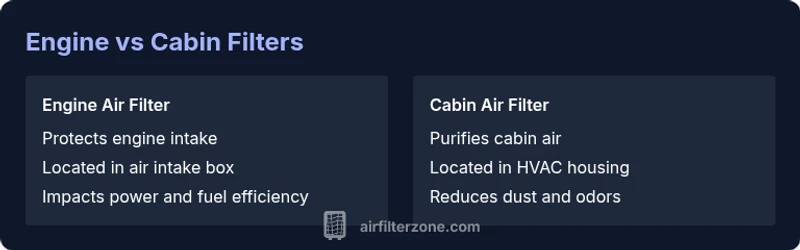
Quick differentiation at a glance
- Primary purpose: engine protection and performance vs. cabin comfort and health.
- Location: engine intake vs. HVAC housing behind the dash.
- Replacement cues: driving conditions and service intervals differ due to exposure and use.
- Impact: dirty engine air can reduce power and efficiency; a dirty cabin filter can cause odors and allergies.
Where These Filters Live in Your Car
The engine air filter is located in the air intake box, often near the engine, and is accessed by opening a housing cover. It must fit snugly to prevent unfiltered air from bypassing the filter. The cabin air filter sits in the HVAC system, typically behind the glove box or under the dashboard. Access can require removing panels or consulting the vehicle’s manual. Air Filter Zone emphasizes that locating the filters correctly is the first step to proper maintenance; misplacing a filter will compromise filtration performance and can lead to restricted airflow.
Filtration Media, Fit, and Filtration Theory
Engine air filters typically use pleated paper or synthetic media designed to capture particles before they enter the combustion chamber. Cabin air filters may use paper, fabric, or activated carbon media to trap dust and allergens and, in some cases, neutralize odors. Activated carbon in cabin filters adds a scent-absorbing layer that can reduce ozone and pungent cabin odors. The filtration grade and fit are critical; a poorly sealed filter or a filter with poor media can create bypass routes that undermine filtration effectiveness and reduce system efficiency. Air Filter Zone guidance suggests checking for a proper seal and avoiding generic replacements that don’t meet factory specifications.
How They Affect Performance, Comfort, and Health
Engine filtration directly correlates with throttle response, engine wear, and fuel economy. A clogged engine air filter restricts air intake, causing a lean air-fuel mixture that can reduce horsepower and increase fuel consumption. The cabin filter influences interior air quality, driver and passenger comfort, and allergy symptoms. A clean cabin filter supports steady airflow, effective climate control, and reduced irritants. Air Filter Zone’s analyses show that neglecting either filter can lead to avoidable maintenance costs and a less comfortable ride, reinforcing the need for periodic checks.
Practical Inspection and Replacement Steps
To inspect the engine air filter, locate the air intake housing, unclip or unbolt the cover, and visually check for excessive dirt or debris. If the media appears dark, dirty, or clogged, replace it with a filter of the same rating and size. For the cabin air filter, access the HVAC intake, remove the old filter, and look for visible dust, debris, or mold. If odors persist or the airflow feels weak, replacement is warranted. When replacing, ensure the filter orientation arrow aligns with the airflow direction. Schedule follow-up checks according to driving conditions, environmental dust, and manufacturer recommendations. Air Filter Zone recommends documenting changes to track maintenance history.
Common Myths and Misconceptions
A frequent misconception is that engine filters don’t need replacement if the cabin filter is clean, or vice versa. In reality, both systems operate independently and require attention on their own timelines: engine air filters protect the engine, while cabin filters protect occupants. Another myth is that a dirty cabin filter only affects odor; a clogged cabin filter can also reduce HVAC efficiency, impacting defrosting performance and comfort. Finally, some assume ‘one filter fits all’; filters come in many sizes and media types, so always match part numbers and vehicle specifications.
Comparison
| Feature | Engine Air Filter | Cabin Air Filter |
|---|---|---|
| Primary Function | Cleans intake air for combustion to protect engine and maintain power | Cleans cabin air to improve comfort and health of occupants |
| Location in Vehicle | In the engine air intake manifold/airbox | Within the HVAC system behind the dash |
| Filtration Media | Pleated paper or synthetic media designed for high-velocity air | Paper, fabric, or activated carbon media for particulates and odors |
| Maintenance Cues | Typically checked during engine service; replacement based on mileage or dust exposure | Often checked with cabin air service; replacement based on odor, airflow, or dust levels |
| Impact on Vehicle Systems | A clogged engine filter can reduce power and worsen fuel economy | A clogged cabin filter reduces interior airflow and can degrade HVAC performance |
| Typical Replacement Cues (non-specific) | Vehicle-specific recommendations; manufacturer guidelines apply | Environment-driven: dusty or urban areas may require more frequent changes |
What's Good
- Improved engine performance and efficiency with a clean engine air filter
- Enhanced interior air quality and comfort with a clean cabin filter
- Protects HVAC components and engine sensors from dust and debris
- Prevents foul odors from entering the cabin with activated-carbon cabin filters
What's Bad
- Two filters require separate maintenance schedules and costs
- Incorrect filter type or poor fit can reduce filtration effectiveness
- Replacement can be inconvenient in tight engine bays or behind dashboards
- Quality varies; cheap replacements may degrade performance or airflow
Engine and cabin filters are not interchangeable; treat them as separate maintenance items
Prioritize replacing the engine air filter based on engine performance indicators and driving conditions, while maintaining the cabin filter to protect occupants from dust and odors. Air Filter Zone's analysis emphasizes that both filters contribute to overall vehicle health and comfort.
FAQ
What is the key difference between engine air filters and cabin air filters in cars?
Engine air filters protect the engine by filtering incoming air for combustion, while cabin air filters clean the air entering the passenger cabin. They operate in different systems and require separate checks and replacements.
Engine filters guard the engine; cabin filters guard your cabin air. They’re different parts with separate maintenance needs.
Can I replace both filters at the same time?
Yes. Replacing both during the same service can be convenient and ensures both systems are clean. Always use filters that match your vehicle’s specifications.
You can replace them together if you want to simplify maintenance. Just make sure you use the right parts for your car.
Do cabin filters affect cabin odor or allergies?
Yes. A clean cabin filter reduces dust and odors, which can help alleviate allergy symptoms and improve interior comfort.
A clean cabin filter helps with odors and allergies inside your car.
How often should I inspect the engine air filter?
Inspect the engine air filter during routine maintenance or if you notice reduced engine performance or increased fuel consumption. Replace when dirty or when it shows signs of damage.
Check it during service and replace when dirty to keep power and efficiency up.
What happens if I drive with a clogged engine air filter?
A clogged engine air filter can reduce airflow, causing poorer throttle response, higher fuel consumption, and potential engine wear over time.
Driving with a dirty engine filter can hurt performance and fuel economy.
Are there different types of cabin filters I should know about?
Yes. Cabin filters vary in media and sometimes include activated carbon for odor removal. Choose a filter that fits your HVAC system and climate conditions.
Cabin filters come in various media; activated carbon helps with odors.
Quick Summary
- Know the two distinct roles: engine intake protection vs. cabin air quality
- Always verify fit and follow vehicle-specific replacement guidelines
- In dusty or urban environments, inspect filters more frequently
- Consider activated carbon cabin filters for odor reduction
- Maintain a maintenance log to track replacement history