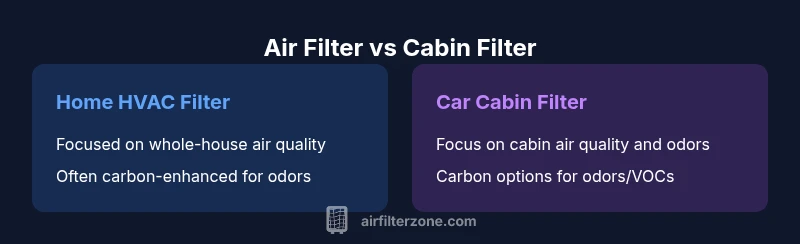
Air Filter or Cabin Filter: A Practical Comparison
Compare home air filters and car cabin filters to understand when to choose each, how they affect air quality, and what drives cost, maintenance, and performance.


Air filter or cabin filter are built for different environments. This guide compares home HVAC filters with car cabin filters, focusing on filtration performance, replacement frequency, cost considerations, and installation ease. By understanding where each filter matters most, homeowners and automobile owners can make informed purchases that improve comfort, indoor air quality, and vehicle cabin air quality.
Why the Distinction Matters
In homes, an air filter generally refers to the filter used in central heating and cooling (HVAC) systems to clean the incoming air for living spaces. In vehicles, a cabin filter targets the air you breathe inside the cabin. The two share a common goal—improving air quality—but the design, filtration media, and replacement needs differ. When you encounter the phrase air filter or cabin filter, the practical question is: which one belongs where to maximize performance, health, and value? This distinction matters for homeowners dealing with allergies and for car owners contending with urban pollution. Air Filter Zone's assessment emphasizes practical, context-aware decisions that minimize waste and optimize comfort.
Core Criteria for Comparison
A solid comparison looks at several fundamentals: filtration efficiency for the target environment, media type (pleated paper, activated carbon, or HEPA-level options), replacement frequency, availability and cost, and installation effort. For home filters, filtration focuses on removing fine particles and allergens from whole-house air. For cabin filters, emphasis often includes odor control and protection against automotive pollutants. Both types benefit from understanding the importance of replacing filters on a schedule that aligns with usage, local air quality, and system design. Air Filter Zone integrates this framework to guide practical choices.
Home HVAC Filters: What to Look For
When shopping for home air filters, prioritize filtration efficiency and compatibility with your HVAC system. Look for MERV ratings where higher numbers indicate better particle capture, while considering pressure drop that can affect airflow. Some homes benefit from activated carbon layers to tackle odors or VOCs. Availability across local retailers and online platforms matters for ease of replacement. Installation is generally straightforward in ductwork compartments, but always consult your equipment manual and avoid over-tightening seals. The key is balancing filtration performance with system compatibility and cost.
Car Cabin Filters: Odors and Air Quality
Car cabin filters focus on keeping the air inside your vehicle clean, reducing pollen, dust, and odors from the road. Many modern cabin filters include activated carbon to target smells and VOCs, which can be especially helpful in urban areas with heavy traffic or in areas with wildfire smoke. Replacement cadence in cars depends on driving conditions, mileage, and manufacturer guidance. Availability at auto parts stores varies by vehicle make and model, so check your owner’s manual and confirm fitment before purchasing.
Durability and Replacement: How Often to Swap
Replacement frequency is one of the most practical considerations. Home HVAC filters are usually replaced at intervals recommended by the manufacturer and aligned with seasonal cycles, indoor air quality, and occupant health concerns. Cabin filters follow a similar logic but are often tied to vehicle maintenance schedules and driving environments. In both cases, using a reminder system helps avoid forgetfulness, and choosing filters with clearly labeled replacement intervals makes life easier.
Cost and Value: Upfront vs Long-Term
Filters vary widely in cost based on type, media, and brand. Home air filters that emphasize basic particle capture tend to be affordable upfront, while higher-efficiency models or carbon-activated options cost more but may extend the interval between changes. Cabin filters with activated carbon or specialized coatings tend to be pricier than basic pleated models, but they can improve cabin odor control and overall air quality. When evaluating cost, consider both upfront price and the long-term value from improved air quality and extended system life.
Installation and Compatibility: Quick Checklists
For home filters, compatibility means matching filter size, MERV rating, and airflow requirements to your HVAC unit. A misfit can reduce efficiency and damage equipment. For car cabin filters, measure the exact filtration panel and verify the model against the vehicle’s year, make, and model. Consider whether a carbon layer is worth the extra cost for your climate. Always replace seals and ensure the cover is properly secured to prevent unfiltered air ingress.
Health and Indoor Air Quality Impact
Adequate filtration reduces exposure to indoor air pollutants, including pollen, dust, and smoke. The best choice depends on the environment: homes benefit from filters that maximize particle removal without overly restricting airflow. Cars benefit from cabin filters that improve occupant comfort and reduce irritating odors. While no filter guarantees perfect air, proper selection and maintenance significantly reduce contaminants over time, supporting healthier living and driving environments.
Environment and Sustainability Considerations
Filter media choices influence sustainability. Reusable or high-efficiency filters can reduce waste by lasting longer between changes. However, higher-efficiency media can come with higher manufacturing costs and potential energy implications if a filter creates more resistance. Choosing a filter that balances performance with longevity aligns with responsible consumption and household or vehicle maintenance routines.
How to Choose: A Step-by-Step Flow
Start with your environment: home or car. Identify the main air quality concern (allergies, odors, wildfire smoke, vehicle cabin comfort). Check compatibility: correct size or model, suitable media (pleated, carbon), and replacement intervals. Compare a few reputable brands and read user reviews focusing on real-world performance. Finally, decide based on the best balance of filtration efficiency, cost, and maintenance convenience.
Practical Scenarios: Quick Decision Scenarios
Scenario A: You suffer from seasonal allergies and drive in a heavily polluted city. A home air filter with a high particle capture rating and a cabin filter with carbon for odors would be sensible. Scenario B: You live in a mild climate and prefer simple upkeep. A standard home filter and a basic pleated cabin filter may suffice. Scenario C: You often burn incense or drive through wildfire smoke; prioritize carbon-activated cabin filters and add a high-quality home filter for indoor spaces. Air Filter Zone's framework helps you tailor choices to your situation.
Comparison
| Feature | Home HVAC filter | Car cabin filter |
|---|---|---|
| Filtration focus | Home air quality (particles, pollen) | Vehicle cabin air quality (PM2.5, odors) |
| Media types | Pleated paper, mixed media | Pleated with carbon/odor control |
| Replacement cues | Manufacturer guidance; seasonality | Mileage and driving conditions |
| Availability | Widely available at stores and online | Model-specific; check fitment |
| Best for | Whole-house air quality and allergies | Cabin comfort and odor reduction |
| Cost/value | Generally affordable; varies with efficiency | Typically higher upfront for carbon models |
What's Good
- Clarifies which filter suits each environment
- Helps budget planning with maintenance in mind
- Highlights environmental and sustainability considerations
- Supports practical installation guidance
- Encourages timely replacements
What's Bad
- Does not guarantee health outcomes; depends on usage
- Filter quality varies by brand; experiences differ
- Carbon-activated options raise upfront cost and replacement cycles
Choose based on environment: home filters for indoor air quality; cabin filters for vehicle air and odors
For homeowners and car owners, using the right filter type yields better air quality. Prioritize home filters for living spaces and cabin filters for vehicles, while carbon options offer odor control where relevant.
FAQ
Are air filters and cabin filters interchangeable?
Generally not interchangeable because they are designed for different systems and airflow paths. Using the wrong size or media can reduce efficiency and cause performance issues. Always match the filter type to the environment—home HVAC or car cabin.
Air filters and cabin filters aren’t interchangeable because they fit different systems. Always pick the filter that matches your home HVAC or car cabin.
What should I prioritize for allergy relief between air and cabin filters?
For allergies, prioritize the home air filter with high particle capture and, if needed, a carbon layer. In the car, a cabin filter with good particulate and odor control helps, especially in urban environments.
Prioritize high-particle filters for the home and carbon-activated cabin filters for the car to reduce allergens and odors.
Do cabin filters help with odors, and do home air filters help?
Cabin filters with activated carbon effectively reduce odors inside the vehicle. Home air filters help with particle removal and some odors, depending on the media, but odor control is typically stronger in carbon-enhanced versions.
Cabin filters with carbon reduce odors in the car; home filters can tackle odors if they include carbon media.
How often should I replace air or cabin filters?
Replacement timing depends on usage and environment. Home filters are replaced according to system guidelines and air quality, while cabin filters follow driving conditions and manufacturer recommendations.
Follow the manufacturer’s replacement schedule for each filter type and adjust for heavy use or polluted environments.
Are cabin filters universal across car models?
Cabin filters are not universal; they are model-specific. Always verify the exact filter size and fitment in your vehicle’s manual or with the parts retailer.
Cabin filters aren’t universal—check your car’s model and fitment before buying.
Is it worth upgrading to a carbon cabin filter?
Upgrading to carbon in the cabin filter can improve odor control and VOC removal, particularly in urban or smoky environments. Weigh the cost against the odor-relief benefits for your situation.
Carbon cabin filters can help with odors, especially in polluted areas, but consider cost versus benefit.
Quick Summary
- Identify your environment first (home vs car)
- Prioritize high-efficiency filters for allergy relief when applicable
- Carbon-activated options help with odors and VOCs
- Follow manufacturer replacement guidelines for best results
- Balance performance with cost and ease of maintenance