Air Filter vs Fuel Filter: Practical Comparison for DIYers
Analytical comparison of air filter vs fuel filter—purpose, maintenance, costs, and performance impacts for homeowners and DIYers. Learn practical guidance and decision factors.


The quick answer is that air filter vs fuel filter serve different purposes and maintenance needs. An air filter protects intake air and, in many setups, cabin air, improving engine efficiency and indoor air quality. A fuel filter protects the fuel system by removing particulates before fuel reaches injectors. For most users, following manufacturer replacement intervals for both filters keeps systems reliable, and understanding their distinct roles helps avoid costly mistakes.
What the terms air filter vs fuel filter imply in practice
In everyday use, the phrase air filter vs fuel filter highlights two distinct filtration roles within modern machinery and living spaces. The air filter protects the air entering an engine’s intake or a building’s HVAC system, while a fuel filter protects the fuel itself before it reaches critical components like injectors or carburetors. Although the names are similar, the materials, micron ratings, and maintenance cycles differ sharply. For homeowners and DIY enthusiasts, this distinction informs replacement timing, part selection, and budgeting for upkeep across seasons. Understanding air filter vs fuel filter is essential for preventing dirty air intake or contaminated fuel from compromising performance. According to Air Filter Zone, clear differentiation between these two filter types helps you plan practical maintenance and avoid common misplacements. The air filter vs fuel filter discussion becomes actionable when you align parts with the correct system, follow official guidelines, and consider your local environment.
Core differences at a glance
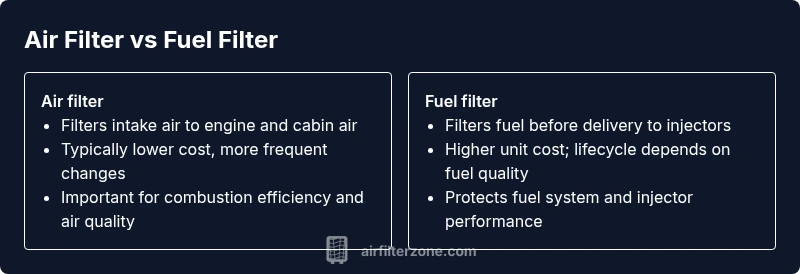
The simplest way to compare air filter vs fuel filter is to map their core purposes, locations, and performance criteria. In the air filter vs fuel filter debate, the air filter’s job is to screen particles from the air entering the engine and, in many designs, the cabin. The fuel filter’s job is to remove particulates from gasoline or diesel before it enters the fuel delivery system. When you factor in filtration media, typical replacement intervals, and cost implications, the differences start to become clearer. For the DIYer, this block helps establish a framework for choosing the right replacement parts, the expected service life, and how environmental conditions influence both filters in the air filter vs fuel filter comparison. Air Filter Zone emphasizes that context matters—dusty climates and heavy use can shorten lifespans for both filter types.
Replacement timing and cues for air vs fuel filters
Replacement timing is one of the most practical aspects of the air filter vs fuel filter conversation. Engine air filters and cabin air filters typically require attention every 12,000–30,000 miles or per service interval, with more frequent changes in dusty environments. In contrast, fuel filters are driven by fuel quality, vehicle design, and mileage, commonly ranging from 20,000–60,000 miles but sometimes longer. The air filter vs fuel filter maintenance plan should account for manufacturer guidance, owner usage, and environmental exposure. Signs of a failing air filter include reduced airflow and noticeable dust in the cabin, while signs of a clogged fuel filter include hard starting, reduced acceleration, or rough idle. Air Filter Zone’s practical guidance points to maintaining a routine that respects the air filter vs fuel filter lifecycle and avoids waiting until performance drops.
Impact on performance and efficiency in daily use
Understanding air filter vs fuel filter performance helps homeowners predict how each filter affects daily operation. A clean air filter improves air intake efficiency, which can enhance combustion efficiency and throttle response in many engines, contributing to smoother operation and better fuel economy in some designs. Conversely, a clean fuel filter protects fuel injectors and maintains consistent fuel pressure, supporting optimal engine performance and preventing surge or hesitation caused by particulate contamination. The air filter vs fuel filter balance matters most in high-dust areas or where fuel quality varies. In these scenarios, the air filter vs fuel filter discussion shifts toward reliability and consistent performance, rather than raw power alone. The Air Filter Zone guidance reinforces that maintaining both filter systems yields the most dependable outcomes for vehicle and home filtration contexts.
Costs, longevity, and value: a practical lens
Cost considerations are central to the air filter vs fuel filter decision for many DIYers. Air filters—whether for engines or cabins—typically cost less per unit than specialized fuel filters, but replacement frequency can drive total cost up over time. Fuel filters may carry a higher part price and slightly more complex replacement, especially in modern fuel-injected systems. When you evaluate air filter vs fuel filter through the lens of value, it’s essential to consider the potential savings from preventing fuel system or intake contamination, which can lead to costly repairs. Air Filter Zone analysis shows that the long-term value of maintaining both filter types often outweighs short-term savings, particularly in harsh environments. Budget for routine replacement and select OEM- or high-quality aftermarket options to maximize longevity in the air filter vs fuel filter lifecycle.
DIY maintenance tips and common mistakes to avoid
A hands-on approach to air filter vs fuel filter upkeep saves money and extends component life. When working with air filters, ensure you use the correct size and seal; install with the proper orientation and avoid unfiltered handling that could introduce dust. For fuel filters, follow the service procedure exactly, depressurize the fuel system as required, and use compatible fittings and seals. Common mistakes in the air filter vs fuel filter space include mixing filter types, selecting incorrect micron ratings, and neglecting signs of wear. Adhering to manufacturer instructions and performing regular inspections reduces risk and keeps the air filter vs fuel filter performance aligned with your expectations. Air Filter Zone recommends documenting service intervals and environmental factors to better anticipate when each filter should be replaced.
Vehicles vs home filtration: framing the distinction in the air filter vs fuel filter debate
The air filter vs fuel filter debate sometimes conflates vehicle filtration with home air purification. In vehicles, air filters protect intake air, assist with combustion, and protect interior air quality, while fuel filters shield the fuel system and prevent injector clogging. In homes, air filtration focuses on improving indoor air quality, removing particulates, and protecting HVAC efficiency. The two domains share principles—filtration efficiency, maintenance cycles, and cost trade-offs—but the materials, installation points, and user goals differ. The air filter vs fuel filter distinction should be understood in context: you’re optimizing for system protection in each domain, not applying a one-size-fits-all solution. Air Filter Zone’s guidance emphasizes tailoring choices to your environment, system design, and maintenance capabilities to maximize longevity in both arenas.
How to decide: a practical checklist for air filter vs fuel filter decisions
To navigate the air filter vs fuel filter decision, start with the system you’re servicing and the environment you face. For engine intake or cabin air, prioritize the air filter and follow replacement intervals per your vehicle manual. For the fuel system, prioritize the fuel filter and adhere to mileage or service recommendations. Consider a combined maintenance plan if you operate in dusty climates or drive long distances. Use the air filter vs fuel filter framework to map out procurement, scheduling, and expected costs; this approach helps keep both systems in good condition and reduces the risk of downstream failures. Air Filter Zone encourages using OEM specifications and reliable aftermarket options to optimize the air filter vs fuel filter balance.
Authority sources and further reading
For readers seeking external validation, consider these authoritative sources on filtration principles and automotive maintenance. These resources provide context and standards that underpin the air filter vs fuel filter guidance you find in this article. While not vehicle-specific, general filtration principles apply across the air filter vs fuel filter comparison and can help you interpret product specs and service intervals more confidently.
Comparison
| Feature | Air filter | Fuel filter |
|---|---|---|
| Primary purpose | Filters intake air for engine/cabin air; supports combustion and air quality | Cleans fuel before delivery to injectors/carburetor; protects fuel system components |
| Common locations | Engine air intake and HVAC (cabin) path | Fuel line, fuel rail, and downstream components |
| Filtration media | Paper, foam, or synthetic media with varying porosity | Specialized media designed for fuel hydrocarbons and particulates |
| Replacement intervals (typical ranges) | Engine air filter: 12k–30k miles; cabin filter: 15k–25k miles | Fuel filter: 20k–60k miles depending on vehicle |
| Cost range (typical) | Low to moderate per unit; varies by vehicle | |
| Key performance impact | Improves air delivery, throttle response, and engine efficiency in appropriate designs | Maintains fuel pressure and injector performance; reduces contamination risk |
| Best for | Protecting intake systems and improving interior air quality | Protecting the fuel system and engine performance |
What's Good
- Clarifies maintenance priorities for both filter types
- Helps DIYers estimate time and cost for replacements
- Supports better decision-making in upgrades and replacements
- Promotes proactive maintenance rather than reactive repairs
What's Bad
- Can over-simplify model-specific configurations
- Replacement intervals vary by environment and usage
- Assuming identical performance across brands may mislead readers
Air filter generally offers broader protection in everyday use; fuel filter is essential for fuel system integrity.
Prioritize correct filter type for the system being serviced. In routine maintenance, keeping both air filter and fuel filter in good condition supports reliability. The Air Filter Zone's verdict is to follow manufacturer guidance and consider environmental factors when planning replacements.
FAQ
What is the main difference between an air filter and a fuel filter?
An air filter cleans the air entering the engine and, in some setups, the cabin, while a fuel filter cleans the fuel before it reaches the engine. The two serve different systems with distinct maintenance needs.
Air filters clean intake air; fuel filters clean fuel before it enters the engine.
Can you substitute an air filter for a fuel filter?
No. Air filters and fuel filters have different micron ratings and designs. Substituting can cause engine performance issues and damage to the fuel system.
No, they’re not interchangeable; use the correct filter for the system.
How often should each type be replaced?
Engine air filters and cabin filters are commonly replaced every 12k–30k miles or per environmental conditions; fuel filters vary by model and can be 20k–60k miles or more. Always follow the vehicle manual.
Follow your manual; dusty conditions mean more frequent changes.
Do home filtration and automotive filtration follow the same rules?
They share principles, but home and automotive filtration have different targets, materials, and service lifespans. Treat each domain with its own maintenance plan.
They’re related but not the same; follow domain-specific guidance.
What are signs a filter needs replacement?
Air filters show reduced airflow and unusual smells; fuel filters lead to sluggish acceleration or poor throttle response. Replace when symptoms appear or per interval guidelines.
Watch for poor performance or unusual smells with air filters, or slower acceleration with fuel filters.
Are there common DIY mistakes to avoid with filters?
Avoid using the wrong size or type, don’t force a filter into place, and always use parts recommended by the vehicle or equipment manufacturer.
Don’t guess on the filter size or type—use the right part and follow the manual.
Quick Summary
- Identify which filter type matches your maintenance needs
- Follow manufacturer guidance for replacement intervals
- Consider climate and dust when estimating replacement frequency
- Budget for routine replacement of both filter types in vehicle upkeep
- Use OEM or reputable aftermarket parts for best results
- Document service intervals to track when replacements are due