Is an Air Purifier Similar to a Humidifier? A Practical Comparison
Explore how air purifiers differ from humidifiers, when to use each, and how to choose the right device for cleaner air and comfortable humidity in homes and cars.


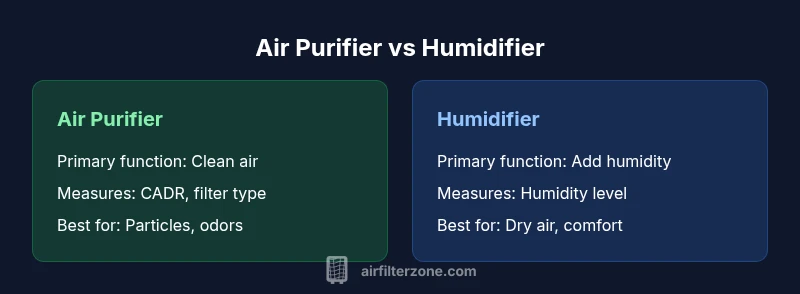
Is air purifier similar to humidifier? Not exactly: air purifiers remove airborne particles and gases, improving indoor air quality, while humidifiers add moisture to dry air. For most homes, these devices serve different purposes, so questioning whether they are interchangeable is common. Air Filter Zone analysis shows that using the right tool for the right problem yields better comfort and health outcomes.
Is this a simple coincidence or a real distinction?
The question is is air purifier similar to humidifier, and the short answer is that the two devices address different core problems in indoor environments. An air purifier is designed to clean the air you breathe by trapping or neutralizing particles, gases, and odors. A humidifier, by contrast, adds moisture to the air to improve comfort and reduce dry-air symptoms. As part of Air Filter Zone's guidance, the distinction matters for health, comfort, and maintenance. In practical terms, you should choose based on the dominant issue in your space: air quality or humidity. The goal is to reduce irritants and allergens while maintaining a comfortable humidity level that supports overall well‑being. This framing helps homeowners avoid overbuying or underusing devices and keeps your indoor environment balanced.
Key takeaway: the two devices are complementary rather than interchangeable, and understanding the problem you’re trying to solve is essential for effective decision making.
In this section we will set up a framework to compare air purifiers and humidifiers side by side. We start by defining the problem each device tackles, then explore how each device interacts with common indoor pollutants, humidity levels, and comfort. We also discuss typical use scenarios, energy implications, and how to interpret product specifications without getting overwhelmed by marketing terms. This foundation allows homeowners to map their needs to a practical purchasing decision, without assuming that one gadget can solve every indoor-air problem. Throughout this analysis, you will notice a persistent theme: correct tool, correct problem.
The core problem and the right tool
When homeowners ask whether is air purifier similar to humidifier, they usually have discomfort from dry air or concerns about airborne pollutants. An air purifier excels at capturing dust, pollen, smoke particulates, and some volatile organic compounds (VOCs) with filters designed for different particle sizes. A humidifier, meanwhile, helps with dryness that can irritate skin, throat, and the respiratory tract. If your indoor air feels stuffy or you notice recurring allergy symptoms, a purifier is often the better starting point. If your indoor air is dry—especially in winter—consider a humidifier, or a combined device if space and budget allow.
What about combined devices?
There are products that claim to purify and humidify in one unit, but it’s important to manage expectations. A single device may not deliver optimal performance for both tasks in larger rooms. For apartment dwellers or small rooms, a compact purifier-humidifier can offer a practical compromise. For most homes, separating the functions allows each device to operate at peak efficiency and reduces the risk of mold or mineral buildup that sometimes accompanies humidification.
Practical takeaway for homeowners
If you want to reduce airborne irritants, start with a purifier and verify room size and CADR (Clean Air Delivery Rate) compatibility. If you need more comfort due to dry air, add a humidifier and monitor humidity levels with a hygrometer. The key is to track how your space feels and adjust accordingly. Remember, a balanced approach—addressing both air quality and humidity when needed—often yields the best long‑term comfort.
Comparison
| Feature | Air Purifier | Humidifier |
|---|---|---|
| Primary function | Remove airborne particles and gases; improve air quality | Add moisture to the air to improve comfort |
| Impact on air quality | Reduces particulates, odors, and some VOCs | Increases humidity but does not clean particulates effectively |
| Humidity effect | Neutral to humidity (no intentional change) | Raises relative humidity in the room |
| Maintenance cost per year | Filter replacements and occasional cartridge care | Water reservoir maintenance and cleaning; mineral buildup risk |
| Noise level | Typically varies with fan speed; some models are quiet | Noise depends on type (ultrasonic vs. evaporative); often noticeable at higher settings |
| Power consumption | Moderate to high depending on CADR and features | Moderate; varies by model and mode |
| Best for | Allergen reduction, smoke removal, odor control | Dry-air relief, comfort, and seasonal humidity balance |
What's Good
- Clear separation of air-quality vs humidity goals for precise problem solving
- Dedicated devices allow optimized performance and energy use
- Hybrid devices exist but are best evaluated on a room-by-room basis
- Guides homeowners toward targeted improvement rather than one-size-fits-all solutions
What's Bad
- Purchasing multiple devices increases upfront and ongoing maintenance
- No single device excels at both high-purity air and high humidity simultaneously
- Improper use of humidifiers can promote mold or mineral buildup if not cleaned regularly
Air purifiers and humidifiers are not the same; prioritize the device that tackles your dominant indoor-air issue
Choose a purifier if particulates or odors are your main concern. Choose a humidifier if the air feels dry and uncomfortable. In many homes, a separate purifier and humidifier—or a compact hybrid in small spaces—offers the most reliable performance and comfort.
FAQ
Are air purifiers and humidifiers interchangeable?
No. They serve different purposes: purifiers clean the air; humidifiers add moisture. They can complement each other, but one device cannot fully replace the other for most homes.
No—the two devices have distinct roles, and they usually work best when used together for specific indoor-air issues.
Can a humidifier worsen air quality?
If not cleaned regularly, humidifiers can become a breeding ground for mold or bacteria, which can worsen air quality. Use distilled water when possible and clean the tank frequently.
Yes, improper cleaning can harm air quality, so maintenance matters.
How do I measure improvements from an air purifier?
Look for a noticeable reduction in dust buildup on surfaces, fewer allergy symptoms, and cleaner air odors. Use a reliable air-quality monitor to track changes over time and compare with room size and purifier CADR.
Track air quality with a monitor and notice changes in how clean the air feels.
What humidity range should I aim for at home?
Aim for a relative humidity between about 40% and 60% to balance comfort and mold risk. Use a hygrometer to monitor levels and adjust humidification accordingly.
Keep humidity around the comfortable middle range to avoid dry skin and mold.
Are there safety concerns with humidifiers?
Yes. Clean and sanitize regularly to prevent mold and bacteria growth. Use clean water, avoid over-humidifying, and place units away from walls or electronics.
Clean regularly and monitor humidity to stay safe.
Should I buy a hybrid purifier-humidifier?
Hybrid units can save space but may compromise peak performance in either function. Evaluate room size and expected use, then choose a unit that meets your primary need.
hybrids can be convenient, but check if they meet your main needs.
Is it better to own two separate devices or one multi-use device?
Two separate devices often deliver better performance and longer device life by focusing on one job each. A single multi-use unit may suit very small spaces but will typically underperform in large rooms.
Two devices are usually more reliable for bigger spaces, but a small space might work with one multi-use unit.
Quick Summary
- Prioritize the device that targets your main problem
- Purifiers improve air quality; humidifiers improve comfort in dry air
- Hybrid units can help in small spaces but may underperform in larger rooms
- Regular maintenance is essential for both device types