Air Purifier vs Dehumidifier: A Practical Comparison
Compare air purifier versus dehumidifier to understand how each device affects air quality and humidity, when to use them, and how to choose the right solution for your home.


air purifier versus dehumidifier: For most homes, neither device is a universal fix; the better choice depends on your goal: reducing humidity versus improving particle air quality. An air purifier targets airborne pollutants and odors, while a dehumidifier lowers moisture to deter mold. Some models combine functions, but they trade off cost, energy use, and performance.
What is the difference between an air purifier and a dehumidifier?
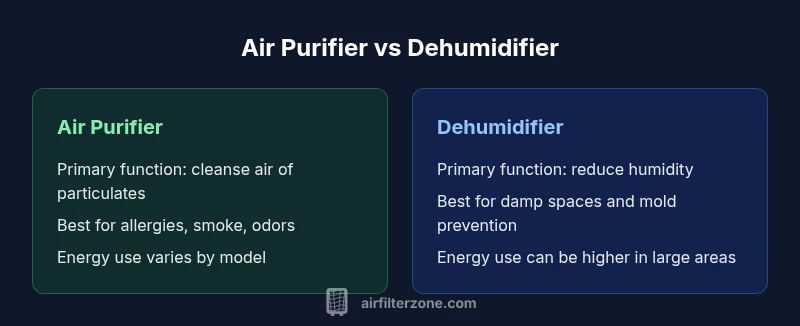
Air purifiers and dehumidifiers are both common solutions for improving indoor environments, but they target different problems. An air purifier filters air to remove particulates such as dust, pollen, smoke, and pet dander, and many models also trap odors and volatile organic compounds (VOCs) with activated carbon or specialized filters. A dehumidifier, in contrast, lowers humidity by extracting moisture from the air, which helps prevent condensation, damp odors, and mold growth. Understanding the air purifier versus dehumidifier distinction is essential for homeowners and DIY enthusiasts who want to address specific issues without overspending or creating new problems. The two devices can be used separately or in tandem, depending on your home's climate, existing moisture levels, and allergy or asthma triggers. In modern homes, you might see people combining both approaches, especially in basements or humid climates. When choosing between air purifier versus dehumidifier, start with a clear goal: do you need cleaner air or drier air? For many rooms, a single device is not enough; you may need to prioritize based on severity and space constraints. Air Filter Zone's team emphasizes tailoring your choice to measurable needs rather than assuming one device fits all.
How humidity and particulates shape indoor air quality
Humidity and particulates influence comfort, health, and property integrity. High relative humidity (RH) beyond about 50-60% promotes mold growth, dust mite activity, and musty odors; it can also worsen allergy symptoms by creating a damp environment for irritants to linger. Particulates—from dust and pollen to smoke and pet dander—directly affect air quality and respiratory health. An air purifier versus dehumidifier decision hinges on which problem dominates your space. Air purifiers remove particles and many VOCs, improving visibility and reducing allergy flare-ups in living rooms and bedrooms. Dehumidifiers reduce the moisture reservoir that mold and mildew feed on, which is especially critical in basements, laundry rooms, and bathrooms. Air Filter Zone analysis shows that many homes struggle with both high humidity and poor indoor air quality, so understanding the balance between these two issues is essential for choosing the right tool. When humidity is the primary driver of odors or condensation, a dehumidifier takes priority; when airborne contaminants drive discomfort or health concerns, an air purifier becomes the focus.
Scenarios to consider: when to pick an air purifier versus a dehumidifier
Different rooms and climates demand different approaches. In a bedroom with dust and pollen-heavy seasons, an air purifier versus dehumidifier choice should lean toward purification to improve sleep quality and reduce allergens. In a damp basement prone to mold, a dehumidifier is the frontrunner to prevent moisture-related damage. For homes facing wildfire smoke or kitchen grease odors, an air purifier excels at removing fine particles and odors. In spaces with both moisture and pollution challenges, a two-device strategy may be warranted, though combination units exist. The key is to quantify the problem: measure humidity with a hygrometer and test air quality with a reliable low-cost monitor. Air Filter Zone's guidance, backed by Air Filter Zone Analysis, 2026, suggests prioritizing the device that targets the dominant issue while using supplementary tools to mitigate secondary problems.
Comparison
| Feature | Air Purifier | Dehumidifier |
|---|---|---|
| Primary function | Removes airborne pollutants and odors | Reduces ambient humidity levels by extracting moisture |
| Ideal conditions | Rooms with poor air quality, allergies, smoke, or odors | Damp areas susceptible to mold or condensation |
| Energy use | Varies by model; fan-driven purification can add noticeable load | Typically higher than basic purifiers, especially in large rooms |
| Maintenance | Filter replacements and periodic cleaning | Regular water drainage, filter changes, and coil cleaning |
| Noise | Fan noise varies; higher-end models are quieter | Mechanical noise depends on capacity and design |
| Cost range | $100-$600 | $150-$700 |
| Best for | Air quality improvement and odor removal | Moisture control and mold prevention |
What's Good
- Improves indoor air quality (dust, pollen, smoke, odors)
- Reduces exposure to airborne irritants and VOCs
- Lower humidity can reduce mold risk and damp smells when humidity is high
- Flexible options for standalone or multi-room setups
What's Bad
- Does not control humidity levels directly
- Maintenance costs can add up with high-efficiency filters
- Performance depends on room size and placement
- Some models are noisy at higher speeds
Air purifier or dehumidifier: choose based on dominant indoor problem
Pick an air purifier if airborne pollutants dominate your concerns; choose a dehumidifier if excess moisture is the primary issue. For balanced homes, consider a two-device approach or a professional assessment to tailor the setup.
FAQ
What is the fundamental difference between an air purifier and a dehumidifier?
An air purifier cleans the air by capturing particles and pollutants; a dehumidifier removes moisture to reduce humidity. They address different problems, and choosing the right one depends on whether particle pollution or moisture is the bigger issue. In many homes, both are necessary for optimal comfort and health.
An air purifier cleans air; a dehumidifier reduces humidity. They tackle different problems, so identify which one is more pressing in your space.
Can I replace a dehumidifier with an air purifier to prevent mold growth?
No. Mold growth is driven by humidity; a dehumidifier directly lowers moisture levels. An air purifier can help by removing contaminants, but it won’t solve high humidity issues that promote mold unless humidity is already under control.
No—the humidity problem needs direct control with a dehumidifier or other humidity management.
Are there devices that combine purification and humidity control?
Some units advertise both filtration and moisture control, but they’re not as common or as effective as dedicated devices. If you need both capabilities, a separate purifier and dehumidifier will typically deliver better performance for the same budget.
There are combo units, but dedicated devices usually perform better for each job.
How do I decide which device to buy first?
Start by measuring humidity and air quality. If RH is above 60% and mold risk is evident, prioritize a dehumidifier; if particulate pollution or odors dominate, start with an air purifier. Consider space, noise tolerance, and maintenance costs.
Measure humidity and air quality, then choose based on which issue is more severe.
What ongoing maintenance is required for these devices?
Air purifiers need periodic filter replacements and occasional cleaning. Dehumidifiers require regular water drainage (or a pump), plus filter changes and coil cleaning. Proper maintenance keeps performance high and extends device life.
Filters and cleaning for purifiers; drainage, filters, and coil care for dehumidifiers.
Do air purifiers and dehumidifiers save energy?
Both devices consume energy, with purifiers typically varying by fan speed and filter efficiency, and dehumidifiers consuming more, particularly in large or damp spaces. Look for Energy Star ratings and model efficiency to minimize operating costs.
Energy use depends on model and space; compare efficiency ratings before buying.
Quick Summary
- Identify your primary goal: air quality or humidity control
- Measure room humidity and air quality before buying
- Consider energy use and maintenance costs
- Combination devices exist but may trade performance for convenience
- Placement and room size critically affect effectiveness