When to Change Air Filter HVAC: A Practical Schedule
Learn practical schedules for changing your HVAC air filter. We explore how pets, allergies, and system use affect replacement intervals and how to tailor a plan for your home.


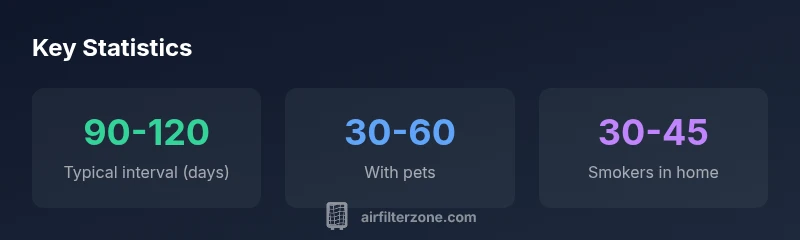
In most homes, HVAC air filters should be changed every 1-3 months. The exact interval depends on pet presence, indoor smoking, allergy sensitivity, and how often the system runs. A practical starting point is 90 days for typical use; reduce to 30-60 days with multiple pets or a smoker in the home, and extend toward 120 days during lighter seasonal use. Inspect the filter monthly and replace when it looks dirty.
When to Change Air Filter HVAC: A Practical Schedule
In many homes, the best first step is to establish a clear replacement cadence. The question often boils down to the simple rule: change the filter every 1-3 months. If you search for the phrase 'when to change air filter hvac' you’ll find that most homeowners start with a 90-day baseline and tighten or loosen the interval based on actual conditions. Factors such as pets, indoor smoking, and allergy sensitivity can rapidly shift this timing. A clean filter supports airflow, reduces energy usage, and helps maintain indoor air quality. Start with a 90-day target, then adjust toward shorter intervals for high-dirt environments and longer ones when usage is light. Monthly visual checks are an easy habit that pays off in comfort and system longevity.
How to Determine Your Ideal Change Interval
Determining your optimal replacement interval begins with observing dirt, airflow, and runtime. A simple method is to track 3 numbers: how dirty the filter looks, how hard the system runs (as felt by air velocity and temperature changes), and how long you’ve gone since the last change. Use a calendar reminder for every 30, 60, or 90 days, depending on your baseline. If dust is a constant in your environment, or you have pets, aim for the shorter end of the range and check monthly. For multi-filter setups, note that some zones may clog faster than others, so a staggered replacement plan can help.
Household Scenarios and Replacement Frequency
Household composition drives frequency. A single-family home with one or two occupants and no pets typically sits near the 90-day range. Homes with dogs or cats, or where occupants have frequent allergies, often require 30-60 day checks. If someone in the home smokes indoors, expect stricter monitoring—30-45 days may be necessary. In spaces with extreme dust or remodeling activity, even more frequent changes could be warranted. Always align with the filter’s MERV rating and the manufacturer’s recommendations, as higher-efficiency filters can load differently than standard ones.
Filter Types and How They Influence Replacement
Filter construction matters. Fiberglass filters are usually cheaper but clog faster in dusty environments, while pleated or high-MERV filters capture more particles and may require more frequent checks if air quality is poorer. Some appliances use specialty filters that require manufacturer guidelines for replacement cadence. When selecting a filter, consider your climate, whether you have an enclosed home with limited air exchange, and your trap for contaminants (pet dander, dust, smoke). A higher-efficiency filter isn’t always better if it leads to unnecessary maintenance; balance filtration with airflow and energy use.
A Simple Monthly Monitoring Routine
Create a quick monthly routine to avoid guesswork. Place a small note on your calendar to inspect the filter for dirt, a transparency check (hold it up to a light source), and a quick airflow test by feeling the air leaving vents. If you notice reduced airflow, more visible dirt, or increased energy use, it’s time to change the filter—even if you’re not exactly at the 90-day mark. Keep a log of replacements and note any changes in indoor air quality or odors; this helps you adjust future intervals more accurately.
Common Mistakes and How to Avoid Them
Common mistakes include waiting until the filter looks completely dirty, using the wrong filter size, or selecting a filter with a too-low MERV rating that reduces airflow. Don’t neglect seasonal changes—your interval may drift with the seasons due to humidity, dust, and heater usage. Also, avoid mixing filter types mid-season; consistency helps your system run reliably. Finally, resist the urge to skip replacements when you notice an unusual spike in dust; that is often a sign your current interval needs adjustment.
Replacement intervals by household scenario
| Scenario | Recommended interval | Notes |
|---|---|---|
| Base case (no pets) | 90-120 days | Standard household usage |
| Pets and heavy dander | 30-60 days | Higher filtration needs |
| Smokers in home | 30-45 days | Increased contaminants |
| Allergy-prone households | 60-90 days | Consider higher MERV |
FAQ
How often should I change my HVAC filter?
Most homes should replace their HVAC filter every 1-3 months, depending on usage and environment. Start with a 90-day schedule and adjust based on observed dirt and indoor air quality. Always follow the filter manufacturer's recommendations.
Most homes replace filters every 1-3 months. Start around 90 days and adjust based on dirt and air quality.
What factors affect replacement frequency besides pets or smoking?
Usage patterns, climate, indoor air quality, dust levels, and the filter’s MERV rating all influence how quickly a filter gets dirty.
Usage, climate, air quality, dust, and the filter rating affect how often you should replace.
Can I clean or reuse disposable filters?
Disposable fiberglass or pleated filters are not reusable. Some reusable filters exist, but only if designed for cleaning; otherwise replace according to the schedule.
Disposable filters aren’t meant to be reused. Use cleanable filters only if the manufacturer says so.
Is there a universal schedule for all homes?
No. Replacement intervals vary by home, climate, occupancy, and filtration needs. Use a baseline and tailor it with regular checks.
There isn’t a universal schedule; tailor it to your home and behavior.
How can I tell if my filter is dirty?
Look for visible dirt, reduced airflow, or signs of buildup. Hold the filter up to light—if you can’t see through, replace.
Look for visible dirt or reduced airflow. If you can’t see light through the filter, replace it.
Should I replace filters during maintenance?
Yes. Align filter replacement with seasonal maintenance to ensure optimal performance and avoid gaps in filtration.
Yes—replace during maintenance to keep your system efficient.
“Regularly changing filters is a simple, effective way to maintain air quality and HVAC efficiency. A tailored schedule reduces energy waste and improves comfort.”
Quick Summary
- Start with a 90-day baseline and adjust.
- Pet and smoker households need more frequent checks.
- Don't ignore visible dirt; replace sooner.
- Higher MERV filters may require more frequent changes.
- Regular monthly checks save energy and improve air quality.