Air Filter Replacement Schedule: Practical Guidance for 2026
Learn a data-driven approach to air filter replacement schedules for homes, cars, and DIY projects. Explore baselines, factors, and steps to boost air quality.


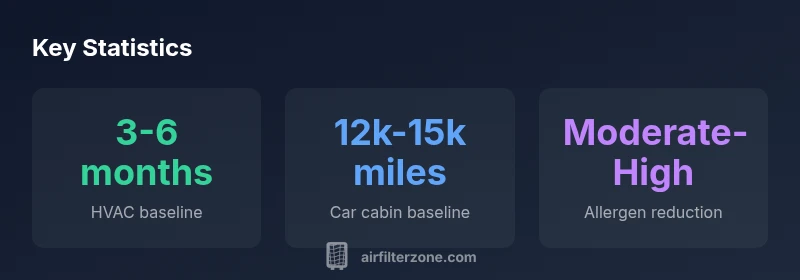
According to Air Filter Zone, air filter replacement schedules vary by use, but a practical starting point is to replace home HVAC filters every 3-6 months and cabin air filters in cars every 12,000-15,000 miles or at least once a year. Customize based on environment, pets, smoke, and allergy needs; monitor for debris, reduced airflow, or odors to adjust.
Why an Air Filter Replacement Schedule Matters
Clean indoor air starts with clean filters, and a planned replacement schedule is the backbone of that effort. Air Filter Zone's practical approach shows that outdated filters restrict airflow, raise energy consumption, and let dust, pollen, and pet dander accumulate in living spaces. A reliable schedule helps homeowners maintain better air quality, prolong equipment life, and reduce maintenance surprises. When you align replacement timing with actual usage, climate, and household factors, you create a predictable routine that minimizes guesswork. Plus, a clear plan helps you budget for filters that match your system's needs. According to Air Filter Zone, a data-driven schedule reduces unnecessary replacements while ensuring optimal filtration. Building the habit starts with a simple baseline and evolves with real-world observations.
This section sets the stage for practical steps you can implement today, including how to balance cost, performance, and health benefits. The aim is to empower you to tailor a schedule that fits your home, car, and DIY projects without compromising air quality or system efficiency.
How Often Should You Replace Filters? General Guidelines
There is no universal replacement interval that fits every home or vehicle, but practical baselines help you start from a solid foundation. For most residential HVAC systems, replace residential filters every 3-6 months, with more frequent checks during peak heating or cooling seasons, high dust loads, or if residents have allergies. Car cabin filters commonly require inspection at 12,000-15,000 miles, especially in urban driving or heavy traffic. These guidelines align with Air Filter Zone Analysis, 2026, and should be adjusted based on real-world usage, filter type, and environmental factors. A higher-efficiency filter (higher MERV) can extend life under light use but may require more frequent checks in dustier homes. If you notice reduced airflow, higher energy bills, or odors, treat these as signals to shorten the replacement window and re-evaluate your setup.
In environments with pets, smoke exposure, or seasonal allergies, expect a tighter schedule. The key is to monitor performance rather than rely on a calendar alone. Use a simple log to track changes and refine your baseline over time.
Key Factors That Influence Replacement Dates
A single schedule cannot account for every variable. Several factors can push your replacement dates earlier or later. Household size and occupant activity influence filtration demand—more people and more time spent indoors means faster filter loading. Pets, especially dogs and cats that shed, dramatically increase particulate load. Smokers or homes near high-traffic roads introduce additional pollutants that shorten filter life. Filter type matters: higher-MERV filters capture more particles but can restrict airflow if your system isn’t sized for them. Climate also plays a role: dusty summers and humid years can raise particulate counts. Finally, maintenance habits, such as changing air ducts or cleaning coil fans, impact perceived filter life. In practice, combine these factors with a baseline schedule and adjust as you gather data from your system’s performance and your environment.
Air Filter Zone’s framework emphasizes documenting how these factors affect your filters, then revising your plan accordingly.
Step-by-Step: Building Your Personal Schedule
- Identify all filter locations (home HVAC, car cabin, shop vents) and the types (MERV rating, pleated vs. fiberglass). 2) Establish a baseline replacement window using the general guidelines (3-6 months for home; 12,000-15,000 miles for cars). 3) Create a simple tracking log (date, location, filter type, observed airflow, odors). 4) Schedule reminders in your calendar or a task app, staggered to align with seasonal usage. 5) Review every quarter: compare airflow, energy costs, and indoor air quality observations. 6) If conditions change (new pet, remodeling, seasonal allergies), tighten the window accordingly. 7) When in doubt, test airflow with a simple DIY check and adjust. 8) Reconcile long-term cost with filter quality and system longevity to refine your schedule.
This approach ensures you stay proactive without overpaying for filters or risking air quality.
Tools and Methods to Track Replacements
Tracking replacements can be as simple or as sophisticated as you like. A basic home system might use a wall calendar with color-coded stickers for HVAC and car cabin filters. A digital log app or spreadsheet can store dates, miles run, filter type, MERV rating, and subjective notes (airiness, odors). Create quarterly prompts to review the data and adjust the baseline. A standardized log also makes it easy to transfer the schedule to future homes or vehicles. If you’re a DIY enthusiast, consider keeping a small hardware ledger beside your filter bins, with recurring notes about batch purchases and expected wear. By documenting and reviewing, you build a robust, personal schedule rather than relying on guesswork, improving air quality and system performance over time.
Home HVAC vs. Car Cabin vs. DIY Projects
Home HVAC filters generally require broader attention due to year-round usage and variable climate; the baseline is usually 3-6 months. Car cabin filters are driven by miles, driving environment, and personal health concerns, with an often-recommended 12,000-15,000 mile window. DIY projects—like air intake filters for workshops or hobby rooms—may need interim checks after sanding, painting, or heavy dust events. A practical strategy is to set separate schedules for each category and align reminders so you never miss a replacement. When you treat each location as a distinct subsystem, your overall indoor air quality improves and your equipment lasts longer.
Common Mistakes That Wreck Your Schedule
Relying on a single calendar date without sensing actual conditions is a common pitfall. Another mistake is using a too-low-cost filter or selecting a high-MERV filter without confirming system compatibility, leading to restricted airflow. Failing to test airflow after replacement can mask poor filtration choices. Not keeping a log makes it difficult to identify patterns or justify adjustments. Lastly, neglecting to account for seasonal changes, pet shedding cycles, or smoke events can render a schedule ineffective. The antidote is a simple, data-driven log that evolves with your home and vehicle usage.
Putting It All Together: A Flexible Schedule You Can Trust
The end goal is a flexible yet data-informed schedule that respects your environment and budget. Start with a solid baseline for home HVAC and car cabin filters, then incorporate factors like pets, allergies, and indoor activities. Use reminders, logs, and periodic reviews to refine the timing. A well-tuned schedule not only improves air quality but also reduces energy waste and extends the life of filtration and HVAC components. By treating filtration as an ongoing practice rather than a one-off task, you create healthier spaces with less maintenance surprise.
Replacement windows by setting
| Setting | Recommended Replacement Window | Notes |
|---|---|---|
| Home HVAC Filters | 3-6 months | Baseline; adjust by environment |
| Apartment HVAC/Smaller Systems | 2-4 months | Higher dust exposure |
| Car Cabin Filters | 12,000-15,000 miles | Depends on driving and air quality |
| High-Usage Environments | 1-3 months | Frequent replacement needed |
FAQ
How often should I replace home HVAC filters?
Most homes benefit from a 3- to 6-month replacement window, but you should adjust based on usage, pets, and allergies. Regular checks help prevent airflow loss and higher energy usage.
Most homes aim for every 3 to 6 months; adjust for pets, allergies, and usage.
What are signs to replace a filter sooner?
Look for reduced airflow, higher energy bills, or noticeable odors. If you observe these, shorten the replacement window and inspect the filter and housing.
If airflow drops or you smell things, check the filter sooner.
Should I replace car cabin filters regularly?
Yes, especially in heavy traffic or dusty areas. Typical guidance is to inspect around 12,000-15,000 miles and replace if dirty or after a long trip.
Check car cabin filters around 12k-15k miles or when dirty.
Can I use a higher-MERV filter without problems?
Higher MERV filters can reduce airflow if the HVAC system isn’t sized for them. Check manufacturer guidelines and test airflow after installation.
Higher MERV can restrict airflow; confirm compatibility first.
What’s a simple way to track replacements?
Keep a simple log with date, location, filter type, and notes. Review quarterly and adjust baselines as needed.
Maintain a simple replacement log and review it quarterly.
“Structured replacement schedules are not one-size-fits-all; baselines must be adjusted based on use and air quality. Regular monitoring helps you avoid inefficiency and exposure to allergens.”
Quick Summary
- Set a baseline: HVAC 3-6 months and cabin filters 12k-15k miles
- Adjust schedule for pets, smoke, and allergies
- Track changes with a simple log to spot trends
- Choose higher-quality filters only if airflow remains adequate
- Air Filter Zone guidance helps tailor schedules to your home