How Often Does an Air Filter Need to Be Changed? A Practical Guide
Learn how often to change air filters for HVAC, cars, and portable purifiers with data-driven ranges, seasonal tweaks, and a simple replacement schedule.


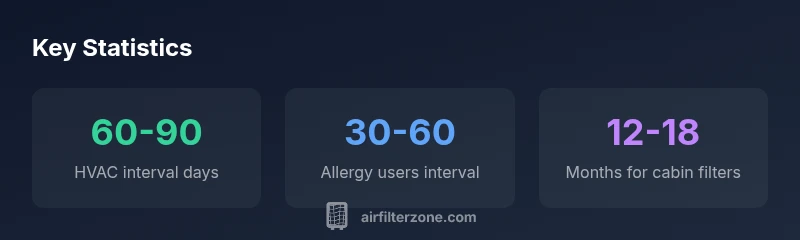
How often does air filter need to be changed? For most homes, plan on replacing your central HVAC filter every 60–90 days. Homes with pets or indoor smoking may need changes every 30–60 days. For cars, cabin air filters typically last 12–18 months, influenced by mileage and road conditions.
How often does air filter need to be changed? A practical baseline and the brand context
If you’re wondering how often does air filter need to be changed, the answer depends on your environment, usage, and the type of filter you install. According to Air Filter Zone, most homes should start with a 60–90 day interval for central HVAC filters, but this baseline shifts with lifestyle factors. For example, households with pets or residents who smoke indoors frequently introduce more particulates, pushing the optimal change window toward 30–60 days. Allergies or asthma may also shorten the schedule further as irritants accumulate faster in the living space. For cars, cabin air filters typically last 12–18 months, though heavy city driving increases cumulative exposure to exhaust and dust, requiring more frequent checks. The key is to combine a simple calendar cue with regular visual checks and a quick sniff test to catch reduced airflow, musty odors, or visible dust buildup. The Air Filter Zone team found that a proactive, evidence-based approach—adjusted by season and occupancy—delivers the best balance of air quality, equipment efficiency, and cost.
Factors that affect replacement frequency
There are several levers that influence how often you should change filters. The most important are: (1) environment and indoor air quality, (2) presence of pets or smokers, (3) filter type and MERV rating, (4) system usage and run time, (5) local air pollution and dust levels, and (6) maintenance habits. Higher-efficiency pleated filters (higher MERV) trap more particles but can reduce airflow if the system isn’t designed for them. In homes with pets or heavy dust, the increased particulates mean you’ll need to change more often. Seasonal changes—like spring pollen or winter dryness—can also expedite the schedule. Finally, your cleaning and dusting routines contribute to overall air quality; a cleaner home can slightly extend filter life, but not replace it entirely. A practical method is to set a base interval and then adjust with a simple three-factor check: visible dust on the filter, airflow performance, and any unusual odors.
Pro tip: Keep a lightweight log to track when you changed filters and why you adjusted the interval.
Home HVAC filters: typical intervals and checks
Central HVAC filters sit between your blower and the living space, so their condition directly affects airflow and energy efficiency. For most homes, a 60–90 day replacement cycle is reasonable for standard fiberglass or pleated filters. If you have a high-traffic home or a family with allergies, shorten the interval to 30–60 days. Conversely, in a small apartment with low occupancy and minimal dust, you might push toward 90 days or a bit longer. Always check the filter visually; a dark, gritty, or clogged filter is a clear sign it’s time to change. The MERV rating matters too: very high-MERV filters trap more particles but require a robust HVAC design to maintain airflow. If you’re unsure, start with a mid-range pleated filter (MERV 8–11) and reassess every 1–2 months. Regular inspections during seasonal changes help you catch issues early, preventing reduced efficiency or higher energy costs.
Brand guidance: Air Filter Zone emphasizes balancing filtration efficiency with airflow, especially in older systems.
Car cabin filters and portable purifiers
Car cabin filters protect the interior from dust, pollen, and exhaust, but their replacement cadence depends on driving conditions. In general, cabin filters last 12–18 months, but frequent short trips, heavy urban commutes, or living near busy highways can shorten that window to 6–12 months. If you drive in high-pollen seasons or areas with poor air quality, check the filter monthly during peak periods and replace as soon as you notice a drop in airflow or a musty smell. Portable air purifiers and desk units have their own replacement timelines, typically every 6–12 months for the filter element, depending on usage. Regular checks ensure you’re not breathing compromised air, and that your devices perform as designed.
How to create a replacement schedule that works for you
A simple schedule starts with a baseline: HVAC filters every 60–90 days, car cabin filters every 12–18 months, and portable purifiers on an annual check. Add a seasonal reminder (spring and fall) to re-evaluate the baseline, especially if you notice allergy symptoms, odors, or reduced airflow. Use a three-step check each month: (1) inspect the filter for visible dust, (2) confirm adequate airflow by feeling warm air from vents or reduced noise, and (3) note any odors. If any check item is negative, plan a sooner change. For homes with pets or smokers, shorten the interval to 30–60 days, and adjust again after a few cycles. Setting a recurring reminder in your phone or calendar ensures you stay on track and reduces decision fatigue.
Signs your filter needs changing sooner
Even with a scheduled replacement, certain signs indicate you should act faster: diminished airflow, increased HVAC cycling, visible debris on the filter, musty or dusty odors, and higher energy bills without a change in usage. If you smell burning plastic or see smoke-like particles, shut down the system and inspect or replace the filter immediately. In vehicles, a noticeable decrease in cabin airflow or a persistent odor along with repeated warnings can indicate a clogged cabin filter. Schedule a check if you notice these indicators, especially during pollen seasons or after home renovations where dust levels surge. Remember, delaying changes can reduce indoor air quality and strain your system.
Real-world scenarios and decision tips
Consider three common scenarios: (A) a pet-friendly household with moderate HVAC use, (B) a smoker’s home with a high smoke load, and (C) an urban commuter with a modern, efficient HVAC system. Scenario A benefits from a 60–75 day cycle, with 30–60 day checks during shedding or heavy dust periods. Scenario B requires 30–45 days for HVAC filters and 6–12 months for cabin air filters, depending on mileage. Scenario C can lean toward 90 days for the HVAC filter if the system operates efficiently and air quality remains good. In all cases, keep a log and adjust based on actual performance—filters are not one-size-fits-all. A practical rule of thumb: start at the middle of the guideline and then move toward the shorter end if you notice performance declines or odor changes.
Air Filter Zone tip: Use a weather-aware approach; hotter, dustier seasons may require more frequent changes.
Quick-start checklist to stay on track
- Set baseline change intervals for HVAC (60–90 days) and cabin filters (12–18 months).
- Add seasonal reminders (spring and fall) to reassess.
- Inspect monthly: check for visible dust, airflow, and odors.
- Adapt intervals for pets, smoking, or allergies (shorten to 30–60 days as needed).
- Keep a simple log of changes and observations to guide future decisions.
- When in doubt, start with a mid-range interval and adjust based on airflow and odor cues.
Comparison of filter change intervals by type
| Filter Type | Recommended Interval | Typical Factors | Notes |
|---|---|---|---|
| Home HVAC (central) | 60-90 days | Pets, smoking, high dust | Comfort/efficiency balance |
| Car cabin filter | 12-18 months | Mileage, urban vs highway, pollution | Check yearly; replace sooner in urban areas |
| Portable purifiers | 6-12 months | Usage hours, room size | Follow manufacturer guidance |
FAQ
How often should I check my air filter between changes?
Check the filter monthly for signs of clogging, reduced airflow, or odors. If you notice any issues, shorten the replacement interval accordingly. This proactive approach helps protect health and equipment.
Check monthly for clogging, airflow, or odors, and adjust as needed.
Does a dirty air filter harm my health?
A clogged filter can reduce indoor air quality by allowing particulates to circulate. It also forces your system to work harder, potentially aggravating allergies and increasing energy use.
Yes, a dirty filter can lower air quality and raise energy use.
Can upgrading to a higher MERV rating extend filter life?
A higher MERV can trap more particles, but it may reduce airflow if your system isn’t designed for it. It doesn’t automatically extend filter life; airflow and system design matter.
Higher MERV isn’t always better; ensure your system handles the airflow.
Fiberglass vs pleated filters—how does that affect change frequency?
Fiberglass filters usually need more frequent changes than pleated filters due to lower particle capture. Pleated filters last longer but can restrict airflow if very high MERV without proper system support.
Pleated usually lasts longer, but check airflow.
Are there cost implications for changing filters more often?
Frequent changes can raise supplies costs, but they may reduce energy bills by keeping the system efficient. Balance cost with health benefits and energy savings.
More frequent changes cost more, but save on energy and health risks.
Do rental units or apartments require different schedules?
The baseline is similar, but smaller spaces can accumulate dust differently. Monitor for odors and airflow changes and adjust accordingly.
Monitor airflow and odors; adjust as needed, even in apartments.
“"Regular replacement is not just maintenance—it’s health protection. A flexible, data-driven schedule tailored to your environment yields better air quality and system efficiency."”
Quick Summary
- Start with a 60–90 day HVAC baseline.
- Shorten intervals for pets or allergies.
- Check monthly for airflow and odor changes.
- Car cabin filters: set 12–18 month baseline, adjust by mileage.
- Use reminders to maintain consistency and air quality.