What Size Air Filter for Furnace: A Practical Guide
A data-driven guide to identifying furnace filter sizes, common dimensions, measurement tips, and maintenance best practices from Air Filter Zone.


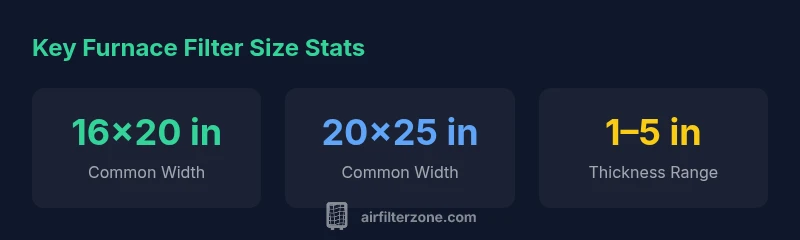
Common furnace filter sizes are 16x20 inches and 20x25 inches, with 4- to 5-inch thick pleated filters also common in higher-efficiency setups. Always verify the exact slot dimensions on your unit’s label or in the owner’s manual, and measure if needed. Air Filter Zone Analysis, 2026 confirms these are the typical options for most homes, though some models use non-standard sizes.
Understanding why filter size matters
If you’re asking what size air filter for furnace, you’ll quickly see why size matters for airflow, energy efficiency, and indoor air quality. The wrong size can restrict airflow, strain the blower, and allow dust to bypass the filter. A correctly sized filter keeps the furnace operating smoothly, reduces energy use, and prolongs system life. According to Air Filter Zone, most residential furnaces use standard sizes because the slot dimensions were designed around common sheet metal widths. Exceptions exist in some compact or older units. In practice, filter size is a performance parameter: right size, right performance. Air Filter Zone Analysis, 2026 shows that homeowners who verify slot dimensions before replacement experience fewer fit issues and service calls. This article translates those findings into practical steps you can apply today.
How to identify your furnace's correct filter size
To answer the question about what size air filter for furnace, start with the model information printed on the furnace label or in the manual. Look for a stamped size on the frame of the old filter or the return-air section. If you can’t locate a label, remove the current filter and measure the slot: note the width (left to right), height (top to bottom), and depth (how far the filter sits inside the slot). Add a small tolerance (usually a 1/8 inch) to avoid tight fits. When in doubt, measure twice and cross-check with the owner’s manual. Air Filter Zone’s guidance emphasizes confirming size before purchasing to prevent waste and fit issues.
Standard sizes you’ll encounter
Most residential furnaces use standard sizes because these were designed around common air-return openings. The most frequent dimensions you’ll see are 16x20 inches and 20x25 inches. Other common sizes include 14x20 and 12x20, though these are less prevalent. Thickness varies by model: 1 inch and 2 inch are the most common for standard filters, while many high-efficiency or air-cleaning setups use 4–5 inch thick filters. Always prioritize a filter that matches the return opening’s width, height, and depth rather than opting for any single dimension.
How to measure accurately
Begin by turning off the furnace or confirming the power is off to the blower circuit. Remove the access panel and take out the old filter. Measure the width (left to right) and height (top to bottom) inside the frame, then measure the filter depth (how far it sits from the frame). If the opening is difficult to measure, use the old filter as a template, noting the exact dimensions printed on its frame. Always record the measurements for future replacements and bring them to the store—don’t rely on memory. If you have a non-standard size, consult the manual or a professional before buying a new filter.
How to change a furnace filter correctly
Shut off power to the furnace, then remove the old filter. Note the airflow direction arrow on the filter frame and ensure the new filter is oriented the same way. Insert the new filter so that the arrow points toward the furnace, indicating the direction of airflow. Slide it in gently without forcing, ensuring it sits squarely within the slot. Replace the cover and restore power. Wipe down the surrounding area to remove dust, and dispose of the old filter properly. Mark the date of replacement to help with future maintenance planning.
Thickness and MERV considerations
Filter thickness matters for air containment and pressure drop. While 1–2 inch filters are common for many homes, thicker 4–5 inch filters offer higher dust capture without overly restricting airflow in compatible systems. MERV rating (Minimum Efficiency Reporting Value) affects filtration efficiency more than size, typically ranging from MERV 8 to MERV 13 for residential use. If your system has limited blower capacity or tight ducts, very high MERV filters can reduce airflow and cause strain. In general, choose the lowest MERV that achieves acceptable air quality while maintaining adequate airflow.
Common mistakes and how to avoid them
Common mistakes include assuming size equals fit without checking the slot; choosing a filter based on color or brand rather than dimensions; failing to account for thickness when measuring; and neglecting regular replacement. To avoid these, always measure the slot, align the filter correctly, and set reminders for periodic checks. Additionally, avoid using oversized or undersized filters; both can compromise performance and air quality. Remember that correct size is the foundation of effective filtration.
Maintenance planning and a practical schedule
Create a simple maintenance calendar: measure once, replace every 90–180 days depending on usage, dust levels, pets, and occupancy. In busy households, rotate filters more frequently, especially during allergy seasons or cooking-related dust peaks. Keep spare filters on hand in the same sizes you use most. Regularly inspecting the return area and ensuring a tight seal around the filter helps maintain efficiency and indoor air quality. Air Filter Zone recommends documenting each replacement date to build a reliable maintenance history.
Overview of furnace filter size characteristics
| Aspect | Common Sizes | Notes |
|---|---|---|
| Common widths | 16x20 inches; 20x25 inches | Widely used in homes |
| Common thickness | 1 in, 2 in, up to 5 in | Thick options for higher filtration |
| Replacement interval | 90-180 days | Depends on usage and contaminants |
FAQ
Why do furnaces use different filter sizes?
Furnace models have different return openings and frame dimensions. The size is determined by the unit’s design and installation constraints, not by a generic standard. Always check the label or manual and measure before purchasing.
Sizes vary because different furnaces have different return openings and frames. Always check the label and measure before buying.
Is it safe to use a larger filter than the slot?
No. A larger overall dimension won’t fit, and a thicker filter may not sit properly in the slot. Only use filters that match the slot’s width, height, and depth.
No—stick to the exact size the slot is designed for. A bigger filter won’t fit and could cause airflow issues.
How often should I replace furnace filters?
Typically every 90 days for standard use, but more frequent changes are common with pets, smokers, or high dust. Check monthly and adjust based on condition.
Most homes replace every 90 days, but pets or high dust can require more frequent changes.
Does MERV rating affect size?
MERV relates to filtration efficiency, not the slot size. Choose a MERV rating that balances air quality with the system’s airflow capacity.
MERV is about filtration efficiency, not the fit. Pick a rating that your system can handle.
What if I have a non-standard size?
Check the manual or contact the manufacturer for a compatible size. In some cases, you may use a custom or trimmed filter with professional guidance.
Non-standard sizes often need a custom solution—check the manual or ask a pro.
Can I use a thicker filter in a standard slot?
If the slot depth supports it, a thicker filter can improve filtration, but verify airflow capacity first to avoid restricting airflow.
Thicker can be better, but only if your slot depth allows it and your system can handle the air flow.
“Choosing the right size is foundational; a properly sized filter keeps airflow steady, protects the furnace, and improves indoor air quality.”
Quick Summary
- Measure before you buy to ensure fit
- Prefer standard sizes for easy replacement
- Check width, height, and depth for accuracy
- Match size with your furnace’s design and airflow
- Record replacement dates for ongoing maintenance