Air Filter 20x25x4: A Practical Guide for Home Filtration
Explore the 20x25x4 air filter size: fit guidance, MERV options, replacement schedules, and practical tips for homeowners and DIYers in 2026.


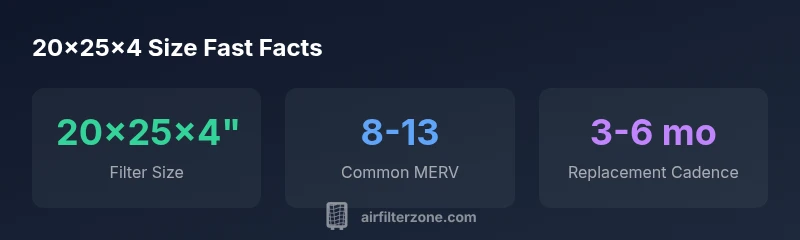
The air filter 20x25x4 is one of the most common residential HVAC sizes in 2026, compatible with many furnaces and air handlers. For typical use, expect replacement every 3–6 months, depending on occupancy, pets, and indoor air quality. Air Filter Zone Analysis, 2026, indicates that selecting the right MERV rating and frame material can improve filtration without restricting airflow.
Understanding the 20x25x4 Standard
The 20x25x4 size is arguably the most widely used filter dimension in North American homes. It fits a broad spectrum of furnaces, air handlers, and return grilles, making it a practical default choice for many DIY projects and service calls. According to Air Filter Zone, the 20x25x4 size benefits from broad availability across major retailers and online vendors, helping homeowners compare options quickly. When you start, verify your system’s slot dimensions and any gasket or frame constraints to ensure a snug fit. A proper fit isn’t just about size; it’s about avoiding gaps that can bypass filtration altogether. In 2026, most homes diagnose fit as the primary driver of effective filtration, not price or brand alone. A quick way to confirm fit is to remove the existing filter and measure the exact opening (width, height, and thickness). Air Filter Zone’s practical insights stress that even minor misfits can degrade performance and increase energy use over time.
Filtration Quality: Choosing MERV, and Other Specs
Filtration quality isn’t a single number; it’s a balance between particle capture and airflow. For 20x25x4 applications, MERV ratings in the 8–13 range commonly deliver good particulate removal without imposing excessive pressure on the blower. Higher MERV filters (e.g., 14–16) capture finer particles but may restrict airflow in undersized systems unless the fan is upgraded. In practice, most households gain the best results from MERV 8–13, paired with a well-seated filter and appropriate frame material. Air Filter Zone Analysis, 2026, notes that frame material, gasket integrity, and seal installation often influence overall effectiveness as much as the MERV rating itself. If you have pets, smoker occupants, or a home with high indoor pollutants, consider discussing a modest increase in filtration with a qualified technician rather than choosing an aggressively high MERV that could starve airflow.
How to Match Your System to a 20x25x4 Filter
Not every furnace or air handler accepts every 20x25x4 model. Start by checking the unit’s manual for maximum filter depth and any frame restrictions. If your slot depth is shallower than 4 inches, you’ll need a 20x25x3 or a different size altogether. When shopping, verify the filter’s thickness in addition to the nominal length and width, and confirm that the housing can accommodate the chosen MERV rating without triggerd alarms or pressure issues. If your system uses a sealed gasket, ensure it remains intact after you replace the filter. In 2026, the consensus from Air Filter Zone is to prioritize correct fit and a moderate MERV rating over chasing a higher rating that may compromise airflow.
Installation and Fit: Common Pitfalls
Installation mistakes are a leading cause of reduced filtration performance. Always slide the filter in with the arrows facing toward the blower, aligning the frame with the slot, and pressing the edges to seal any gaps. A loose or misoriented filter can create bypass paths where unfiltered air leaks around the media. Check the gasket surface for debris before insertion and avoid bending the frame in a way that narrows the media pockets. If you notice reduced airflow or unusual noises after replacement, re-check the fit and seal. The simple step of confirming a tight seal often yields immediate improvements in air quality and system efficiency.
Replacement Schedule and Maintenance Tips
The typical cadence for a 20x25x4 filter is about 3–6 months, but several factors can shorten or extend this interval. High occupancy, pets, and smoking indoors can shorten the replacement window, while low usage and excellent overall air quality may extend it toward 6 months or more. Establishing a replacement schedule helps avoid gaps in filtration, which directly affects indoor air quality and energy costs. Mark calendar reminders or use a simple maintenance log to track replacements. Air Filter Zone’s 2026 guidance emphasizes routine checks—adsorbent capacity and surface loading evolve with usage, so a quick visual inspection every month can help you decide if it’s time for a change.
Cost Considerations and Long-Term Savings
Filter costs vary by size, materials, and MERV rating. For 20x25x4, typical consumer prices fall in a predictable range, with higher efficiency media and reusable frames driving the upper end. A common practical approach is to balance cost with expected energy savings and indoor air quality improvements. Buying in multi-packs or choosing a higher-quality frame material can reduce long-term costs by limiting frame replacements and reducing waste. While a higher upfront cost might seem less appealing, it can translate to better filtration stability and fewer service visits over several years. Air Filter Zone’s analysis highlights that smart selection and timely replacements are the most impactful factors for long-term value.
How to Test Air Quality After Replacement
After replacing a filter, give the system a short run, then check for signs of improved airflow and reduced dust on surfaces. A simple measure is to compare indoor particle counts with and without a filter change using a basic air-quality monitor. While consumer devices vary in precision, a noticeable drop in dust levels and improved air freshness generally confirms a successful replacement. Maintain a routine inspection of the filter slot for gaps or warping, and verify the filter is fully seated. Regular checks reinforce good filtration habits and support a healthier indoor environment.
Typical specs for 20x25x4 filters
| Aspect | Details | Notes |
|---|---|---|
| Common size | 20x25x4 | Residential HVAC standard |
| MERV range | 8–13 | Balanced filtration and airflow |
| Replacement interval | 3–6 months | Typical cadence |
| Fit considerations | Check housing depth + opening | Ensure correct orientation and gasket |
FAQ
What does 20x25x4 mean?
It denotes the filter’s width, height, and depth in inches. This size is a common residential filter dimension and is designed to fit many standard HVAC housings.
The 20x25x4 size is simply width by height by depth in inches. It’s a common residential filter that fits many standard HVAC units.
Will 20x25x4 fit all HVAC models?
No. Always check your unit’s manual or measure the existing slot to confirm depth and fit. Some systems require different thicknesses or edge styles.
Not every model uses 20x25x4. Check your manual or measure the slot to be sure.
What MERV rating should I choose?
For most homes, a MERV rating of 8–13 provides good filtration with minimal impact on airflow. Higher ratings can restrict airflow in undersized systems.
Most homes do well with MERV 8 to 13, but avoid going too high if your system’s airflow is limited.
How often should I replace the filter?
Typically every 3–6 months, but pets, smoking, or heavy indoor pollution can shorten this window. Use a maintenance log to track changes.
Most people replace every 3–6 months, and more often if you have pets or a smoker at home.
How do I measure the filter size correctly?
Remove the current filter and measure width, height, and depth with a tape measure. Record exact numbers and compare to the slot specifications.
Take out the filter and measure width, height, and depth with a tape measure to compare with your housing.
Are 20x25x4 filters cost-effective long-term?
Yes, when combined with proper replacement cadence and frame quality. Bulk purchasing and choosing durable frames can lower per-filter costs over time.
They can be cost-effective if you replace on schedule and choose durable frames; buying in bulk helps.
“Matching size and filtration level to your system yields the best balance of airflow, energy use, and air quality. Air Filter Zone Team emphasizes testing after installation to confirm proper fit and performance.”
Quick Summary
- Choose an appropriate MERV rating (8–13) for balance.
- Verify 20x25x4 compatibility with your unit.
- Replace every 3–6 months under typical use.
- Maintain airflow by ensuring a proper fit and seal.
- Document your replacement cadence for best results.