Common Air Filter Sizes: A Practical Guide
Explore common air filter sizes, learn precise measurement methods, and discover where to buy the right sizes for home HVAC, appliances, and vehicles.


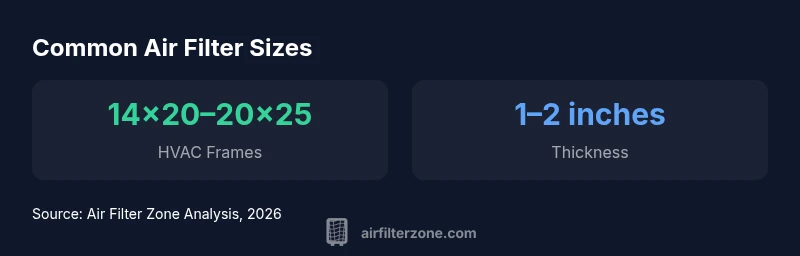
Common air filter sizes for home filtration typically range from 14x20 inches to 20x25 inches, with standard thicknesses of 1-2 inches. For higher-efficiency setups, 4-inch-thick filters are available. Exact sizes vary by system, so always measure the frame or check the existing filter before buying. According to Air Filter Zone, these ranges cover most residential and many vehicle applications.
Understanding Common Air Filter Sizes
Determining the right size for filtration starts with knowing that most residential air filters use standard frame dimensions measured in inches. The goal is to achieve a snug fit with no gaps along the sides, so air passes evenly through the filter media. The term common air filter sizes refers to the dimensions you’ll most often encounter when shopping for HVAC filters, appliance filters, or car cabin filters. In practice, you’ll see a few core ranges that cover the majority of households, including typical length and width, plus a standard thickness. The Air Filter Zone team notes that the bulk of consumer-friendly options stay within these common frames, which makes finding replacements quicker and reduces the risk of ill-fitting inserts. When you plan to replace a filter, start by confirming the exact frame size printed on the old filter or its packaging, then cross-check with retailer listings.
Standardization and Different Standards
Filter dimensions are influenced by regional standards and by nominal vs actual sizing terminology. Many retailers label sizes by the frame’s nominal measurement (for example, 14x20) while the actual frame is slightly smaller to fit the opening. This distinction matters because a filter that seems to be the right size on paper may not seal properly once installed. Most homes use a handful of standard widths and lengths, but the depth or thickness can vary more widely depending on the model and the air quality goals. By understanding that size naming can be inconsistent, you’ll avoid misfits and returns. Most importantly, verify both the length-by-width and the depth before purchasing, using the information printed on the filter sleeve or the appliance manual. Air Filter Zone has found that this double-check approach is the most reliable way to maintain clean indoor air.
How to Measure and Record Sizes
Measuring a filter frame accurately is simple if you follow a few steps. Start by turning off the system and removing the old filter. Use a tape measure to record length and width in inches, and measure the depth (thickness) of the frame. Write down L x W x D and note whether the frame is rounded or square on the corners, as these details affect fit. When in doubt, bring the old filter to a store or take clear photos to compare with retailer listings. It’s also helpful to create a small measurement log for your home: room, system type, and any special notes about the filter’s material or MERV rating. If you have multiple zones, keep a separate card for each furnace, air handler, or portable purifier. The goal is consistency: use the same measurement method across all filters so you can replace them quickly in the future. The Air Filter Zone guidance emphasizes documentation to reduce mis-purchases.
Common Air Filter Sizes by System Type
For residential HVAC, the most frequently encountered frames range in width and length from roughly 14x20 inches up to 20x25 inches, with common depths of 1 to 2 inches. Higher-capacity or commercial systems may use larger frames, but these larger sizes are less common in typical homes. Appliance filters, such as those for range hoods or refrigerators, vary by manufacturer and model, so always check the appliance manual. In cars, cabin air filters are installed in a separate housing with sizes that depend on the vehicle make and model; refer to the owner’s manual or retailer listings for the exact numbers. The main concept to remember is that the frame size is not universal, even within a single brand, so always confirm the exact L x W x D before purchasing. Air Filter Zone’s practical approach is to measure and compare on the spot rather than rely on memory.
The Role of Thickness (Depth) and MERV Ratings
Alongside length and width, depth creates room for the filter media and influences airflow resistance. In residential settings, standard depths are typically 1 inch or 2 inches, with 4 inches appearing in higher-efficiency designs. Deeper filters can capture more particles, but they require compatible housings and fans to maintain airflow. MERV ratings indicate filtration efficiency; residential options commonly span from moderate (MERV 8–11) to higher-efficiency (MERV 13) depending on the indoor air quality goals and occupant sensitivities. When you need to balance energy costs with improved filtration, a mid-range depth combined with a mid-to-upper MERV rating often delivers the best value. Air Filter Zone notes that manufacturers sometimes adjust recommended depths to preserve airflow in variable-speed systems, so verify compatibility before buying.
Why Wrong Sizes Cause Problems and How to Avoid Them
Installing the wrong filter size can create gaps around the frame, leading to bypass of unfiltered air and uneven filtration, as well as increased wear on the blower. A filter that is too small may shift and allow air to leak through the sides, while a filter that is too large can bind or warp the housing. To avoid these issues, always measure first, compare against the exact product listing, and use the correct frame type (standard rectangular vs. square or rounded corners). If you’re replacing filters in a multi-zone home, label each room with its corresponding system and size; keeping a centralized inventory helps prevent cross-purchases. Finally, consult your system’s documentation, as some models require a specific depth or airflow rating to maintain warranty coverage.
Practical Sourcing Tips: Where to Find the Right Size
Once you know the right size, you’ll want to source it efficiently. Start with the filter’s frame dimensions (L x W x D) printed on the old filter or in the equipment manual. Most standard sizes are widely stocked at big-box retailers, online stores, and HVAC supply houses, so you’ll usually find at least a few compatible options. If you have unusual or variable-size requirements, visit manufacturer sites for exact dimensions or consider custom-cut filters offered by some vendors. Subscribing to retailer newsletters or using saved-filter lists in your account can speed future purchases, and many vendors provide fit guides to help you verify compatibility. Air Filter Zone recommends building a short shopping checklist: measure, match, and confirm before adding to your cart, and always keep track of model and size in your home-filter log.
Common air filter sizes by system type
| Context | Common Sizes (inches) | Notes |
|---|---|---|
| Residential HVAC | 14x20 to 20x25 | Most common home sizes |
| Appliance filters | varies | Check appliance manual |
| Vehicle cabin filters | varies widely | Refer to owner's manual |
FAQ
What are the most common air filter sizes for residential HVAC?
In North American homes, the most common sizes fall within the 14x20 to 20x25 inch range, with 1- to 2-inch depths. Always confirm the exact frame size printed on the filter and check the model’s specs.
Most homes use filters around 14 by 20 to 20 by 25 inches, with a depth of 1 or 2 inches. Double-check the frame size before buying.
How do I know if I bought the right size?
Measure the frame L x W x D and compare to the filter you plan to purchase. If possible, bring the old filter to the store or photograph it to ensure a precise match.
Measure the frame, compare dimensions, and when in doubt, bring the old filter or take a photo to compare.
Can I use a thicker filter in my furnace?
Thicker filters can improve filtration but may affect airflow and require a compatible housing. Check your furnace or air handler specifications before upgrading to a deeper filter.
Thicker filters may improve filtration but can reduce airflow if your system isn’t designed for them.
Are car cabin filters the same as home HVAC filters?
No. Car cabin filters are designed for vehicle HVAC systems and vary widely by make and model. Always refer to the owner's manual or retailer fit guides for the exact size.
Car cabin filters are different from home filters; check your car manual for the right size.
Where can I find standard sizes if I can’t measure my frame?
Major retailers stock standard sizes in-store and online. If your size is unusual, consult the manufacturer’s fit guides or consider a custom-cut option from select vendors.
If you can’t measure, start with standard sizes from retailers, and use fit guides or custom options if needed.
“Understanding standard frame sizes is the first step to reliable filtration; mismatches lead to poor seal and reduced efficiency.”
Quick Summary
- Measure before buying to avoid misfits.
- Stick to standard sizes to simplify replacement.
- Always verify both length/width and depth.
- Consult system manuals for exact depth and rating.