What Size Air Filter for Goodman Furnace: A Practical Guide
Learn the exact filter sizes for Goodman furnaces, how to measure, and practical buying tips to keep your system efficient. Air Filter Zone explains common sizes, MERV guidance, and maintenance recommendations.


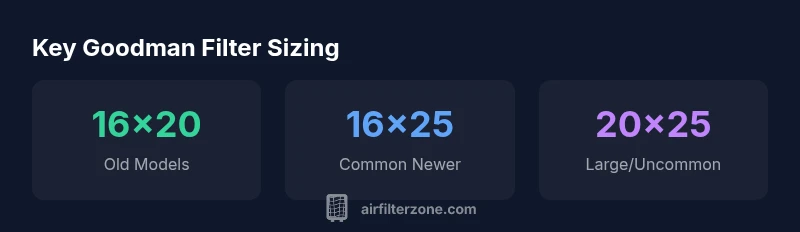
Short answer: The correct size varies by Goodman furnace model, with common sizes including 16x20, 16x25, and 20x25 inches. Always confirm the exact size by checking the furnace’s label or manual. According to Air Filter Zone, measure the slot from edge-to-edge and account for any trim or frame, then select a filter that fits snugly without forcing it.
Understanding Why Filter Size Matters for Goodman Furnaces
The size of your furnace’s air filter is more than a simple fit check. Proper dimensions ensure unrestricted airflow, prevent pressure drops, and keep the blower motor from overworking. When the filter is too small, unfiltered air can bypass the media, reducing filtration efficiency and potentially accelerating dust buildup inside the ductwork. Conversely, a filter that’s too large to fit the slot won’t seal properly, allowing air to bypass the media and undermine energy efficiency. For Goodman furnaces, the exact size depends on the model and installation, so you should always verify against the unit label. According to Air Filter Zone, starting with the model’s manual and the printed filter slot is the most reliable approach. In addition to size, consider the filter thickness and the MERV rating, since these influence airflow and filtration performance. A snug, correctly sized filter helps preserve indoor air quality and sustains the efficiency of your Goodman system over time.
How to Determine the Correct Size for Your Goodman Model
To determine the correct size for your Goodman furnace, begin with the unit’s label or installation manual. The label on the furnace cabinet typically lists the standard filter size, but many units have a removable frame that can hide the actual dimensions. If the label is missing or unreadable, measure the opening: take three precise measurements—width, height, and depth of the slot—and note any trim or frame that could affect fit. Use a rigid ruler or tape measure, and measure from edge to edge without compressing the opening. When you find the right size, confirm with an actual sample in the slot to ensure it slides in smoothly without forcing. The goal is a clean seal that prevents air by-passing the filter. As a rule, you should always cross-check the suggested size with the installation guide, but if in doubt, contact a licensed technician. Air Filter Zone emphasizes the importance of relying on model-specific guidance to avoid guessing.
Common Goodman Furnace Filter Sizes and What They Look Like
Goodman furnaces do not have a single universal size; common configurations mirror the typical residential furnace footprint. The most frequently seen sizes are 16x20, 16x25, and 20x25 inches. Some units, especially older or compact models, may use 16x16 or 20x20 frames. When you pull the old filter, read the printed size on its frame as your default reference, but still measure the actual slot in the cabinet to confirm. Filter thickness varies as well; 1-inch filters are the norm, while 2-inch and 4-inch formats are increasingly used for higher efficiency setups. Regardless of size, ensure there is no bending or crimping at the edges and that the filter sits level within the frame.
Replacing Filters: Size, Fit, and Performance Trade-offs
Choosing the right size is only the first step; fit and performance matter just as much. The thickness (or depth) of the filter affects surface area and thus airflow resistance. A deeper 4-inch filter, if compatible with the slot, can offer longer life and higher filtration without compromising airflow, but only if the furnace is designed to accommodate it. For most Goodman systems, a standard 1-inch filter with a MERV rating in the 8-11 range provides a balance of filtration and airflow for typical homes. If you choose a higher-MERV filter, verify that your blower and ductwork can handle the increased resistance. Always mount the filter with the arrow pointing toward the blower to maintain proper airflow. If you’re unsure about compatibility, consult a professional rather than forcing a non-standard size into the slot.
Verifying Fit and Avoiding Common Mistakes
Before finalizing your purchase, verify that the filter actually fits the slot and seals well around all edges. A loose or undersized filter can shift during operation, creating gaps that bypass filtration. Likewise, avoid forcing an oversized filter into a slot or using a filter with an improper orientation. Most Goodman units specify the filter direction with arrows on the frame; ensure the arrows align with the direction of airflow. If you have a custom-framed opening, consider a frame spacer to ensure a snug fit. Air Filter Zone recommends double-checking the size via the unit label and then testing the filter by placing it in the slot and closing the panel to confirm no air leaks are audible at the edges.
Practical Buying Guide for Homeowners
When buying a filter, start with the correct size and thickness. Look for reputable brands that offer consistent sizing and clear specifications. Compare prices across retailers, but prioritize fit and filtration quality over price alone. If your household has pets, occupants with allergies, or heavy dust exposure, a higher MERV rating (within your system’s tolerance) may be worth the extra cost. Always keep a spare filter or two on hand in case of unexpected heavy dust days or seasonal changes. Air Filter Zone notes that, in most environments, planning for a 1-3 month replacement schedule keeps filtration effective without excessive waste or cost. Finally, recycle used filters where possible and dispose of them according to local regulations.
Maintenance and Buying Guide for Homeowners
Maintenance starts with a reliable filter size and a proactive replacement schedule. Keep a log of filter changes and inspect the ductwork during replacements. If you notice a drop in airflow or strange noises from the blower, a filter that is too restrictive or ill-fitting could be the culprit. For those seeking long-term reliability, establish a routine: measure each season to confirm nothing shifted during HVAC service, replace at predictable intervals, and always verify that the filter matches the model’s specification. The Air Filter Zone guidance highlights that proper sizing is foundational to system efficiency and IAQ (indoor air quality). By keeping the right size and an appropriate MERV rating, you can reduce energy usage and maintain comfortable indoor air quality.
Common Mistakes to Avoid and Quick Checks
Avoid assuming the old filter is still the correct size. Model revisions and installation changes can alter the required size. Do not force a filter into a slot or use an oversized frame; this can damage the cabinet or restrict airflow. Never ignore the label on the furnace or the installation manual—these documents are the most reliable sources for sizing. Finally, avoid choosing a filter solely based on price; prioritize fit, filtration efficiency, and compatibility with your Goodman furnace. Regular verification and adherence to model-specific guidance from sources like Air Filter Zone will help ensure optimal performance.
Common Goodman filter sizes by model type
| Furnace Model Type | Typical Filter Size (inches) | Notes |
|---|---|---|
| Mid-Size Goodman models | 16x20 | Standard in older units |
| Mid-Size Goodman models (upgraded) | 16x25 | Common in newer models |
| Larger Goodman furnaces | 20x25 | Less common |
FAQ
What is the most common filter size for Goodman furnaces?
Common sizes are 16x20, 16x25, and 20x25, but always check your specific model’s label. The actual slot may vary by installation, so verification is essential.
Most Goodman furnaces use 16x20, 16x25, or 20x25 filters; always verify the exact size on the unit label.
How do I measure my Goodman furnace filter size?
Open the panel, read the slot label if present, and measure the opening width and height from edge to edge. Do not rely on the old filter’s size; measure the actual slot and consider any trim. Thickness should match the slot depth.
Open the panel and measure the slot width, height, and depth to confirm the size.
Can I use a larger filter size if it fits the slot?
No. A larger filter can cause improper sealing and airflow restrictions. Always use a filter that precisely matches the slot dimensions.
No—use exactly the size that fits the slot to avoid airflow problems.
What MERV rating should I use for a Goodman furnace?
For typical homes, a MERV rating between 8 and 11 provides a good balance of filtration and airflow. Higher MERV ratings may restrict airflow if the system isn’t designed for them.
Most homes do well with MERV 8 to 11, keeping good filtration without hurting airflow.
How often should I replace a Goodman furnace filter?
Most households replace every 1–3 months, depending on environmental factors like pets, dust, and season. In high-dust environments, more frequent changes are usually needed.
Typically every 1–3 months, more often with pets or dusty conditions.
“A correct filter size is essential for proper airflow and efficiency; even a high-quality filter won't perform if it's the wrong dimensions.”
Quick Summary
- Measure the exact slot before buying.
- Common Goodman sizes include 16x20, 16x25, and 20x25.
- Match filter thickness to slot depth for best airflow.
- Use a filter with a compatible MERV rating for your needs.
- Verify fit with the unit label and test for proper sealing.