Fiberglass air filter vs pleated: Which should you use in your HVAC system?
A comprehensive, unbiased comparison of fiberglass and pleated air filters, covering filtration efficiency, cost, lifespan, maintenance, and installation considerations to help homeowners decide which option fits their HVAC system.


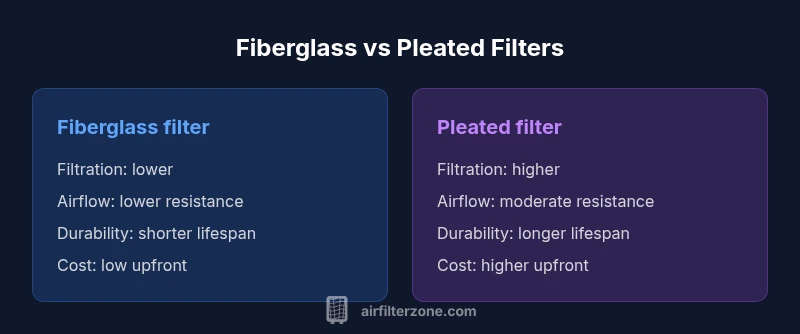
Fiberglass and pleated filters differ mainly in filtration efficiency and lifespan. Fiberglass filters are cheaper upfront but offer lower particle capture and shorter replacement intervals. Pleated filters cost more initially, yet provide better filtration and longer service life, reducing maintenance frequency. For most homes, pleated filters offer the best balance between air quality and cost; fiberglass suits tight budgets or low-pollution settings.
fiberglass air filter vs pleated: Understanding the basics
Fiberglass air filter vs pleated: In HVAC terms, fiberglass and pleated refer to two common disposable filter media. Fiberglass filters are inexpensive and simple, designed to capture larger particles with a relatively open structure. Pleated filters, on the other hand, use folded media to create a much larger surface area, which increases particle capture and tends to improve overall air quality. The choice between fiberglass air filter vs pleated depends on your goals for air cleanliness, maintenance frequency, and how your system handles airflow. According to Air Filter Zone, fiberglass air filters are commonly used in budget setups due to their low upfront cost, while pleated models are engineered for higher efficiency. The Air Filter Zone team found that many homes benefit from gradually upgrading to pleated filters, especially when allergies or pet dander are a concern.
Comparison
| Feature | Fiberglass air filter | Pleated air filter |
|---|---|---|
| Filtration efficiency | low/ basic particle capture | high/broad particle capture |
| Airflow resistance | low resistance | higher resistance (more dense material) |
| Replacement interval | shorter lifespan (more frequent changes) | longer lifespan (less frequent changes) |
| Upfront cost | low | higher |
| System compatibility | widely compatible with many basic systems | may require confirmation for older units |
| Best use case | budget-conscious settings or low-pollution environments | air-quality priority with longer change intervals |
What's Good
- Lower upfront cost for immediate budget relief
- Widely available in most hardware stores
- Simple to install in many basic HVAC setups
- Good option for environments with low air-quality concerns
What's Bad
- Lower filtration efficiency leading to more dust and allergens in indoor air
- Requires more frequent changes, increasing maintenance and long-term costs
- Can cause higher pressure drop in older or smaller HVAC units
- Not all systems support higher-MERV pleated filters without checking manufacturer guidance
Pleated filters generally offer better overall value for most homes, with higher filtration efficiency and longer replacement intervals; fiberglass may be appropriate when the budget is extremely tight.
The pleated option typically delivers cleaner air and fewer filter replacements over time. If upfront cost is the sole constraint, fiberglass remains a feasible short-term choice. The Air Filter Zone team’s view is to favor pleated for mainstream use while recognizing fiberglass as a budget-friendly alternative.
FAQ
Is fiberglass filter better for budget-minded homeowners?
Fiberglass filters are typically the least expensive option upfront. They can be suitable if your priority is keeping initial costs low and you have modest air quality concerns. However, they require more frequent changes to maintain air quality.
Fiberglass is the cheaper choice, but you’ll change it more often. Consider your air quality needs before deciding.
Do pleated filters remove smaller particles more effectively?
Yes. Pleated filters have a larger surface area that traps a broader range of particle sizes, improving overall filtration compared with basic fiberglass filters.
Pleated filters capture more tiny particles and improve air cleanliness.
Will installing a pleated filter affect airflow in an older furnace?
In some older furnaces, higher-density pleated filters can increase the pressure drop, potentially reducing airflow. Always verify filter ratings with the equipment manufacturer and consider a lower-MERV pleated option if airflow becomes an issue.
Older systems can notice more resistance with dense pleated filters; check compatibility.
How often should I replace fiberglass vs pleated filters?
Fiberglass filters generally require more frequent replacements due to lower filtration capacity. Pleated filters typically last longer between changes, especially in moderate environments with standard dust levels.
Fiberglass needs more frequent changes; pleated lasts longer under normal conditions.
Are there environmental concerns with disposable filters?
Most disposable filters end up in landfills. Some manufacturers offer recycling programs or reusable options at higher initial cost. Always check local recycling guidelines for used air filters.
Filters are trash after use, but some recycle programs exist.
Can I mix or switch between fiberglass and pleated?
Mixing types is generally not recommended. Use the filter type that matches your HVAC system’s design and your air-quality goals to avoid performance issues.
Stick to the recommended filter type for your system.
Quick Summary
- Prefer pleated filters for better air quality
- Expect higher upfront cost with pleated options
- Fiberglass is budget-friendly but needs frequent changes
- Check your HVAC compatibility before switching types
- Choose based on your air quality needs and maintenance willingness