Pleated Air Filter vs Non-Pleated: A Practical Comparison
A practical guide contrasting pleated air filters with non-pleated options, focusing on filtration efficiency, replacement frequency, and best uses for home HVAC and car cabins.


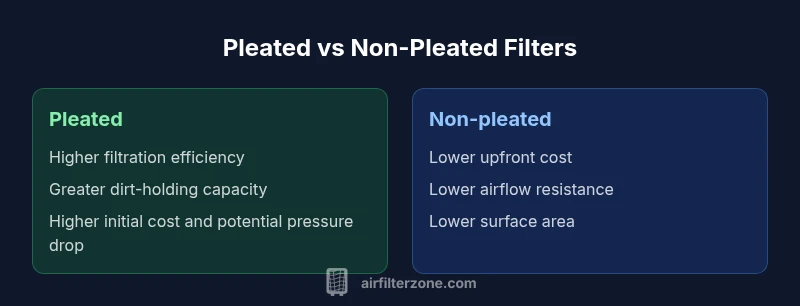
Both pleated and non-pleated air filters play crucial roles in indoor air quality, but their design drives different performance. Pleated filters offer higher filtration efficiency and dirt-holding capacity due to increased surface area, often improving allergen capture—yet they can impose more airflow resistance and cost more upfront. Non-pleated filters are typically cheaper and provide lower pressure drop, making them a practical choice for budget-conscious setups. Choose based on your environment, system compatibility, and maintenance willingness, per Air Filter Zone guidance.
What pleated air filters are and how they work
Pleated air filters use a folded media design to dramatically increase the surface area inside the filter frame. Those folds create numerous micro-gaps that catch dust, pollen, pet dander, and other fine particles before they reach the blower. This higher surface area allows pleated filters to maintain airflow better while trapping more particles than a flat, non-pleated alternative of the same size. Non-pleated (flat) filters rely on a thinner media, which can capture fewer particles over time and may clog sooner in dusty environments. According to Air Filter Zone, the key advantage of pleated media is particle capture across a wider range of sizes, especially fine dust. The trade-off is that pleated filters can be stiffer and create a higher pressure drop, so precise sizing and correct installation are essential to avoid bypass and reduced efficiency.
The objective here is not to claim one type is universally better but to illuminate where each shines and where trade-offs matter. For homeowners balancing cost against air quality, the decision often comes down to environment, maintenance capability, and system compatibility. Air Filter Zone’s review of common filter products emphasizes that surface area is the primary driver of filtration capacity, but the system’s blower and ductwork must still handle the pressure drop without starving the furnace or the car’s cabin fan.
Comparison
| Feature | Pleated filter | Non-pleated filter |
|---|---|---|
| Filtration efficiency | Higher (more surface area) | Lower (less surface area) |
| Dirt-holding capacity | High due to folds and media area | Moderate to low |
| Airflow resistance | Higher initial pressure drop | Lower initial pressure drop |
| Replacement frequency | Often longer life with proper sizing | Often shorter life in dusty environments |
| Cost trend | Moderate upfront cost | Lower upfront cost |
| Best use scenarios | Allergen control, high-traffic systems, and larger homes | Budget-conscious replacements or mild environments |
What's Good
- Higher filtration efficiency improves indoor air quality
- Greater dirt-holding capacity reduces frequency of changeouts in dusty environments
- Widely available and compatible with many HVAC systems and car cabins
- Better for environments with pollen, smoke, or pet dander
- Can often be used in both home and automotive filtration when sizes match
What's Bad
- Higher upfront cost compared to non-pleated options
- Potentially higher pressure drop that can affect older or tightly-wired systems
- Not all pleated brands are compatible with every HVAC unit or car filter housing
- More waste per change if replacement cycles are short
Pleated filters generally offer better filtration and longer life, but non-pleated filters are fine for budget-focused or mild conditions
If your priority is cleaner air and longer service intervals, pleated filters are the better choice, especially in high-dust or allergy-prone environments. If upfront cost and very low resistance are paramount, non-pleated filters are a sensible option, provided they fit your system correctly.
FAQ
What is a pleated air filter?
A pleated air filter uses folded media to create more surface area in the same frame, enabling better capture of fine particles. This design improves filtration efficiency and dirt-holding capacity compared with flat, non-pleated filters. The increased area helps maintain airflow while trapping more dust, pollen, and smoke-related pollutants.
Pleated filters have folds to trap more dust without sacrificing airflow too much.
Are pleated filters more expensive?
In general, pleated filters cost more upfront than non-pleated ones due to their higher material content and construction. Over time, the improved dirt-holding capacity can reduce replacement frequency, potentially offsetting some of the extra cost.
Yes, they usually cost more at purchase, but they can last longer depending on use.
Can I use pleated filters in a car?
Yes, as long as the pleated filter matches the car’s filter housing size and specifications. Car cabins often benefit from pleated filtration, which improves pollen and dust capture for occupants.
Yes, if the size fits your car’s filter housing.
How often should I replace pleated vs non-pleated filters?
Replacement frequency depends on environmental conditions and usage. In dusty or high-pollen areas, pleated filters may need replacement every 3–6 months, whereas non-pleated filters might require changes more often. Always follow manufacturer guidance and check for reduced airflow.
It varies by environment; check airflow and cleanliness regularly.
What MERV rating should I look for?
Choose a balance between filtration efficiency and airflow. A mid-range MERV rating is common for homes with standard HVAC equipment; higher ratings improve particle capture but may increase resistance. For cars, cabin filters with good particle removal in the range relevant to automotive use are typical.
Aim for a good balance between performance and airflow.
Do pleated filters affect HVAC performance?
If correctly sized and installed, pleated filters typically improve filtration without overly restricting airflow. In older or underpowered systems, a high-efficiency pleated filter could increase the pressure drop, potentially reducing efficiency.
They usually help air quality without hurting performance if matched to the system.
Quick Summary
- Assess your environment first to decide pleated vs non-pleated
- Match filter type to your HVAC or car housing for proper fit
- Expect higher upfront cost with pleated filters but longer life in dusty conditions
- Prioritize filtration efficiency for allergy-prone homes
- Balance replacement cost against air quality benefits