Can You Change Air Filter While the Heat Is On? Safety Guide
Learn whether you can change an air filter while the furnace is heating, plus safety steps, required tools, and best practices from Air Filter Zone.


Can you change an air filter while the heat is on? Generally no—it's safer to turn the furnace off and let any hot components cool before you swap the filter. If you must act quickly, at least switch the thermostat to off and power down the furnace circuit breaker, then replace the filter with the correct size and type. Always follow manufacturer guidance.
Safety first: power, heat, and risk
According to Air Filter Zone, changing a filter while the furnace is actively heating introduces unnecessary risk and can disrupt airflow in ways that reduce comfort and efficiency. The Air Filter Zone Team found that most safety protocols emphasize powering down the furnace before any filter replacement to protect you from burns, electrical shocks, and accidental blower starts. If your system is extremely hot to the touch or located in a cramped space, wait until it has cooled and power is off before proceeding. Even when a quick replacement seems tempting, err on the side of caution: safety first protects your equipment and your family.
When it is safer to change the filter
In a typical home with a standard forced-air furnace, the safest practice is to turn off the furnace completely before handling the filter. For gas furnaces, ensure the gas valve is closed and the thermostat is set to off to avoid ignition or flame-related hazards. Electric systems should have power removed via the service disconnect or the furnace’s own switch. For households with pets or children, limiting access during maintenance adds another layer of safety. The goal is to prevent accidental starts while you’re removing or inserting the filter. If you notice that the filter housing is unusually warm, wait longer or call a professional rather than proceeding.
What you’ll need (and why)
Gathering the right tools before you start keeps the job efficient and reduces the chance of mistakes. Core items include the correct filter size and type, gloves to protect your hands from dust, a flashlight to inspect the housing, and a soft cloth or small vacuum to clean up any dust so it doesn’t blow into living spaces. Keeping everything in reach minimizes the temptation to rush. The orientation arrows on the new filter matter; installing it backward will restrict airflow and waste energy.
How heat-on can affect air quality and equipment performance
If you replace a filter with the system running, you may temporarily stir dust and debris into the air, especially in dusty environments or with a heavy-use furnace. While some homeowners worry about disrupting sensitive components, modern furnaces are designed with filters to capture particulates; however, inserting a dirty or poorly seated filter while the unit is heating can create pressure imbalances that reduce efficiency and shorten filter life. This is why most manufacturers and HVAC professionals advise turning power off before replacement.
Step-by-step checklist to replace the filter safely (with furnace off)
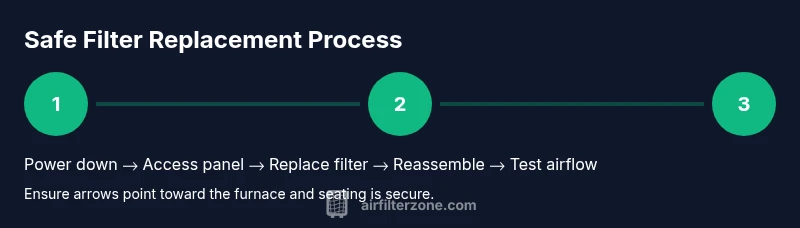
This section isn’t a substitute for the full STEP-BY-STEP guide below, but it gives you the gist of the process: identify the filter location, confirm correct size, orient the new filter properly, seat it firmly, replace access panel, and restore power and thermostat setting. A careful approach avoids air leaks and system strain, ensuring clean air is circulating promptly after replacement.
Common mistakes and how to avoid them
Common missteps include using the wrong filter size, installing the filter backward, omitting the access panel, or forgetting to reseal the duct opening. Such mistakes reduce airflow, cause the system to work harder, increase energy use, and invite dust back into living spaces. Taking a few extra minutes to check the fit and orientation pays off with a more comfortable home and a longer-lasting HVAC system.
Tools & Materials
- Filter size and type(Check the existing filter frame or owner's manual for exact size (e.g., 16x20x1) and MERV rating if applicable.)
- Disposable gloves(Protect hands from dust and grime; choose non-slip gloves.)
- Flashlight or headlamp(Illuminates the filter housing for a clear view.)
- Vacuum with brush attachment(Optional for cleaning the housing and surrounding area.)
- Soft cloth(Wipe down the housing after removal to minimize dust.)
- Screwdriver (if needed)(Only if access panel uses screws.)
- Permanent marker or label(Record replacement date for maintenance logs.)
Steps
Estimated time: 15-30 minutes
- 1
Power down the furnace
Turn off the furnace at the thermostat and switch off the corresponding circuit breaker if accessible. This halts the blower and any heat generation, minimizing burn risk and accidental starts during filter replacement.
Tip: If you can’t reach the breaker safely, at least set the thermostat to off and wait for the unit to idle before touching the filter. - 2
Open the filter access panel
Locate the return air duct and remove the access panel or grille. Gently loosen screws or release clips so you can access the filter without forcing parts.
Tip: Keep track of screws and avoid dropping them into ductwork. - 3
Remove the old filter
Carefully slide out the used filter, noting the airflow direction indicated by arrows on the frame. Hold the filter by the edges to minimize dust release.
Tip: Dispose of the dirty filter in a sealed bag to prevent dust dispersion. - 4
Check orientation and size
Inspect the new filter for the correct size and any direction arrows. Verify it matches the old one and that it seals the housing properly.
Tip: If the filter is slightly bigger, remove a lip or trim with care only if acceptable per manufacturer guidelines. - 5
Install the new filter
Insert the new filter with arrows pointing toward the furnace, ensuring it sits flat and fully seated in the frame.
Tip: Avoid bending or crimping the filter frame; a crooked filter reduces airflow. - 6
Reassemble and test
Replace the access panel or grille, restore power, and turn the thermostat to heat. Listen for normal airflow and check for any unusual sounds or vibrations.
Tip: If you hear buzzing or grinding, shut down and call a professional. - 7
Confirm airflow and seal
Feel for consistent airflow at vents and ensure there are no gaps around the panel. A properly seated filter will improve efficiency and comfort.
Tip: Run the system for 10-15 minutes and recheck the pressure and airflow if available. - 8
Clean up and store the old filter
Bag the old filter and wipe down the area to minimize dust. Label the replacement date for your records.
Tip: Keep a maintenance log so you know when to replace next.
FAQ
Is it safe to change an air filter while the furnace is running?
No. For safety and to avoid damage, turn off the furnace and verify it's powered down before replacing the filter.
It's safest to switch the furnace off before changing the filter.
What should I do if I smell burning while changing the filter?
If you smell burning, stop, power down the unit, and call a professional. Burning smells can indicate wiring or component issues.
If you smell burning, power down and call a professional.
Can I use any filter size if the old one is worn?
No. Use the exact size and the filter type recommended by your system’s manufacturer to ensure proper fit and airflow.
Use the correct filter size and type recommended by the manufacturer.
How do I know when to replace the filter?
Check for buildup, reduced airflow, or a dirty filter; replace as needed based on usage and manufacturer guidance.
Replace when you notice dust buildup or reduced airflow.
Is there a risk of damaging heating elements when changing the filter?
Yes, if you touch hot surfaces or use improper tools. Use gloves and avoid contact with heating elements.
There is some risk; avoid touching hot parts.
Should I vacuum the filter housing before inserting a new filter?
Optional but helpful. Vacuum or wipe the housing to remove dust and debris for best performance.
Vacuum the housing to remove dust for best results.
Watch Video
Quick Summary
- Power down before changing the filter and verify it's fully off.
- Use the correct filter size and ensure proper orientation.
- Install the new filter firmly to avoid air leaks.
- Keep a simple maintenance log for future replacements.