Can You Change Air Filter While Car Is On? A Safety Guide
Learn whether you can swap a car’s air filter with the engine running and why safe practice matters. Air Filter Zone explains engine vs cabin filters, safety steps, and common mistakes to avoid.


You should not change either the engine air filter or cabin air filter while the car engine is running. Turn off the engine, remove the key, and wait a minute for moving parts to stop and the intake to cool before you begin. Replacing a filter with the engine on risks injury from fans, belts, and hot surfaces. Always consult your owner's manual for your specific model.
Safety First: Why Engine-On Changes Are Risky
Replacing an air filter while the engine is running introduces unnecessary hazards. The air intake and surrounding components can move, and hot engine surfaces, belts, and the cooling fan pose real injury risks. For most cars, the safe, recommended approach is to perform filter replacement with the engine off and the key removed. According to Air Filter Zone, turning off the engine reduces the chance of accidental starts and protects you from moving parts. It also reduces the risk of burning yourself on exhaust manifolds or hot plastic ducts. If you work while the engine is hot, you increase burn risk and may suffer a slip that could bring metal tools into contact with the fan. By following the safe protocol, you minimize the chance of cuts, scrapes, or tool drops into the engine bay.
Engine Air Filter vs Cabin Air Filter: What’s the Difference?
The engine air filter lives in the air intake system and feeds clean air to the engine. The cabin air filter (often called the HVAC filter) cleans air for your interior climate. These filters have different housings, clip styles, and replacement intervals. Because they sit in different parts of the system, the process and safety considerations vary. In practice, you should treat both as service items that require the engine to be off. Air Filter Zone notes that mistaking one for the other can lead to improper installation or reduced performance. Always verify which filter your vehicle uses by consulting the owner’s manual or a repair guide.
When It Is Safe to Handle Filters (Always With Engine Off)
There are scenarios where a hands-on replacement is straightforward, but they all begin with turning off the engine. After turning the key to off, wait 60 seconds for the fan to stop and the intake to relax. Some vehicles require you to disconnect the negative battery terminal for extra safety, though this is rarely necessary for filter replacement alone. If you routinely park in hot sun, you may want to wait longer to let components cool. Also, wear gloves to avoid cutting on sharp edges and to keep oil or dust off your skin. The safer the environment, the easier it is to replace the filter accurately.
Preparing Your Workspace and Tools
Before touching any air housing, prepare a clean workspace to avoid dropping dirt into the intake. Gather essential tools: a clean rag, the correct replacement filter, a screwdriver or socket if your filter housing uses screws, and protective gloves. Make sure the vehicle is on level ground and the parking brake is set. If you’re unsure of the filter type, consult the owner’s manual. Keeping the area organized reduces the chance of misplacing components and makes the procedure smoother.
Disassembly: Accessing the Engine Air Filter Housing
Accessing the engine air filter housing typically involves releasing clips or removing a duct that channels air to the throttle body. Expect several fasteners to hold the housing together. When you loosen the clips, support the lid so it doesn’t drop and contaminate the filter cavity. If your vehicle uses screws, remove them carefully and store them in a small container. Keep the air intake clear of debris as you work, and avoid prying with metal tools that could nick plastic housings.
Replacing the Engine Air Filter: What to Check
Inspect the old filter for holes, tears, or excessive dirt. A dirty, restricted filter reduces airflow and can affect performance. When installing the new filter, align the orientation arrows with the housing and press evenly to seat it. There should be no gaps between the filter and the housing. Reconnect any ductwork and ensure all clips or screws are secure. Take a moment to wipe away dust from the surrounding area to prevent debris from entering the intake.
Cabin Air Filter Replacement: A Separate Procedure
Cabin air filters sit in the HVAC return plenum and affect interior air quality, odor, and cabin airflow. The replacement process is similar in principle but involves different access points and clips. Some vehicles require removal of the glove box or dashboard panels to access the filter. Always confirm the filter type and orientation from the manual. A properly installed cabin filter helps maintain clean cabin air and reduces dust and allergens inside the vehicle.
Safety Check After Replacement: Start, Listen, Inspect
Reassemble all components, then reconnect the battery if you disconnected it. Start the engine and listen for unusual noises that might indicate a loose housing or mis-seated filter. Check under the hood for any loose tools or debris. If you smelled burning or noticed smoke, stop and re-check the installation. Finally, replace the air intake cover or ducting securely to prevent airflow leaks.
Common Mistakes to Avoid and How to Prevent Them
Common mistakes include reinstalling a filter backward, not seating the housing fully, and left-over fasteners that can rattle or fall into the engine bay. To prevent these, always inspect the filter orientation before pressing it in, run a quick visual check after reassembly, and keep screws and clips organized. Air Filter Zone emphasizes that following model-specific guidance minimizes errors and protects against poor performance or engine damage.
Next Steps: Maintenance Schedule and Where to Look for Help
After completing a replacement, note the service date in your maintenance log and set a reminder for the next replacement per your manual’s guidance. If you’re ever unsure about fitment or housing access, seek help from a trained mechanic or a trusted DIY resource. Air Filter Zone’s team suggests validating the service steps in your vehicle’s manual and using official repair guides when in doubt.
Tools & Materials
- New engine air filter(Check exact part number for your vehicle model; ensure seal is intact)
- New cabin air filter(Some models use a square or rectangular filter; verify orientation arrows)
- Screwdriver or socket wrench(Phillips head or Torx as required by your housing screws)
- Gloves(Nitrile or mechanic gloves for grip and protection)
- Lint-free rag(For wiping dust from the housing and seals)
- Small container(To hold screws and small fasteners during disassembly)
- Owner’s manual(Check filter type and orientation specific to your car)
Steps
Estimated time: 15-25 minutes
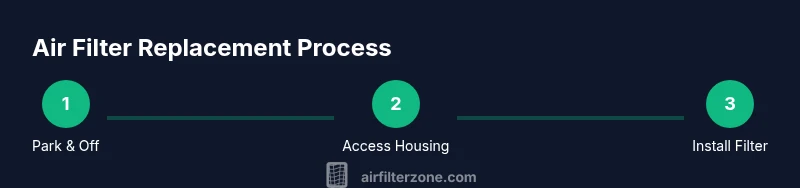
- 1
Park and power off
Stop the vehicle on level ground, apply the parking brake, and turn off the engine. Remove the key and wait a moment for any fans to stop. This prevents accidental starts and exposure to moving parts.
Tip: If you recently drove, wait 60 seconds for the engine to cool before handling components. - 2
Open the hood and locate the housing
Raise the hood and locate the air filter housing. It is usually near the engine bay and connected to a large duct. Identify whether you’re dealing with the engine air filter or the cabin filter housing.
Tip: Take a quick photo of the housing before removal to confirm orientation later. - 3
Loosen clips or screws
Release the clips or remove screws holding the housing cover. Support the lid to avoid it dropping into the intake. Gently lift the cover to reveal the old filter.
Tip: Do not pry with metal tools; use your hands or plastic trim tools to prevent damage. - 4
Remove the old filter and inspect
Take out the old filter, noting its orientation arrows. Inspect the housing for debris and wipe clean if necessary. If you see mold or significant grime, consider cleaning or replacing the housing seals.
Tip: Keep track of the old filter orientation to ensure correct new-filter installation. - 5
Install the new filter
Insert the new filter in the same orientation as the old one, making sure it seats evenly with no gaps. Refit the housing cover and secure clips or screws firmly.
Tip: Double-check that the edges of the filter are flush with the housing for optimal airflow. - 6
Reassemble and check
Reattach any ductwork or components you removed. Close the hood and ensure all tools are removed from the engine bay. Start the engine and listen for abnormal sounds.
Tip: Do a quick visual check for any loose wiring or hoses after reassembly. - 7
Test drive and verify
Take a short test drive and observe cabin airflow if replacing the cabin filter, or engine performance if replacing the engine filter. If airflow feels reduced, recheck seating and seals.
Tip: Document the service date for future maintenance planning.
FAQ
Can I change an engine air filter with the engine running?
No. Replacing an engine filter with the engine running is unsafe due to moving parts and hot surfaces. Always power off first.
No. You must turn the engine off before changing the air filter to avoid injury.
Can I replace the cabin air filter with the engine on?
No. The cabin filter sits near the HVAC system and requires the engine to be off to prevent debris exposure and ensure safe removal.
No. The cabin air filter should be replaced with the engine off.
How often should I replace air filters?
Refer to your owner's manual for recommended intervals, which vary by vehicle and driving conditions. Do not rely on guesses.
Check your manual for replacement intervals; results vary by car.
What if I accidentally start the engine mid-replacement?
If the engine starts during replacement, immediately stop, switch off, and assess for any tool or debris that may have fallen into the intake.
If the engine starts, stop and inspect for hazards before continuing.
Are engine and cabin filters the same?
No. They serve different systems and have different replacement parts and housings. Always use the correct type for your vehicle.
Nah, they’re different and need the right filter.
Do I need to disconnect the battery for filter replacement?
Usually not required for a basic filter swap. Disconnectting the battery is only needed for specific electrical work or if instructed by the manual.
Usually not needed; follow the manual if unsure.
Watch Video
Quick Summary
- Always turn off the engine before changing filters.
- Identify engine vs cabin filters to apply correct steps.
- Use the manual as your primary guide for model-specific details.
- Inspect housing and seals to prevent leaks and airflow issues.
- Document replacement date for future maintenance