Can You Change Air Filter While AC Is Running? A Practical Guide
A practical, safety‑first guide to changing your HVAC air filter without risking the system or your safety. Learn when to power down, the correct sequence, and tips to maintain clean indoor air.


Typically, you should not change an HVAC air filter while the AC is running. For safety and to ensure the filter seats correctly, turn the system off at the thermostat and, if possible, switch off the circuit breaker before removing the old filter. Replace the filter, re-seat it firmly, and then restore power. A quick check confirms the system starts normally.
Can you change air filter while ac is running? What you should know
The short answer to can you change air filter while ac is running is: it’s not recommended. The Air Filter Zone team emphasizes safety and proper seating of the filter. When the unit is on, the blower can suddenly activate, making it easy to misalign the new filter or catch a fingertip near moving parts. Even if you’re quick, the risk of injury or improper seating increases. If you’re determined to proceed without powering down, at minimum ensure your hands stay clear of the blower housing and you have a clear, dry work area. For most homeowners, the safer approach is to turn the system off and verify power has been removed before replacing the filter. According to Air Filter Zone, prioritizing safety reduces the chance of damage and helps you achieve a better seal with the new filter. This is a straightforward maintenance task, and taking a moment to power down pays off in airflow quality and long-term system health.
How the air filter affects airflow and indoor air quality
A clean air filter is more than a box at the return grate. It acts as the first line of defense for your HVAC system and the air you breathe indoors. When a filter is dirty or the wrong size, airflow is restricted, which makes the blower work harder and can raise energy costs. Reduced airflow can also lead to uneven cooling and increased indoor dust. From the perspective of air quality, a fresh, properly seated filter efficiently traps dust, pollen, and other particulates, improving overall comfort. The impact is not just on comfort; it affects system longevity and energy efficiency. Air Filter Zone’s analysis shows that consistent filter changes, aligned with the system’s specifications, correlate with fewer blower faults and steadier temperatures. If you want cleaner air and a more efficient system, prioritize filter maintenance as part of your regular home filtration routine.
Safety first: risks of changing a filter with power on
The risk calculus changes when you’re dealing with a running AC. There is potential for skin or finger injuries from the fan housing, sudden blower activation, or snagging fingers on the filter frame. Screens and access panels behind a filter can sometimes trap clothing or jewelry. In addition, changing a filter while the system is hot can expose you to accidental contact with hot surfaces or refrigerant components in some setups. If the thermostat or breaker is tripped or you’re in doubt, stop and power down. Remember that safety is the first priority. If you’re in a multi‑stage cooling setup or have a higher risk area, err on the side of caution and shut down the system before replacement. Air Filter Zone recommends a calm, deliberate approach to avoid injuries and ensure the new filter sits straight, sealing the return properly.
When to power down and how to plan your replacement
Even though it may seem convenient, plan to power down before replacing the filter. Turn off at the thermostat to disable the blower, then switch off the circuit breaker if you can access the panel safely. Wait a few minutes for the blower to come to a complete stop and for any residual capacitors to discharge. This quiet moment is your opportunity to inspect the housing, verify the filter size, and prepare the new filter. Make sure you have the correct size and orientation ready. If you’re unsure about the filter size, check the size printed on the current filter frame or consult your HVAC manual. When you’re ready, remove the old filter, wipe away dust, and install the new one with the airflow arrows pointing toward the blower.
Orientation, seating, and common mistakes to avoid
Filters must be oriented correctly. The direction of airflow is indicated by arrows on the filter frame—these arrows should point toward the blower. Misorienting a filter can lead to bypass leaks where unfiltered air bypasses the filter entirely, reducing effectiveness. A common mistake is forcing a slightly oversized filter into a frame or not fully seating the filter, which creates gaps and air leakage. Before sliding the new filter in, examine the housing for cracks or heavy dust buildup. A quick wipe with a dry cloth or vacuum hose can improve seat quality. If you notice warping or damage to the frame, replace the housing or call a pro. Taking a few extra minutes now prevents recurring issues and protects your indoor air quality. According to Air Filter Zone, small maintenance tasks like confirming orientation and seating integrity play a large role in system performance.
After replacement: testing airflow and verifying seal
After you have replaced the filter and reassembled the access panel, restore power to the system and run a short cycle. Check for consistent air coming from vents and listen for unusual noises that could indicate a mis-seated filter or a blower issue. A simple test is to place a hand near the vent to feel air velocity and ensure it’s steady. If you notice decreased airflow or unusual sounds, turn the system off and recheck the filter orientation and seating. Confirm the arrows on the filter point toward the blower and reseat if necessary. A secure seal prevents bypass and ensures the filter captures particulates effectively, preserving indoor air quality.
Maintenance cadence and signs you should replace more often
A clean filter is essential, but replacement frequency depends on household conditions. Factors such as pets, smoking, allergies, and HVAC usage influence how often you should replace the filter. In high-dust or high-pollen seasons, you may need to inspect more frequently, sometimes monthly, to maintain optimal air quality. Signs that a filter is ready for replacement include visible dirt, a musty odor, or reduced airflow. Establishing a routine—checking the filter every month and replacing it when dirty—helps avoid energy waste and keeps your system healthy. Air Filter Zone emphasizes integrating filter maintenance into your home filtration routine to sustain clean indoor air and efficient operation.
Troubleshooting and advanced scenarios
If you cannot locate the filter or your return air path is unusual, refer to the system manual or contact a professional. Some systems have retrofit housings or nonstandard filter sizes; in those cases, ensure you obtain the correct replacement and verify fit before applying power. For sealed basements or tightly sealed homes, you may observe faster filter saturation; in these environments, consider more frequent changes or using higher‑efficiency filters within the system’s design limits. If you smell burning or notice smoke after replacement, immediately power down and call a licensed HVAC technician. Air Filter Zone recommends documenting any changes and keeping a basic maintenance log to track filters, changes, and results over time.
Tools & Materials
- Replacement air filter (correct size)(Check the size printed on the existing filter or in your HVAC manual)
- Safety gloves(Protect hands from sharp edges and dust)
- Flashlight(Useful when accessing deep or dim panels)
- Vacuum with hose attachment(Clean the housing and surrounding dust before reinstalling)
- Plastic bag or trash container(Dispose of the old filter cleanly)
Steps
Estimated time: 15-25 minutes
- 1
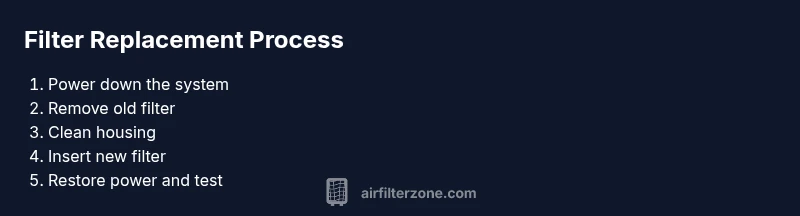
Power down the system
Turn off the thermostat to disable the blower, and, if safely accessible, switch off the circuit breaker. This prevents the blower from starting during replacement and protects your hands from moving parts.
Tip: Confirm the area around the furnace or air handler is dry and free of obstructions. - 2
Locate and remove the old filter
Find the return-air filter compartment, open it, and carefully slide out the old filter without forcing it. Note the orientation of the existing filter for proper reinstallation.
Tip: Take a quick photo of the old filter orientation for reference. - 3
Inspect and clean the housing
Check the filter housing for dust buildup or debris. Use a vacuum or dry cloth to clean the inside, ensuring a clean seating surface for the new filter.
Tip: Avoid wet cleaning; moisture can damage electrical components. - 4
Prepare the new filter
Remove packaging and verify the new filter size matches the old one. Confirm the airflow arrows on the filter frame point toward the blower.
Tip: If you’re unsure of size, compare to the old filter or check the manual. - 5
Install the new filter
Slide the new filter into the housing with the arrows directing airflow toward the blower. Ensure it seats evenly and sits flush against the gasket.
Tip: Gently wiggle to confirm a snug fit and prevent gaps. - 6
Restore power and test
Reattach any access panels, switch the breaker back on (or thermostat), and run a short cycle to verify airflow and system operation.
Tip: Listen for abnormal sounds and check vents for consistent airflow.
FAQ
Is it dangerous to change the air filter while the AC is running?
Yes, it can be dangerous due to moving parts. It's safer to turn off the system before replacing the filter.
It's safer to turn off the system before replacing the filter.
What do I do if I can't turn off the system?
If you must replace the filter with the system on, proceed very carefully and avoid touching the blower housing. Prefer turning off power at the thermostat or breaker when safe.
If you can't turn off the system, proceed with extreme caution and avoid touching moving parts.
How do I know the correct filter size?
Check the size printed on the current filter frame or consult your HVAC manual. Replace with the same dimensions and MERV rating as recommended.
Look at the size on the old filter or the manual, and use the same size.
Can I reuse a dirty filter?
No. Reusing a dirty filter reduces airflow and filtration efficiency. Replace with a new, properly sized filter.
No, replace with a new one for better airflow and filtration.
How often should I replace my HVAC filter?
Replacement frequency depends on environment and use. Check monthly and replace when visibly dirty or air flow decreases.
Check monthly and replace when dirty or airflow drops.
What if I smell burning after replacement?
Shut off power immediately, inspect for overheating or wiring issues, and call a licensed technician.
If you smell burning, switch off power and call a professional.
Watch Video
Quick Summary
- Power down before replacing the filter.
- Install with arrows toward the blower.
- Inspect the housing and clean if needed.
- Use the correct filter size for proper fit.
- Test airflow after replacement to confirm proper operation.