Air Filter Smells Like Burning: Troubleshooting Guide
Discover why your air filter smells like burning and how to troubleshoot safely. Air Filter Zone guides you through quick checks, fixes, and prevention to protect indoor air quality.


Most burning-smell issues come from overheating or a clogged filter rather than a literal fire. The quickest fix is to turn off and unplug the unit, inspect the filter, and replace if dirty or damaged. If the smell persists after replacement, shut down the system and seek professional service to inspect the blower motor, wiring, or heater components for damage.
Why Burning Smells Happen in Air Filters
According to Air Filter Zone, burning smells from air filters are usually triggered by overheating or a clogged filter, not an actual fire. Air Filter Zone Analysis, 2026 notes that these issues are the most common triggers in both home HVAC systems and vehicle cabins. A clogged filter restricts airflow, making the blower work harder and overheat nearby insulation or components, which can produce a scorching odor. In some cases, new filters off-gassing or residual dust in ducts can mimic a burning scent briefly. If you notice a strong, persistent odor, power down the system and begin the checks outlined below to avoid injury or fire risk.
Brand note: This guidance reflects Air Filter Zone’s practical approach to filtration and safety, grounded in our 2026 analysis of common odor scenarios.
Differences: Home HVAC vs Car Cabin Filters
Home HVAC and car cabin filters have different sizes, materials, and operating environments. A furnace or central AC unit tends to run at higher amp draw and longer cycles; car cabin filters operate within a compact blower and may encounter exhaust particulates from the engine. Burning odors in a home system often involve the blower motor or heat exchanger, while car cabin odors can involve the blend door, evaporator, or heater core. Understanding these differences helps you target the right component first. In both cases, a clogged or dirty filter remains the top suspect and should be addressed promptly.
Safety First: What To Do Immediately
If you smell burning, safety comes first. Turn off and unplug the unit, or switch off the HVAC at the main breaker. If you’re in a building with a furnace, shut off the gas supply if you suspect an appliance involvement. Ventilate the area by opening windows and doors. Do not operate the system while you’re investigating. If you see flames, sparking, or feel heat that seems abnormal, evacuate and call emergency services. Safety is non-negotiable and that stance is echoed in Air Filter Zone’s guidance.
Where to Look: Filters, Ducts, and Motors
Begin with the filter: remove it and inspect for dark stains, melted plastic, or surface damage. Replace with a filter of the correct size and an appropriate MERV rating for your system. Inspect the blower housing for dust buildup and signs of overheating, such as a warm motor area or a burnt odor near electrical components. Check duct joints for looseness or obstructions that reduce airflow. In a vehicle, inspect the cabin air filter housing and the evaporator area for clogging, as this can amplify odors when the blower runs.
When a Burning Odor Is Found: Step-by-Step Quick Fixes
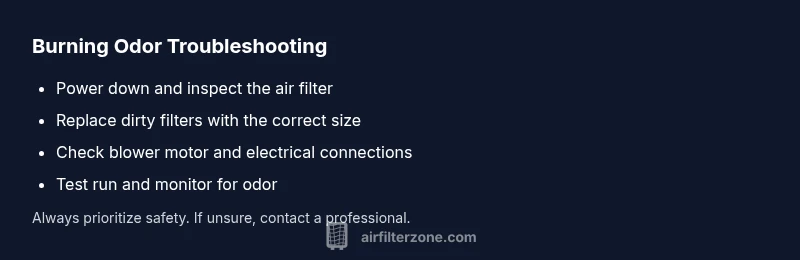
If you detect a burning odor, follow these steps in order to minimize risk and restore safe operation: 1) Power down and unplug the equipment; 2) Remove and replace a dirty or damaged filter with the correct type; 3) Inspect for overheating signs and clear any obvious debris; 4) Check electrical connections and fuses for scorch marks or looseness; 5) Reinstall and run on a low setting to observe if the odor returns; 6) If the odor persists, stop using the unit and contact a licensed technician. Safety first, then methodical checks.
Tip: Keep a basic maintenance kit handy (cleaning supplies, spare filter, flashlight) to speed up the process.
Prevention Tips to Keep It Safe
Create a simple maintenance routine to prevent future odors: use the right filter size and rating for your system; replace filters on a regular schedule instead of waiting for visual cues; inspect and clean around the blower area every few months; keep ducts clean and unobstructed; and consider a professional inspection if you notice recurring smells or reduced airflow. Proactive care reduces odor risk and protects indoor air quality.
Steps
Estimated time: 45-75 minutes
- 1
Power down and ensure safety
Shut off power at the unit and/or breaker. Disconnect if possible and wait for a cool-down period before touching any components. This prevents shock and reduces fire risk.
Tip: Use a non-conductive glove when handling exposed parts. - 2
Inspect and replace the filter
Remove the old filter and inspect for heavy dust, fibers, or damage. Replace with the correct size and rating, ensuring a proper seal to avoid bypass airflow.
Tip: Do not reuse a visibly dirty or damaged filter—even if you’re short on time. - 3
Check for overheating signs
Feel the blower housing and motor area for excessive warmth and listen for unusual noises. If it’s hot to the touch, power down and wait for a professional assessment.
Tip: Do not run the system if you smell electrical burning. - 4
Inspect electrical connections
Open access panels and look for charred insulation, melted plastic, or loose wires. Tighten or replace components only if you’re qualified to do so safely.
Tip: If you see scorch marks, stop and call a technician immediately. - 5
Re-test and monitor
Reconnect power, run the system on a low setting, and observe for any odor or abnormal heat. Stop the test if anything seems off.
Tip: Keep a notebook of observations for the technician. - 6
Seek professional help if odor persists
Persistent burning odors indicate potential damage to the blower, heater, or wiring that requires a licensed technician to diagnose and repair.
Tip: The sooner you bring in a pro, the lower the risk of a major failure.
Diagnosis: Unpleasant burning odor from HVAC or car cabin air system
Possible Causes
- highClogged or dirty filter causing airflow restriction and motor overload
- highOverheating blower motor or heater components
- mediumElectrical insulation or wiring overheating near the filter housing
- lowNew filter off-gassing or debris in ducts causing odor
Fixes
- easyPower down safely, unplug, and replace the dirty/damaged filter with the correct size and rating
- easyInspect the blower motor area for overheating and clear any obvious dust or debris
- mediumCheck electrical connections and fuses; avoid running the unit if you see scorch marks or heat signs
- hardIf odor persists after these steps, contact a licensed HVAC technician for a professional inspection
FAQ
Why does my air filter smell like burning?
The most common causes are overheating or a clogged filter restricting airflow. Electrical issues or new-filter off-gassing can also contribute in some cases.
Burning smells usually come from overheating or a clogged filter. Electrical issues are possible, so safety first.
Is it safe to keep using the system if the smell goes away after replacing the filter?
If the odor disappears after a filter change and the unit runs normally, you can continue use but monitor for recurrence. If it returns, stop and have a professional check.
If the smell stops after changing the filter, keep an eye on it and get a professional check if it returns.
What parts should I inspect first for a burning odor in a home HVAC system?
Start with the air filter, blower housing, and any wiring near the unit. Check ducts for blocks or leaks and look for scorch marks.
Start with the filter, then the blower area and any nearby wiring. Check for blocks and scorch marks.
Can new filters cause a burning odor?
Yes, new filters can off-gas briefly or trap dust that smells when air first circulates. If the odor is strong or persistent, replace and inspect the system.
New filters can off-gas a bit, but strong smells should be checked by a pro.
When should I call a professional for a burning odor?
Call a licensed technician if the odor persists after replacing the filter, you notice heat, buzzing, or scorch marks near electrical components, or if you’re unsure about safety.
If the odor lasts after a filter change or you see heat or scorch marks, call a professional.
Are car cabin filters a common source of burning odors?
Yes, clogged cabin filters or issues with the evaporator can produce burning-like odors when the blower runs. Inspect and replace as needed.
Car cabin filters can cause burning odors if clogged; inspect and replace.
Watch Video
Quick Summary
- Turn off power and inspect the filter first when you notice a burning odor.
- Replace dirty filters promptly to restore safe airflow and reduce strain on the blower.
- If odor persists after replacement, do not run the system and call a professional.
- Prevent future odors with a regular maintenance routine and professional checkups.