Does Air Filter Smell Like Gas? An Urgent Troubleshooting Guide
Urgent troubleshooting guide for homeowners and DIY enthusiasts: does air filter smell like gas? Learn safety steps, common causes, quick fixes, and prevention to protect indoor air quality.


Gas smell in an air filter is a safety concern. If you notice it, prioritize safety: evacuate if the odor is strong, avoid switches or flames, and call your gas utility or emergency services. Ventilate only after the area is declared safe. Inspect nearby appliances, ducts, and the filter itself; if the odor persists, contact a licensed professional.
Does air filter smell like gas? What it signals
If you notice a strong gasoline-like scent coming through your HVAC or car cabin air filter, this is not normal. The question does air filter smell like gas is a common one among homeowners and drivers, but an odor of this kind often signals a safety issue rather than a simple stale smell. The Air Filter Zone team emphasizes that fuel-like odors can indicate fuel vapors entering your indoor space, a faulty appliance, or contaminated air circulating through ducts. Treat it as urgent: avoid ignition sources, ventilate the area, and begin a safe diagnostic checklist. In a home, the most dangerous possibility is a gas leak from a nearby appliance such as a furnace, water heater, or stove. In a vehicle, it might reflect a leak in the exhaust, intake system, or a misfiring engine letting fuel fumes back into the cabin. Regardless of location, the odor should prompt a careful inspection, professional assessment if the source isn’t obvious, and immediate steps to protect your family.
Common Causes of a Gas-like Odor in Air Filters
There are several plausible reasons you notice a gas-like odor relayed by an air filter. A gas leak or faulty appliance near the system is a primary danger. Backdrafts from a furnace or water heater allow exhaust fumes to travel backward into your ductwork. Contaminated ducts, stale air from enclosed spaces, or new filters off-gassing adhesives can introduce chemical scents. Cooking odors, solvents, or solvents from renovations trapped by your HVAC can also be pushed through the filter. In cars, a leak in the exhaust or intake system can draw fumes into the cabin via the HVAC intake. A persistent, unusual odor should trigger a cautious, thorough inspection rather than a quick replacement of components.
Can an Air Filter Itself Emit a Gas-like Odor?
Sometimes the odor originates from the environment surrounding the filter rather than the filter material itself. New filters can off-gas adhesives or packaging odors for a short period after installation. Saturated filters can retain cooking smells, scents from cleaners, or other VOCs that later release when air passes through. If an odor lingers after a filter change, there may be a more serious source such as a leak in a connected appliance, ductwork, or a misbehaving exhaust system. In any case, document the odor, observe when it intensifies (system on/off, certain rooms), and proceed with targeted checks.
Immediate Safety Steps If You Detect a Gas Smell
Prioritize safety before anything else. If the odor is strong or you suspect a gas leak: leave the area immediately, avoid turning on/off electrical switches, and call your gas utility or emergency services from a safe location. If you are indoors, open doors and windows to ventilate once you are safe to do so. Do a quick check around furnaces, water heaters, stoves, and any gas appliances for signs of leaks (hissing sounds, frost around connections, or sooty residue). Use a CO detector and ensure it’s functioning. If you’re in a car or vehicle cabin, turn off the engine if you suspect a fuel leak and move to fresh air. Do not drive if you smell gas strongly near exhaust systems.
Diagnostic-Flow: A Practical Troubleshooting Approach
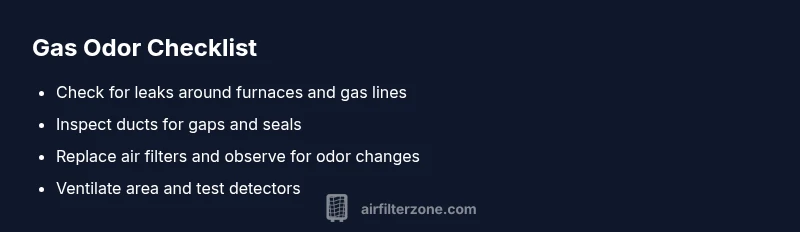
Symptom-driven flow helps you identify non-urgent issues without overlooking hazards. Start by confirming whether the odor is gas-related, then check for leaks around fuel-burning appliances, ductwork, and the air intake. If a leak is suspected, call a professional immediately. If no leak is found, inspect the air filter itself for saturation, test different rooms, and consider VOC sources in the home. Finally, replace the filter and seal ducts if needed while monitoring for recurring odors.
Maintenance and Prevention to Stop Odors from Returning
Regular maintenance is your best defense against odors. Replace filters on a manufacturer-recommended schedule and choose high-quality filters with appropriate MERV ratings for your space. Seal obvious gaps around ductwork and vents to reduce outside air intrusion. Keep the area around appliances clean and free of solvents, cleaners, or fuel-based products. Install or verify functioning CO detectors and ensure proper ventilation in kitchens, garages, and laundry rooms to minimize buildup of fumes. Periodically inspect for signs of gas leaks and schedule professional inspections if you notice persistent odors.
When to Call a Pro and What to Expect
If a gas odor persists after basic checks, contact a licensed HVAC technician or your gas utility. Expect a professional to perform a leak test, inspect the furnace, water heater, and gas lines, and verify duct integrity. They may inspect the cabin air intake, verify filter installation, and recommend duct cleaning or sealant application. If odors are due to VOCs or off-gassing from new filters, a professional can advise on safer filter choices and venting practices.
Steps
Estimated time: 45-60 minutes
- 1
Ensure immediate safety
If the odor is strong, evacuate, avoid sparks, and call emergency services or your gas provider.
Tip: Do not ignore a gas-like smell; safety first. - 2
Ventilate the space
Open doors and windows where safe to do so and minimize sources of ignition while awaiting help.
Tip: Air out the space but stay aware of the source of the odor. - 3
Check for obvious leaks
Look around furnaces, water heaters, stoves, and gas lines for hissing sounds, frost, or residue; do not touch fittings.
Tip: If you see signs of a leak, leave and call professionals. - 4
Inspect the air filter and ducts
Remove the filter to assess saturation; examine duct joints for gaps or seals that could pull in odors.
Tip: If you must re-enter the space, wear a mask and avoid direct exposure to fumes. - 5
Test and replace as needed
Replace the air filter with a quality filter of proper rating after leaks are resolved; ensure proper installation direction.
Tip: Keep a record of replacement dates for maintenance. - 6
Schedule a professional inspection
If odors persist, arrange a professional HVAC or gas-leak inspection to identify hidden leaks or faulty appliances.
Tip: Ask for leak tests and duct-sealing recommendations.
Diagnosis: Air filter emits a gas-like odor when the system runs
Possible Causes
- highGas leak from nearby appliances or fuel lines
- mediumExhaust backdraft from furnace, water heater, or HVAC furnace exhaust
- lowContaminated ducts or external odors being drawn in
Fixes
- easyIf the odor is strong or you suspect a gas leak, evacuate and call your gas utility or emergency services immediately
- mediumTurn off the HVAC system from a safe location and have a professional inspect fuel lines, appliances, and chimney/venting for leaks
- easyInspect duct seals, clean or replace air filters, and test for air quality improvements after repairs
FAQ
What should I do first if I smell gas near my HVAC system?
Escape the area if the odor is strong and call your gas utility or emergency services. Do not operate electrical switches or flames. After safety, ventilate and have a professional inspect appliances and ducts.
If you smell gas near your HVAC, leave the area and call your gas company or emergency services. Do not use electrical switches and ventilate only after it's deemed safe by professionals.
Can a dirty air filter cause a gas-like odor?
A saturated filter can trap and slowly release odors from VOCs and household scents. It may amplify existing smells but isn’t usually the sole cause of a gas leak. Inspect the system and replace the filter as needed.
A dirty air filter can contribute to odors, but it usually isn’t the sole cause of a gas leak. Check and replace the filter and inspect the system.
Is it safe to run the HVAC if I smell gas?
No. A gas-like odor warrants immediate safety steps and an inspection by a professional. Turn off the system if you can do so safely and call for service.
No, do not run the HVAC if you smell gas. Leave the area and contact a professional to inspect for leaks.
How often should I replace air filters to prevent odors?
Follow the manufacturer's guidelines and your system's usage. Regular replacement helps prevent odor buildup, especially in homes with pets or cooking scents.
Stick to your filter’s replacement schedule and replace sooner if odors recur.
Should I check CO detectors if I notice a gas odor?
Yes. Ensure CO detectors are functional and placed according to local code. A gas odor could indicate CO risk, so test devices and replace batteries as needed.
Definitely check your CO detectors; odors can signal potential carbon monoxide risks.
Can odors come from outside the house and enter through the air filter?
Yes, if there are leaks or open ducts, external odors can be drawn in by the system. Inspect duct seals and close any gaps to keep outdoor smells out.
Outside odors can enter through leaky ducts; seal them and replace filters as part of maintenance.
Watch Video
Quick Summary
- Identify odor source safely before acting.
- Gas-like smells require immediate safety steps and professional checks.
- Regular filter maintenance reduces odor risks.
- Seal ducts and ventilate to prevent recurrence.