Air Filter Smells Like Fuel: Quick Troubleshooting Tips
Learn how to diagnose and fix a fuel-like odor coming from your air filter or cabin air system. Practical steps, safety tips, and when to call a pro, with Air Filter Zone guidance.


Most likely, a fuel odor from the air filter points to a fuel system vent issue or contaminated intake path. Begin by turning off the engine, inspecting the cabin air filter housing for fuel stains, and replacing a saturated filter. If the smell persists after replacement, avoid driving and consult a professional to check lines, seals, and the evaporative emissions system.
Why 'air filter smells like fuel' happens
Fuel odors around the air filtration system are more common than you might expect. According to Air Filter Zone, a fuel odor in the intake or cabin usually signals a leak or a contaminated air path rather than a dramatic spill. Potential sources include a leaky EVAP system, cracked vacuum hoses, or a saturated cabin air filter that allows vapors to travel through the HVAC plenum. When the engine runs, fuel vapors can be drawn into the intake via the HVAC system, making the odor noticeable even at low speeds. Being proactive helps you avoid safety risks and costly repairs. If you notice a persistent fuel smell, treat it as a warning sign and begin a systematic check of air-path components, seals, and connections.
Immediate safety steps
Safety first: if you detect a strong fuel odor, pull over to a safe location and turn off the engine. Do not idle, and avoid using the HVAC system to pull vapors deeper into the cabin. Put on eye protection and gloves if you inspect under the hood. Visually inspect the cabin air filter housing for moisture, staining, or fuel residue. If the filter is damp or smells strongly, replace it and reseal the housing before restarting. If you cannot locate a source quickly, do not drive the vehicle; arrange professional inspection to rule out fuel leaks or EVAP faults.
Common culprits you should check
- Saturated cabin air filter: a damp or fuel-splashed filter can allow vapors to bypass the filter path and enter the blower.
- Leaking fuel lines or injector seals near the intake: even a small leak can produce noticeable fumes in the intake tract.
- Evaporative emissions (EVAP) system fault: a compromised purge valve, charcoal canister vent, or cracked hoses can vent vapors toward the intake.
- Cracked vacuum hoses or PCV valve: cracks or degraded seals can pull fuel vapors into the intake under vacuum.
- Intake manifold or throttle body leak: a small air-fuel leak may carry odor into the cabin via the HVAC system.
How to diagnose without replacement parts
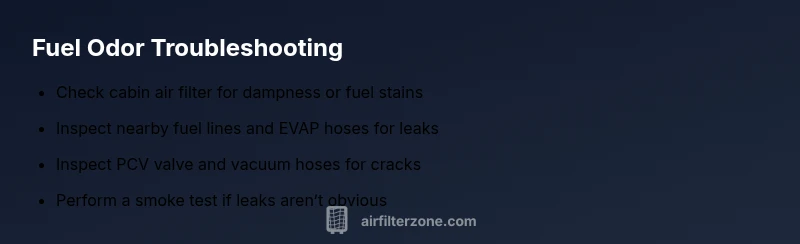
Start with the simplest checks: look for visible fuel leaks under the hood and around the fuel lines; listen for hissing sounds near hoses when the engine is running. Do a quick odor check near the cabin air intake while the HVAC system is off to determine if the odor originates from the cabin path or the engine bay. If you cannot locate the source, a smoke test or EVAP diagnostic with a professional can reveal hidden leaks. Always document odors, locations, and times for reference when you visit a shop.
Safe fixes and when to call a professional
Replace the cabin air filter if it shows fuel odor or dampness and ensure the housing seals properly. Inspect and replace any cracked vacuum hoses, faulty PCV valves, or damaged EVAP components. If fuel lines or the EVAP system show signs of wear or leak, stop driving and seek professional service promptly. Fuel odors can indicate safety risks beyond odor, including emissions faults or fuel leaks that require certified handling and repair.
],
diagnosticFlowStoneCountWrong?null;
Steps
Estimated time: 60-90 minutes
- 1
Power down and ensure safety
Park in a safe area, turn off the engine, and remove keys. Wait for components to cool before touching anything under the hood. This reduces the risk of fuel exposure or accidental ignition.
Tip: Wear gloves and eye protection when inspecting under the hood. - 2
Inspect the cabin air filter
Open the cabin air filter housing and remove the filter. Check for fuel stains, strong odor, moisture, or visible deterioration. If damp or stained, replace the filter and reinstall a fresh seal.
Tip: Use the vehicle’s manual to locate the filter housing and the correct replacement type. - 3
Check for obvious fuel leaks
Scan the engine bay, fuel lines, injector seals, and nearby hoses for signs of fuel leakage or wet spots. A leak near the intake can draw vapors into the cabin through the HVAC system.
Tip: Do not use open flames and avoid prolonged sniffing near the suspected area. - 4
Inspect EVAP and vacuum components
Look for cracked hoses, a loose purge valve, or damaged canister lines. A faulty EVAP path can vent fuel vapors into the intake. Gently wiggle hoses to check for cracks or disconnections.
Tip: If uncertain, label hoses before disconnecting and refer to the service manual. - 5
Reassemble and test
Install a new cabin air filter, ensure all seals are snug, and re-run the HVAC with fresh air. If the odor persists, do not drive and seek professional diagnosis.
Tip: Document where and when you notice odor to help the technician. - 6
Professional follow-up
If you cannot locate the source or if fuel smell returns after fixes, arrange a professional diagnostic. A mechanic can perform a smoke test and EVAP system analysis to pinpoint leaks safely.
Tip: Fuel odors can indicate potentially hazardous conditions; prioritize safety over speed.
Diagnosis: Air filter smells like fuel
Possible Causes
- highFuel line leak or injector seal issue near the intake
- mediumContaminated cabin air filter saturated with fuel vapors
- mediumPCV valve or cracked vacuum hose pulling fuel vapors into the intake
- lowEvaporative emissions (EVAP) system malfunction
Fixes
- easyInspect fuel lines, injector seals, and EVAP hoses for leaks and replace damaged components
- easyReplace the cabin air filter if damp or saturated and reseal the housing
- mediumCheck the PCV valve and nearby hoses for cracks; replace or reseal as needed
- hardRun an EVAP diagnostic and repair EVAP faults with professional service
FAQ
Why does my air filter smell like fuel after starting the car?
Fuel odors after start often signal a leak or emissions fault near the intake or EVAP system. Start with the cabin air filter inspection, check for leaks, and replace damp components. If the odor persists, have a professional diagnose the EVAP and fuel system.
Fuel odors after starting usually point to a leak or emissions fault near the intake; inspect the filter and hoses, and seek professional help if it continues.
Could a bad cabin air filter cause a fuel odor?
Yes. A saturated or damp cabin air filter can permit fuel vapors to pass into the blower. Replacing the filter and sealing the housing helps reduce odors.
A bad cabin air filter can cause fuel odor by letting vapors pass into the HVAC path; replace it to stop the smell.
Is it safe to drive with a fuel odor coming from the air filter?
No. Fuel odors can indicate leaks or dangerous emissions faults. Stop driving and have the vehicle inspected to avoid fire risk and environmental harm.
No, fuel odors aren’t safe to drive with; pull over and get a diagnostic.
What should I inspect first if I smell fuel?
Begin with the cabin air filter and accessible fuel lines. Then check vacuum hoses and EVAP components. If unsure, consult a professional.
Start with the cabin filter and visible fuel lines; if the smell remains, get a professional check.
When should I replace the cabin air filter?
Follow the vehicle manual for replacement intervals. If you notice dampness, odor, or reduced airflow, replace sooner.
Check your manual for the recommended replacement interval; replace sooner if you smell fuel or airflow is reduced.
Watch Video
Quick Summary
- Identify fuel odor sources before driving again
- Replace damp or stained cabin air filters promptly
- Inspect fuel lines and EVAP components for leaks
- Schedule professional diagnostics for EVAP or PCV faults