Air Filter Smells Like Mildew: Troubleshooting Guide
Urgent troubleshooting guide for homeowners and DIYers. Learn how mildew odors start, where they come from, quick checks, and step-by-step fixes to restore fresh air and protect your family.


Most likely, a damp environment is allowing mildew to grow in or behind your filter. Start by turning off power, removing and inspecting the filter housing, and replacing the filter with a labeled, mold-resistant type. Then dry the housing, reduce humidity, and run a short test cycle.
Why air filter smells like mildew
The moment you notice a mildew-like scent coming from your air system, it’s a signal that moisture and microbial growth are at play. The smell often trails a hidden moisture problem rather than a simple dirty filter. According to Air Filter Zone, mildew odors from filters usually signal moisture issues that invite mold growth. Mildew can develop behind the filter housing, in the ductwork junctions, or on porous surfaces inside the filter frame. The result is a musty, earthy odor that worsens when the system runs and can circulate small mold spores throughout living spaces. The root causes vary—from high humidity in the home to slow-drying condensate components—and the fastest path to relief is a thorough inspection followed by decisive action. This section lays the groundwork for understanding where the odor originates and how moisture management plays into prevention.
Common sources behind the mildew smell
Mildew odors don’t always come from the filter media itself. Frequently, the real culprits are moisture and stale air around the filter housing. Here are common sources to check:
- Behind-the-filter moisture pockets: Water can accumulate in tight spaces and promote fungal growth.
- Condensate tray and drain lines: Leaks or clogs invite damp conditions that feed mildew.
- Ductwork and blower housing: Mold can establish itself on damp surfaces where air slows down.
- Aged or contaminated filter media: Old filters can harbor microbes that release odors as they break down.
- Poor air exchange: Infrequent system cycling leads to stagnant air, increasing odor intensity.
Air Filter Zone analysis shows that repeated, routine maintenance and proper humidity control dramatically reduce mildew risk (Air Filter Zone Analysis, 2026). Start with a clean slate by confirming there aren’t obvious moisture sources and then move to filter replacement and housing drying. See how these steps fit with your system’s layout and usage patterns.
How to test and identify the source safely
Begin with a careful, safe inspection to locate the odor’s origin without exposing yourself to mold spores. Always power down the system before touching components. Use a flashlight to peek into the filter housing and duct openings. If you detect visible mold on surfaces you can reach safely, treat those surfaces with HVAC-safe cleaners and dry thoroughly before reassembly. A moisture meter can help you quantify damp zones near the filter housing, though it isn’t necessary for every case. If the smell lingers after cleaning, the source may be deeper in the ductwork or within the filtration path, which may require professional assessment. This approach aligns with practical, home-friendly troubleshooting guidance from Air Filter Zone.
Immediate fixes you can perform today
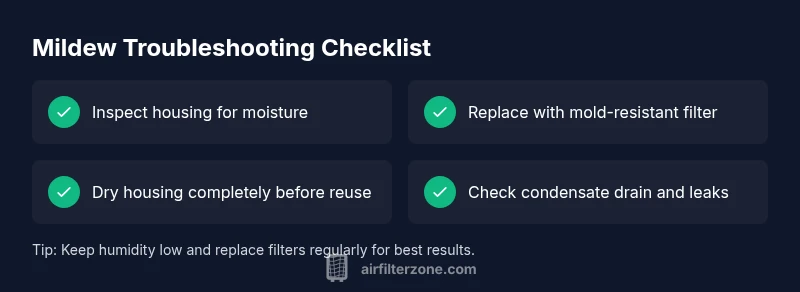
Start with the simplest fixes first to maximize safety and speed. Replace the filter with a high-quality, mold-resistant type and ensure it snaps securely in place. Thoroughly dry the entire filter housing area with a lint-free cloth and leave the access panel open for a short ventilation period to promote evaporation. Check condensate drains for clogs and verify there is no standing water in trays or pans. If you notice ongoing dampness, fix leaks or adjust humidity controls. Once the housing is dry and the filter is new, run the system on a short cycle with the fan to verify the odor abates. These steps are widely recommended as first-line actions for mildew-related odors.
When to call a professional
If visible mold appears in ducts, behind walls, or the odor persists after DIY steps, it’s time to call a licensed HVAC technician or mold remediation specialist. A pro can perform more thorough duct cleaning, identify hidden moisture sources, and ensure there’s no structural issue contributing to ongoing dampness. Don’t delay if asthma, allergies, or other health concerns are present—air quality issues can quickly impact well-being. This is where professional help becomes a safety and efficacy decision, especially for multi-room systems or stubborn odors.
Prevention tips to keep mildew from returning
Preventing mildew means stopping moisture from taking hold in the filter housing and surrounding components. Use a dehumidifier or improve ventilation in humid spaces, ensure condensate drainage is clear, and schedule regular maintenance to replace filters before they become saturated. Keep the filter housing clean and dry between changes, and store replacement filters in a dry place to prevent contamination before installation. Consistency is key: set reminders for routine filter changes and system cleanouts to minimize odor recurrence and protect indoor air quality.
Steps
Estimated time: 45-90 minutes
- 1
Power down and remove the old filter
Turn off the HVAC system and unplug the unit if possible. Remove the existing filter carefully to avoid kicking up dust or mold spores. Inspect the filter housing for visible moisture or mold growth and set the housing aside for cleaning.
Tip: Wear a mask and gloves when handling suspected mold. - 2
Inspect the housing and surrounding area
Look for damp spots, standing water, or mineral deposits around the housing. Check seals and gaskets for cracks or gaps that could allow moisture intrusion. Note any unusual staining that could indicate past leaks.
Tip: Take a quick photo for reference before cleaning. - 3
Replace with a mold-resistant filter
Choose a filter rated for higher moisture tolerance and better mold resistance. Ensure the filter size matches the unit and install with the correct orientation. Don’t reuse an old filter if mildew is suspected.
Tip: Seal the packaging and handle the new filter only by its edges. - 4
Dry the housing thoroughly
Wipe down all interior surfaces with a dry cloth, then allow the housing to air-dry completely. If available, use a clean, dry towel to speed up evaporation. Verify there is no lingering moisture before reinstalling the unit.
Tip: Leave the access panel off for a short time to aid drying. - 5
Check condensate drains and leaks
Inspect condensate pans and drain lines for clogs or leaks. Clear any blockages and ensure proper drainage. A persistent moisture source is often the root cause of mildew odors.
Tip: Pour a small amount of water to test the drain flow (do not overflow pan). - 6
Test run and monitor odor
Reassemble the system and run a brief cycle with the fan to disperse any residual odors. If the mildew scent returns within 24-48 hours, investigate deeper into ducts or seals and consider professional inspection.
Tip: Keep windows open during the test if possible for cross-ventilation.
Diagnosis: Smell of mildew when the system runs or after replacing the filter
Possible Causes
- highMoisture buildup behind or inside the filter housing
- mediumMold growth in ductwork or blower area
- mediumStanding water in condensate pan or clogged drain
- lowContaminated or aged filter that already harbors microbes
Fixes
- easyInspect and dry the filter housing; replace the filter with a mold-resistant type
- easyCheck and clear condensate drain lines; fix leaks
- mediumClean the inside of the blower housing and nearby ducts with HVAC-safe cleaner
- hardIf odor persists, call a professional for mold remediation or duct cleaning
FAQ
Why does my air filter smell like mildew?
Mildew odors usually come from moisture and mold behind or in the filter housing. Inspect the housing, replace the filter, and dry all surfaces. If the odor continues, deeper mold assessment may be needed.
Mildew odor comes from moisture and mold behind the filter; inspect, replace, and dry, then consider a deeper check if it persists.
Is mildew harmful to health?
Yes, prolonged exposure can irritate airways and trigger allergies. Address odors quickly and ensure good ventilation during cleaning and maintenance.
Mildew can irritate airways; fix it quickly and keep the area ventilated.
Should I replace the filter whenever I notice a mildew smell?
Replacing with a mold-resistant filter is recommended. Cleaning alone rarely removes root mold; check for moisture sources at the same time.
Yes—replace with a mold-resistant filter and check moisture sources.
Can I clean the filter housing to remove mildew?
Light cleaning can help, but porous surfaces may harbor mold. Use HVAC-safe cleaners and dry completely before reassembly; consider duct cleaning if mold is extensive.
Cleaning helps, but mold may remain on porous surfaces; dry thoroughly or call a pro if needed.
When should I call a professional?
If mold is visible in ducts or odors persist after DIY fixes, a licensed HVAC technician should inspect for mold remediation and moisture management.
Call a pro if you see mold or odors persist after DIY steps.
Watch Video
Quick Summary
- Replace mildew-impacted filters promptly.
- Dry the housing to prevent quick mold re-growth.
- Address moisture sources and drainage issues.
- Call a pro if odors persist after DIY fixes.