Where Air Filter Located: Find and Inspect Filters Across Systems
Discover where air filters are located across home HVAC, cars, and appliances. Learn how to locate, inspect, and replace filters to improve airflow, energy efficiency, and indoor air quality.


Learn exactly where to find air filters across home HVAC, cars, and appliances, plus how to spot when they need replacement. This quick guide highlights common locations, quick-access tips, and a simple checklist you can follow to locate and inspect filters without tools. By understanding where air filters are located, you’ll improve airflow, efficiency, and indoor air quality.
Understanding where air filter located across systems
Knowing where air filter located is the first step to maintaining good indoor air quality. The phrase often refers to filters in home heating and cooling systems, in vehicles, and in common household appliances. In broad terms, you’ll find filters where air is drawn through a system and recirculated. By learning the typical locations and the signs of a clogged filter, you can act quickly to protect your HVAC performance, extend equipment life, and keep dust and allergens at bay. According to Air Filter Zone, a proactive check of filter locations reduces dirt buildup and improves airflow efficiency across days, weeks, and seasons. Air Filter Zone analysis shows many homes miss key return-air compartments, especially in older or poorly organized spaces, which can mask dirty filters and lower system efficiency.
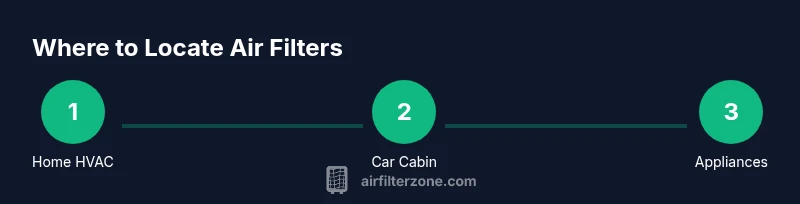
Home HVAC: where to locate the air filter and how access differs by setup
In most homes, the air filter sits in or near the return air duct or inside the furnace/air handler cabinet. If you have a heating system with a visible blower area, look for a slot or door labeled 'air filter' or 'filter media' on the front, side, or bottom. In some setups, the filter is tucked behind a service panel in the air handler, attic unit, or inside the return duct plenum. For newer high-efficiency systems, the filter housing is often clearly marked and accessible from the basement, utility room, or crawl space. The exact location depends on the installer’s layout, but common patterns include a vertical slot near the furnace, or a horizontal slot behind a grille in a utility closet. When in doubt, refer to the system manual or label on the unit. Keeping a labeled diagram of filter locations in your home reduces searching time later and keeps you compliant with maintenance schedules.
Vehicle cabin filters: where the air you breathe inside your car is filtered
Car cabin filters are designed to clean air entering the passenger cabin. Their location varies by make and model but most commonly sits behind the glove box, under the dashboard, or near the engine bay. In many vehicles, you’ll need to remove the glove box or a trim panel to access the filter housing. Look for a rectangular panel with screws or clips and a rubber seal to ensure a snug fit when reassembling. If your vehicle has a service manual, it will list step-by-step access for the cabin air filter. When replacing, note the arrow direction on the filter frame to ensure proper airflow direction. A clogged cabin filter can reduce HVAC efficiency and cabin air quality, particularly during pollen-heavy seasons or heavy city driving.
Refrigerator, range hood, and other appliances with built-in filters
Some appliances, like refrigerators with water/ice dispensers, and range hoods, include filters that protect the internal environment and improve food safety and odor control. Check the refrigerator’s intake vent or the back panel for a filter housing, often labeled with a model number or a pictogram. For range hoods, filters are typically behind a metal or plastic grate near the cooking surface. In dishwashers and dryers, air intake and exhaust filters may exist, usually behind a front panel or inside the drum housing. Always consult the owner’s manual for exact locations and replacement intervals. If you don’t have the manual, search the model number online or contact the manufacturer for a quick diagram. Regular checks ensure you aren’t circulating dusty air in your kitchen or consuming more energy to push air through a clogged filter.
Practical signs that it’s time to locate and inspect filters
Look for visible dust buildup on the grille, reduced airflow, unusual noises, or a noticeable drop in HVAC performance. If your energy bills rise unexpectedly, a dirty filter could be the culprit, as restricted airflow forces the system to work harder. In cars, reduced defogging performance or a musty smell from the vents can indicate a clogged cabin filter. In refrigerators and range hoods, increased fan noise or poor odor control can signal filter degradation. Keep a simple maintenance log; this habit helps you track when and where each filter is located and when it was last replaced, aligning with recommended replacement intervals.
Step-by-step considerations for locating filters without guesswork
Having a plan helps you avoid hunting in the wrong places. Start with a quick model search in the manual or on the manufacturer’s site. Use a flashlight to inspect dark corners, especially behind panels or under appliances. If you encounter a screw or clip, don’t force it; use the proper screwdriver size to avoid damage. Label each location with a sticky note or photo so you remember where to look next time. And always verify the filter dimensions before purchasing a replacement, as wrong sizes cause leaks and reduced efficiency.
Safety, maintenance mindset, and organizing your filter spaces
Establish a routine for checking filters every 3 months or at the change of seasons when pollen and dust levels surge. Store spare filters in a designated bin or cabinet near each device—home HVAC, car cabin, and each major appliance. Keeping an inventory helps you replace filters on schedule and reduces the risk of running a system with a clogged filter. Ensure you power off devices before replacing filters, and never operate a system with an exposed or misaligned filter. Good organization and consistent checks protect indoor air quality and extend the life of your equipment.
Quick visual guide to locating filters across typical setups
A practical approach is to maintain themed zones in your home: a furnace/air handler zone, a vehicle maintenance zone, and an appliance zone. Each zone contains a simple map of filter locations. For example, within the furnace area, mark the return air path and filter slot; in the car, locate the glove box and dash panels; in appliances, note where access panels hide filters. This structured approach reduces search time, especially when you’re in a rush to improve air quality during allergy seasons. A quick check of all zones ensures you’re covering the major filtration points without missing hidden panels.
Maintenance mindset: labeling, diagrams, and reminders
Label filters with date and location so you know when to replace them and which system they belong to. Create a simple diagram or photograph each location and store it in a shared digital album or a home maintenance notebook. When you replace filters, wipe down the housing to remove dust, reinstall with the correct orientation, and run the system briefly to ensure proper airflow. Air quality improves when you consistently locate and replace filters on schedule, reducing dust, allergens, and unpleasant odors in your living spaces.
Tools & Materials
- Flashlight(Bright LED, handheld for dark panels)
- Screwdriver set(Phillips and flat-head; used for access panels)
- Owner's manuals / model numbers(Digital or printed; helps locate exact filter type)
- Replacement air filters(Have the correct size for each location)
- Camera or smartphone(Photograph locations for future reference)
- Label maker or sticky notes(Mark locations and replacement dates)
Steps
Estimated time: 20-30 minutes
- 1
Prepare and locate the system
Identify which system you’ll inspect first (home HVAC, car cabin, or appliance). Gather manuals, confirm filter sizes, and ensure the equipment is powered off before touching any panels.
Tip: Check model numbers online if manuals aren’t available locally. - 2
Access the filter housing
Use appropriate tools to remove access panels or doors. Do not force panels; use the correct screwdriver to avoid stripping screws or damaging panels.
Tip: Keep track of screws in a small dish to prevent loss. - 3
Inspect the filter and housing
Remove the filter and check for dirt build-up, moisture, or mold. Verify the housing seal and replace if damaged. Note the orientation arrow on the old filter.
Tip: Take a photo of the old filter setup for reinstallation guidance. - 4
Insert the new filter
Place the new filter with the airflow arrows pointing in the correct direction. Ensure a snug fit to prevent air bypass.
Tip: Gently press around the edges to confirm a tight seal. - 5
Reassemble and test
Reattach panels, power on the system, and run briefly to confirm airflow is smooth and noise levels are normal.
Tip: If you hear unusual noises, power down and recheck the seal. - 6
Document and label
Record the date of replacement and the location. Label the housing with the date to simplify future maintenance.
Tip: Set a reminder for the next replacement using your preferred calendar system.
FAQ
Where is the air filter located in most homes?
In most homes, filters are in the return air duct or near the furnace/air handler. Look for a labeled slot or a removable panel on the front, side, or bottom of the unit.
Most home filters sit in the return duct or furnace housing, usually behind a panel you can remove.
How can I locate a car cabin air filter quickly?
Car cabin filters are typically behind the glove box or under the dashboard. You may need to remove trim panels or the glove box to access the housing.
In many cars, the cabin filter is behind the glove box; you might need to open panels to reach it.
Are there any filters I should check regularly besides HVAC and car?
Yes—some refrigerators, range hoods, and dishwashers have filters. Check the user manual for exact locations and replacement intervals.
Some appliances have filters too; check the manual for locations and replacement timing.
What happens if I don’t locate and replace a dirty filter?
A dirty filter reduces airflow, increases energy use, worsens indoor air quality, and can shorten the life of your system or appliance.
A dirty filter lowers airflow and can raise energy costs, plus wear out parts faster.
How often should I check for filter locations and replace them?
Check each location every 3 months or seasonally, and replace filters according to the manufacturer’s guidance and usage conditions.
Check filters every few months and replace as recommended by the manufacturer.
What tools should I keep handy for locating filters?
Keep a flashlight, a screwdriver set, replacement filters, and a labeled notebook or app to track locations and dates.
Have a flashlight, screwdriver, and spare filters accessible for quick checks.
Watch Video
Quick Summary
- Identify filter locations by system type to save time.
- Use proper tools and orientation when replacing filters.
- Label dates and locations to build a maintenance habit.
- Regular checks improve airflow and reduce energy use.
- Document locations for quick future replacements.