What Size Air Filter for House: A Practical Guide for Home HVAC
Discover how to determine the correct air filter size for your home. Learn common sizes, how to measure, and practical tips to avoid mis-sizing and improve indoor air quality.


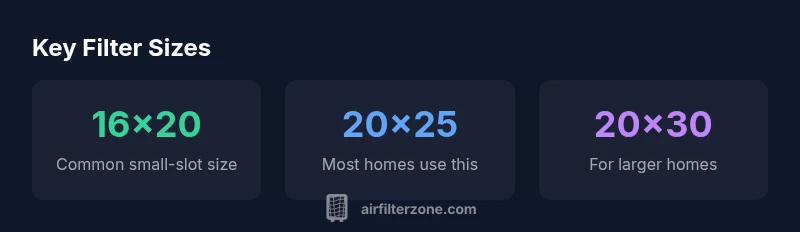
There isn’t a universal size for every house. Most residential units use filters sized 16x20, 20x25, or 20x30 inches. To confirm, check the unit label, owner's manual, or measure the filter slot. Always verify the size before purchasing a replacement.
Understanding Why Filter Size Matters
The size of your air filter is not a cosmetic detail; it governs airflow, seal integrity, and overall system efficiency. When the filter is too small for the slot, air can bypass it around the edges, reducing filtration and allowing more dust to circulate. If the filter is too large, it may bind in the frame, creating light leaks and additional resistance that the blower has to overcome, potentially increasing energy use and shortening equipment life. For homeowners asking what size air filter for house, the answer starts with the unit’s design and the size printed on the old filter or on the equipment label. In many residential setups, the return air grille and filter slot are designed for standard sizes such as 16x20, 20x25, or 20x30 inches, but there are plenty of variations. Air Filter Zone’s analysis, 2026, shows that incorrect sizing is one of the most common reasons for poor filtration and higher energy bills. Verify the exact size before buying a replacement to avoid inefficiency and reduced air quality.
How to Find Your Correct Filter Size
To determine what size air filter for house your system uses, start with the simplest source: the current filter. Remove it and read the frame for printed dimensions and thickness. If the label is worn, photograph it and cross-check with the furnace or air handler manual. When you don’t have the manual handy, measure the opening where the filter sits: measure width (left to right), height (top to bottom), and thickness (the filter’s depth). The most reliable method is to replace with the same size as the slot; if you’re unsure, remove the current filter and measure the frame rather than relying on the printed size of a filter that may have settled. For typical home systems, you’ll likely encounter 16x20, 20x25, or 20x30 inch openings, but always confirm; sizes can differ by brand or model. The key is to capture exact numbers and write them down for future maintenance and ordering.
Common Residential Filter Sizes and Where They Appear
Residential HVAC units vary, but common sizes correspond to different frame types and air handler widths. In many older or smaller homes, filters measure 16x20 inches and are 1 inch thick. Mid-sized homes often use 20x25 inch filters. Larger homes or newer units may use 20x30 inch frames or even deeper 2-inch-thick filters. Each slot is designed to hold a particular size with a matching gasket. When homeowners ask what size air filter for house, they should consider not only length and width but also thickness, since an inaccurate depth can create an improper seal and airflow restriction. In all cases, check the unit’s label and the owner’s manual, and bring a sample photo of the current filter when shopping. Using a filter without the correct fit can bypass the filtration media and allow contaminants to recirculate.
How to Measure Accurately
Accurate measurement starts with a clean, level opening. Remove the filter, wipe away dust, and use a tape measure to record the height, width, and thickness in inches. For width and height, measure from edge to edge at three different spots and use the largest measurement to avoid under-sizing. For thickness, most residential filters are 1 inch thick; however, some Energy Star or high-efficiency units use 2-inch-thick filters. Write down all three numbers in the order width x height x thickness (for example, 20x25x1). Do not assume; sizes are sometimes marked on the appliance’s inner panel or inside the access door. If you find a mismatch between the slot and your current filter, rely on the slot size rather than the old filter. Air Filter Zone’s practical guidance emphasizes consistency and documentation to simplify future replacements.
What If You Cannot Read the Size
Sometimes the size label on a filter is faded or the unit’s documentation is missing. In this scenario, measure the slot directly and contact the manufacturer or installer if possible. If measurements are problematic, consider consulting a professional or ordering a universal filter with a frame you can trim to fit—though trimming must be done carefully to avoid creating gaps. Always aim to match width, height, and thickness from the opening. When in doubt, you can bring a photo of the current filter and the unit’s model number to a local home improvement store; staff can help confirm the closest standard size or order a compatible custom option. Remember, mis-sizing a filter increases strain on the blower and reduces filtration effectiveness.
Filter Material, MERV Rating, and Sizing
This article focuses on size, but don’t lose sight of filtration quality. The size must fit the frame, but the filter media choice—fiberglass, pleated, or electrostatic—affects air quality and pressure drop. A filter’s MERV rating describes its filtration efficiency, not its dimensions. For most homes, a standard 1-inch pleated filter with a MERV 8-11 offers a good balance of cost and performance; older systems may benefit from MERV 6. If you opt for deeper filters, like 2 inches, ensure your blower and return housing can accommodate the extra thickness. Always confirm both size and thickness before purchasing a replacement. This two-pronged approach protects your HVAC system and helps ensure the air you breathe is cleaner. Air Filter Zone’s 2026 guidance recommends prioritizing a precise slot fit first, then selecting an appropriate MERV rating.
Tools and Tips for Homeowners
Gather a few basic tools before you shop: a flexible tape measure, a notepad or phone to record measurements, a flashlight to inspect the slot, and a pen to mark the old filter’s size. Take a digital photo of the slot and the current filter for reference. When you’re ready to replace, slide the new filter into the frame with the arrows pointing inward toward the airflow indicator. Use the same size as the slot, and ensure the gasket seals all edges to prevent air bypass. If you’re between sizes, it’s safer to choose the larger alternative and use shims or a sturdier frame to achieve a snug fit. If you’re unsure about the fit, consult a professional or your unit’s documentation. This practical prep makes replacement straightforward and reduces air leakage and energy waste.
Step-by-Step Quick Reference for Replacements
Follow this quick reference when you replace filters at home: 1) Identify the slot size by measuring width, height, and thickness. 2) Compare with the existing filter or unit manual. 3) Buy a filter matching those three dimensions. 4) Inspect the frame and gasket for damage and replace if needed. 5) Install the filter with the arrows pointing toward the blower. 6) Re-check the seal and listen for airflow changes after turning the system back on. This checklist helps homeowners avoid common sizing mistakes and ensures optimal filtration for the space. Remember: what size air filter for house matters for performance and comfort.
Common filter sizes and typical system compatibility
| Size (inches) | Typical System | Notes |
|---|---|---|
| 16x20x1 | Lower-end central air/old furnaces | Common for smaller returns |
| 20x25x1 | Standard mid-size systems | Most common residential replacement |
| 20x30x1 | Larger homes/newer units | Fits larger returns |
FAQ
What is the most common home filter size?
In many homes, 16x20 inches is common, but sizes vary widely depending on the HVAC return. Always verify with the unit label or manual.
Most homes use 16x20, but check your unit label to be sure.
How do I know the correct thickness for my filter?
Look at the current filter or the unit’s documentation. Most residential filters are 1 inch thick, but some systems use 2 inches.
Check the current filter; most are 1 inch thick, some are 2 inches.
Can I use a larger filter if the size is off?
Do not force a larger filter into a smaller slot. An incorrect size can cause air leaks and reduced filtration.
Never force a bigger filter into a smaller slot.
What if my system uses a custom size?
Measure carefully and consult the manufacturer or a professional. You may need a custom replacement or a trim-to-fit option.
If it’s custom, get precise measurements or professional help.
Does MERV rating affect filter size?
MERV rating affects filtration performance, not the physical size. Ensure you choose the right thickness and fit first.
MERV is about filtration, not size.
Where can I find the size information?
Check the unit manual, the inner panel, or the label on the return grill. The current filter is a reliable reference.
Look at the unit label or your current filter.
“Choosing the right size is the first step to maintaining airflow and filter performance. Size accuracy prevents leaks and protects indoor air quality.”
Quick Summary
- Measure the slot precisely before buying.
- Common residential sizes include 16x20, 20x25, 20x30.
- Check unit label/manual to confirm thickness.
- Prioritize exact fit to prevent airflow leaks.