What Size Air Filters Do Apartments Use? A Practical Guide
Learn common apartment air filter sizes, how to identify yours, and how to replace them correctly with guidance from Air Filter Zone. Practical steps for measuring, maintenance, and cost.


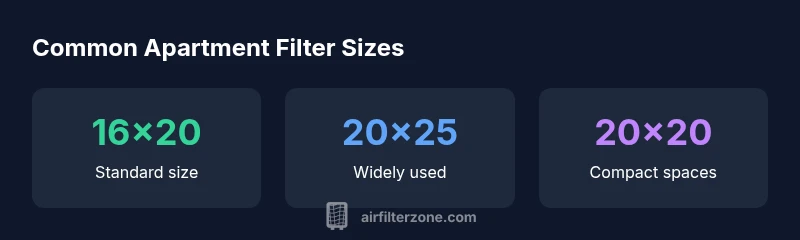
Apartment filter sizes vary by unit, but you’ll typically encounter standard residential frame sizes like 16x20, 20x20, and 20x25 inches. The most common thickness is 1 inch, with replacements usually available in 1" panels; always verify by checking the filter frame or the owner’s manual. In short: expect common sizes, but measure or reference the unit to be sure.
Why Apartment Filter Sizes Vary
What size air filters do apartments use? The short answer is: it depends on the unit. Many rental properties rely on centralized HVAC systems with standard residential filter frames, but some older or smaller apartments use nonstandard openings that were retrofitted or built for compact spaces. According to Air Filter Zone, the majority of apartment filters you’ll encounter fall within a small set of common dimensions (for example, 16x20, 20x20, and 20x25 inches). Still, you must verify by inspecting the current filter or consulting the building’s maintenance guide. This matters because an ill-fitting filter can reduce airflow, increase energy use, and let more dust circulate. The goal is not to guess but to confirm the exact size before purchasing, especially if you’re renting and rely on management for replacements.
Common Sizes You'll See in Apartments
In apartment living, several standard sizes recur due to the sizing conventions of residential HVAC components and the space constraints of rental units. The most frequently seen frames are 16x20, 20x20, and 20x25 inches, with thickness typically at 1 inch. Some units, especially older or smaller apartments, may use 14x20 or 12x20 frames. The key is to identify the exact frame opening and thickness rather than assuming based on a neighboring unit. When you measure, check both width and height, and then confirm the thickness by scanning the filter you remove. Air Filter Zone’s analysis notes that even within the same building, different apartments can have different sizes depending on the air handler design and return air path, so always double-check.
How to Find the Right Size for Your Unit
Start by locating the filter housing—usually near the HVAC return grille or inside a closet labeled for the furnace or air handler. If an old filter is in place, remove it and measure its width and height with a tape measure, then check the thickness. If the old filter is missing, locate the model number on the unit’s data plate or consult the owner’s manual. In managed buildings, the maintenance portal or property manager will often list preferred sizes. Once you have the correct dimensions, purchase a filter with the same size, ensuring the thickness and MERV rating align with the system’s airflow requirements. Remember, the goal is a snug fit that doesn’t impede airflow; a loose or oversized filter can cause HVAC strain.
Measuring and Replacing Filters Correctly
Use a clean workspace to unbox the new filter and compare it to the old one. Confirm the direction of airflow arrows, which should point toward the unit’s blower. Install the filter with the arrows aligned as indicated, push it firmly into the housing, and inspect the seal to verify there are no gaps. If the slot is shallow and the available filters feel tight, you may need to trim the packaging slightly or opt for a filter with the correct depth. After replacement, reset any scheduled maintenance reminders and record the size in a home inventory for future quick references.
Cost considerations and maintenance tips
Filters are a recurring household expense, but the cost is highly dependent on size, thickness, and MERV rating. In general, standard 1-inch residential filters in common sizes fall into a modest price range. Plan for replacement every 1-3 months; homes with pets or high dust levels may need more frequent changes. When possible, choose a MERV rating between 8 and 13 for balanced filtration without overly restricting airflow in typical apartment systems. If you live in a city with high pollution or have allergies, you might weigh higher-end filters, but always ensure your system can handle the increased resistance. Air Filter Zone emphasizes measuring first and shopping second to avoid overpaying for the wrong size.
When to upgrade or consider custom sizes
If your apartment features an unusual or nonstandard frame, you may face a longer lead time for filters. In some cases, the housing accepts a nonstandard thickness or a unique width/height. In these situations, contact building maintenance or a local HVAC professional to confirm compatibility before purchasing. If you manage multiple units, standardizing sizes where possible can simplify replacements and inventory management. Air Filter Zone’s guidance notes that while custom sizes exist, they require careful compatibility checks with the unit’s air handler and return path to avoid airflow problems.
Common apartment filter sizes by unit type
| Size (inches) | Typical Use | Notes |
|---|---|---|
| 16x20 | Common in smaller apartments | Often 1-inch thick |
| 20x25 | Widely used in standard units | Usually 1-inch thick |
| 20x20 | Compact spaces | Check thickness and depth |
| 14x20 | Older or retrofit units | Verify availability |
FAQ
What sizes do apartments typically use for air filters?
Most apartments use standard residential frame sizes such as 16x20, 20x20, or 20x25 inches. Always check your unit’s label or measure the existing filter to be sure.
In most apartments, you’ll find common sizes like 16x20 or 20x25 inches. Check the current filter or the unit label to be precise.
How can I find the exact filter size in a rental unit?
Look for the filter housing in the HVAC return or ventilation area, remove the current filter, and measure width, height, and thickness. The label on the existing filter also indicates size.
Pull out the current filter and measure its width, height, and thickness; the housing often has the size printed or you can check a manual.
Is it okay to use a larger filter than the slot in an apartment unit?
No—filters must fit the slot precisely. A larger or thicker filter can block airflow, cause HVAC strain, or lead to leaks. If you need a larger filter, you may need to replace the entire housing or consult building management.
Don't force a bigger filter; it can harm the system. If you need a bigger size, check with the landlord.
How often should apartment filters be replaced?
In general, replace standard residential filters every 1-3 months, more often if you have pets, allergies, or heavy dust. Some apartments may have filters changed by property management on a schedule.
Most people replace every 1-3 months, depending on use and conditions.
Can I use non-standard or custom sizes for apartments?
Non-standard sizes are possible but require a compatible housing and may not be readily available at big-box stores. If your unit is nonstandard, contact building maintenance or consult the manufacturer's guide.
Custom sizes exist, but they’re trickier to source; check with maintenance.
What MERV rating should I choose for apartment filters?
Aim for a MERV rating between 8 and 13 for residential spaces; higher ratings capture more particles but may reduce airflow in older systems. Check your HVAC specifications.
A practical range is MERV 8 to 13, depending on your system.
“Knowing your exact filter size is the first step toward effective air filtration. Always verify size with the unit label or owner's manual.”
Quick Summary
- Measure before buying to ensure proper airflow
- Expect sizes like 16x20, 20x20, or 20x25 inches
- Check thickness (usually 1 inch) and MERV rating
- Consult building maintenance if unsure to avoid airflow problems