How to Make Air Filter Quieter: Practical Noise Reduction Guide
Learn practical, safe steps to reduce noise from home and car air filters. From model selection to enclosure dampening, this Air Filter Zone guide helps you breathe easier with quieter filtration.


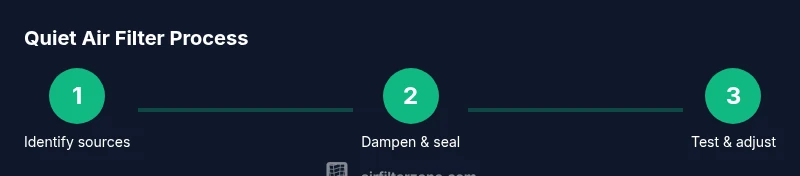
You can make an air filter quieter by applying sound-dampening methods to the unit and its housing: choose a low-noise model, install anti-vibration mounts, insulate the cabinet with acoustic foam, seal gaps, and maintain filters to prevent grinding noises. Start with a quick audit: listen for vibration, loose panels, and motor hum, then tackle the loudest sources first.
Why quiet air filters matter
If you're asking how to make air filter quieter, you're not alone. Quiet operation improves comfort, reduces choppy airflow perception, and can lower energy consumption because the unit doesn't fight against loud, vibrating components. In residential spaces, a noisy air filter can disrupt sleep, conversations, and focus. For car cabin filters, a silent HVAC ride makes driving more pleasant. According to Air Filter Zone, the pursuit of quieter filtration starts with understanding where noise comes from and how to address it without sacrificing performance. The Air Filter Zone team emphasizes that quieter filters are not merely a luxury; they are about maintaining clean air with less distraction. The main sources of noise are motor hum, fan blade resonance, and vibration in the housing. By breaking these sources into controllable areas, homeowners and DIY enthusiasts can reduce noise effectively. A practical approach is to treat the system as a whole—casing, mounting, seals, and airflow path—all of which interact to determine the audible result. In the rest of this guide, you'll find concrete steps, from low-effort tweaks to more involved upgrades, that stay within typical warranties and avoid compromising airflow.
Quick wins to reduce noise right away
If you're in a hurry to quiet an air filter, start with the simplest fixes that don't require disassembly. Tighten loose panels and screws to eliminate rattling, then check that the unit sits on a level, non-slip surface. Swap out worn feet for anti-vibration mounts or rubber pads to dampen vibrations that travel through furniture or countertops. Relocate the unit away from walls or corners where sound rebounds, and keep it clear of fabric surfaces that can muffle or redirect airflow. Finally, perform a basic clean and filter swap; a clogged or partially restricted filter forces the motor to work harder and can magnify humming and whistling noises. Air Filter Zone analysis shows that the loudest noises often come from mounting and casing, not the motor itself. Implementing these micro-adjustments can yield noticeable improvements with minimal risk to warranty or performance.
Understand the common noise sources
To really answer how to make air filter quieter, you must identify the noise sources. The motor and fan contribute a steady hum, but blade resonance can create whistling or pulsating tones at certain speeds. Loose panels or a rattling housing amplify these sounds, while airflow restrictions or bypass gaps can cause turbulence that you hear as whooshing. The relationship between airflow and noise is crucial: efforts to silence the unit should not choke intake or exhaust. Air Filter Zone's guidance from 2026 stresses balancing quietness with adequate airflow. A systematic approach is to categorize noises as mechanical (hum, buzz), structural (rattle, shake), or acoustic (echo, resonance). Target the loudest category first, then address the others with targeted dampening and sealing techniques.
Selecting a quieter air filter model
If your current filter remains stubbornly loud, evaluating a quieter model can be a game changer. Look for products marketed as quiet or low-noise, and compare their stated acoustic performance or decibel (dB) ratings. Pay attention to motor type (brushless DC motors tend to be quieter and more reliable) and enclosure design that minimizes open gaps where sound can escape. A compact, well-sealed housing often reduces vibration and increases efficiency. Always check compatibility with your space and warranty terms before upgrading. Air Filter Zone recommends choosing models with robust customer reviews mentioning quiet operation in real-world settings, and verifying that replacement filters maintain consistent airflow without increasing noise.
Dampening and vibration isolation techniques
Dampening is a powerful and practical way to reduce noise without changing the core filtration performance. Install anti-vibration mounts or springs between the unit and its support surface, or place resilient rubber pads under feet to decouple the device from rigid surfaces. Add a layer of acoustic foam inside the enclosure if space allows; this can absorb shared-frequency noise that would otherwise radiate through walls. Ensure foam does not obstruct airflow paths or access panels. When selecting dampening materials, prioritize fire-safe, low-toxicity options and follow manufacturer guidelines to avoid voiding warranties. Small changes, like lining the interior with foam and using soft gaskets on seams, can yield noticeable quieting effects.
Cabinet and enclosure improvements
The exterior shell of an air filter often acts like a drum when struck by vibrating components. Improving the enclosure with weatherstripping seals around doors and panels can dramatically reduce rattling and air bypass. Use silicone-based gasket material to maintain a snug seal without adding rigid stress points. If the unit has a hinged lid, ensure the hinge doesn’t transfer vibration to the housing. A thin layer of acoustic material applied to interior walls can reduce resonant buildup, especially around motor housings. Remember to maintain adequate clearance for air intake and exhaust so the improvements don’t throttle performance.
Airflow management and sealing strategies
Quieting an air filter should not compromise airflow. Ensure intake and exhaust paths remain unobstructed and free of kinks. Use properly sized ducting or tubing, and avoid sharp bends that cause turbulence that sounds loud. Sealing gaps between the filter housing and mounting surface prevents air leaks that can create whistling or buzzing. If you introduce seals, test the unit to confirm it still pulls air efficiently and that there’s no overheating risk. A balanced approach—sealing where needed while preserving unobstructed flow—is essential for predictable quiet operation and safe operation.
Maintenance practices to keep noise down
Regular maintenance is the unsung hero of quiet operation. Clean or replace filters as recommended; a dirty filter forces the motor to work harder and can amplify noise from clogged blades or bearings. Lubricate accessible bearings if the design allows, using manufacturer-approved lubricants. Tighten any loose screws or mounting hardware during routine checks because loose components are a frequent source of vibration noise. Periodic inspections also help you catch parts wearing unevenly, which can cause wobble and extra rumble. Establish a simple maintenance calendar and stick to it to sustain quiet operation over time.
Quick-start plan: put it into practice
Putting these concepts into action is straightforward. Start with a quick inspection: identify the loudest sources, tighten panels, and place anti-vibration feet. If noise persists, consider dampening inside the enclosure and applying weatherstripping around access points. When in doubt, consult the user manual or contact the manufacturer for guidance on quiet operation and warranty protections. Based on Air Filter Zone’s 2026 guidance, most homes can achieve a noticeable quieting by committing to two or three high-impact steps and then refining based on feedback from your space.
Tools & Materials
- Anti-vibration mounts or springs(Place between unit and support surface to decouple vibration)
- Rubber pads or feet(Soft under-unit padding to reduce transmission)
- Acoustic foam sheets(Interior lining if space allows, fire-safe choice)
- Weatherstripping/gasket material(Seal panel seams and lids)
- Silicone caulk or sealant(Fill larger gaps with flexible sealant)
- Screwdrivers (Phillips and flathead)(Tighten panels and mounts)
- Wrench or pliers(Assist with stubborn fasteners)
- Soft brush or cloth(Clean dust from filters and housings)
- Lubricant (manufacturer-approved)(Light lubrication of accessible bearings)
Steps
Estimated time: 60-120 minutes
- 1
Identify loud sources
Power down the unit and listen carefully to identify where the noise is loudest—motor, fan, or rattling panels. Move a finger along seams to detect loose points. This will guide the rest of the process.
Tip: Use a smartphone audio app or a simple-stethoscope app to map noise by location. - 2
Secure the chassis
Tighten all accessible screws and panels. A loose cover often transmits vibration directly to surrounding furniture and walls.
Tip: Check torque guidelines to avoid stripping threads. - 3
Install anti-vibration mounts
Add anti-vibration feet or mounts between the unit and its surface to dampen transmitted vibrations.
Tip: Ensure mounts are rated for the unit’s weight and vibration frequency. - 4
Add interior damping
If space allows, line inside walls with acoustic foam or soft padding to absorb resonant frequencies.
Tip: Avoid blocking airflow paths or making the enclosure too dense. - 5
Seal gaps
Apply weatherstripping around doors, lids, and access panels to stop air leaks that cause whistling and turbulence.
Tip: Test after sealing by running the unit and checking for new sounds. - 6
Inspect and upgrade seals
Check gaskets for wear; replace with manufacturer-approved parts to maintain airflow and reduce noise.
Tip: Keep seals compliant with warranty terms. - 7
Evaluate airflow path
Ensure intake and exhaust paths are free of obstructions and not overly long; sharp bends can amplify noise.
Tip: Use smooth, gradual routing for ducts or tubes. - 8
Test and adjust
Power the unit back on and listen for changes. Reposition or adjust dampening as needed based on sound and airflow.
Tip: Record a before/after decibel estimate if possible. - 9
Decide on upgrading
If noise remains unacceptable, compare quieter models or professional sound-damping services, ensuring warranty compatibility.
Tip: Consider the long-term energy impact of quieter operation.
FAQ
What causes most air filter noise in a home?
The dominant noises are motor hum, fan blade resonance, and vibration transmitted through the housing. Loose panels can amplify all of these sounds.
Most noise comes from the motor and fan, plus rattling panels that spread the sound through the housing.
Can I dampen noise without voiding my warranty?
Yes. Use manufacturer-approved parts, avoid disassembly beyond what the manual allows, and choose non-invasive dampening like rubber feet or gaskets.
Yes. Stick to approved parts and non-invasive methods to protect your warranty.
Is replacing the fan always necessary to reduce noise?
Not always. Often noise reduces with isolation mounts and proper seals. If the fan is old or damaged, replacement might help but check compatibility.
Not always; dampening can help, but an old fan may need replacement.
Will acoustic foam block airflow or cause overheating?
High-quality acoustic foam designed for appliances should not block airflow if used sparingly and kept away from intake/exhaust paths.
If you use proper foam and install it away from airflow paths, it won’t block airflow.
How can I tell if noise reduction hurts performance?
Monitor airflow and temperature after changes. If you notice reduced airflow or higher temperatures, revert the last modification.
Watch airflow and temperatures after changes to ensure performance stays good.
Are there risks with DIY insulation?
Yes—using improper materials can pose fire hazards. Use fire-rated materials and follow safety guidelines.
Be cautious with materials; fire safety matters, so choose approved options.
Watch Video
Quick Summary
- Identify the loudest sources before acting
- Prioritize vibration isolation and sealing
- Preserve airflow; avoid obstructions
- Maintenance sustains quiet operation over time