How to Find Air Filters in Your House
Learn practical steps to locate every air filter in your home, from the HVAC system to portable purifiers. Discover where to look, how to measure, and when to replace filters for better indoor air quality.


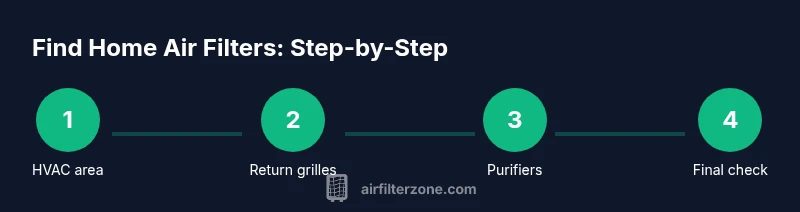
By following this guide, you will locate every air filter in your house—from the central HVAC to portable purifiers. Start with the furnace/air handler closet, then inspect return air grilles, ceiling diffusers, range hoods, and any built-in purifiers. This practical, step-by-step approach helps you map all filters and understand when to replace them for better air quality.
Start with the HVAC system and owner's manual
If you want to locate air filters in your house, begin with the central heating and cooling system. The owner’s manual often lists the exact filter location and size. In most homes, the air filter sits near the furnace or air handler in a dedicated closet or mechanical room. Before you touch anything, turn off the system to avoid unfiltered airflow or moving parts. This first step sets a clear map for where to look next, and it helps you identify any unusual filter setups that aren’t standard in your home. According to Air Filter Zone, many households overlook extra filters tucked away behind doors, under stairs, or inside built-in purifiers. Remember to note the orientation arrows on the frame so you install a new filter correctly.
Common hiding spots in plain sight
Filters aren’t always in a single cabinet. They hide in several familiar places: the furnace closet, behind return air grilles in walls, inside ceiling diffusers in living spaces, behind the range hood, and in some cases behind a panel in a laundry or utility room. In apartments, look for a filter slot near the air handler or in a hallway closet. When you find a filter, check the frame for size markings and the arrow direction, which indicates airflow. Keeping a small notebook or photo log helps you track where each filter sits and when it was last changed.
How to identify the filter slot and measure it
Once you’ve located a likely slot, remove the cover or the filter itself to determine its size. Measure the height, width, and depth (thickness) of the frame using a flexible tape measure. Note the exact dimensions and the filter type (pleated, fiberglass, or carbon). Take a quick photo of the filter so you can reorder the same spec. If the slot requires a non-standard size, note that too and plan for a custom option. This step ensures you buy the correct replacement and reduce returns.
Special cases: built-in purifiers and hidden compartments
Some homes include built-in air purifiers or compact units integrated into walls or ceilings. These devices often hide a replaceable cartridge rather than a traditional flat panel. Look for a removable panel with a filter behind it, usually labeled by the manufacturer. If you’re unsure, check the unit’s model number and search the manual or manufacturer site. This awareness helps you avoid missing filters that aren’t in the obvious furnace closet.
Replacing, orientation, and disposal basics
After identifying the filter, slide it out carefully, keeping the old orientation as a reference. Insert the new filter with the airflow arrow pointing toward the blower. Recheck fit and reseal the slot. If you notice dirt or debris on the filter housing, wipe it clean before installing the new one. Keep a log of the replacement date and the filter’s size so you stay on schedule. Used filters should go to the trash—do not recycle unless your local guidelines approve it.
Quick maintenance checklist for home filters
Create a simple, repeatable routine: visually inspect filters monthly, measure every six to twelve months, and replace according to your usage and environment. For homes with pets or smokers, more frequent changes may be necessary. Maintain a small stock of standard sizes and label each location in your notes so you can replace quickly when needed.
Tools & Materials
- Flashlight(Bright LED preferred to inspect dark compartments)
- Tape measure(Flexible, at least 6 ft)
- Screwdriver (if needed)(Phillips or flathead depending on access panel)
- Replacement filters (various sizes)(Have a few common sizes on hand)
- Gloves(Optional for handling dusty filters)
Steps
Estimated time: 40-60 minutes
- 1
Power down and prep
Turn off the HVAC system and gather your tools. This prevents accidental air currents and keeps you safe while you inspect. Take notes of any unusual access points before you touch panels.
Tip: Wear gloves and use a flashlight to improve visibility. - 2
Locate the mechanical space
Identify the furnace closet or air handler area. If you can’t find it, consult the owner’s manual or a sticker on the unit. Mark the space on your map for later reference.
Tip: Look for a door, panel, or cabinet labeled 'Air Handler' or 'Furnace'. - 3
Open the access panel
Carefully remove the panel or cover to reveal the filter housing. Some units require a screwdriver; others have clips. Do not force anything that seems stuck.
Tip: Note how the panel attaches so you can reassemble correctly. - 4
Remove and inspect the old filter
Take out the old filter, check its size markings, and examine the material for wear. If the filter is discolored or clogged, plan for replacement.
Tip: Check both sides of the frame for size stamps. - 5
Measure the filter opening
Use a tape measure to determine height, width, and depth. Record the exact numbers; even slight differences matter for fit.
Tip: Write the measurements on the filter frame or in your notes. - 6
Select a matching replacement
Choose a filter with the same dimensions and similar filtration rating. If in doubt, take the old filter to the store or order online with the exact size.
Tip: Prefer pleated filters for better efficiency in most homes. - 7
Install the new filter
Insert with the airflow arrows pointing toward the blower. Recheck fit and reinstall the panel securely.
Tip: Make sure the seal is tight to prevent bypass. - 8
Document and reset
Log the replacement date, size, and location for future maintenance. If you have a central log, update it now.
Tip: Set a reminder for the next replacement. - 9
Test the system
Turn the system back on and ensure airflow is even through vents. Listen for unusual noises that might indicate a loose panel.
Tip: If you hear whistling, recheck the seal.
FAQ
Where is the air filter usually located in a house?
Most homes have the HVAC filter behind a panel in the furnace closet or near the air handler. Some units also hide filters behind return grilles or built-in purifiers. Always check the owner’s manual for exact spots.
Most filters are behind a panel near the furnace or air handler; check return grilles too.
How often should I check or replace air filters?
A monthly visual check is a good practice, with replacements every 3-6 months typical for many homes. Pet owners or smokers may need more frequent changes.
Check monthly and replace every 3-6 months, more often if you have pets or smoke indoors.
Do apartments have filters?
Yes, most apartments with central HVAC have filters either behind a panel or near the unit. If you’re unsure, ask building maintenance or check the unit’s manual.
Yes, many apartments have filters; ask management if you can’t locate it.
What if I can’t locate a filter?
Rescan the main living areas, check for doors labeled 'Furnace' or 'Air Handler', and look behind large closets. If still missing, call a professional to help identify ductwork and filtration points.
Look in the mechanical spaces and behind large closets; consult a pro if you still can’t find it.
Can I use any filter size?
Filters must match the frame size precisely. Using a mismatched size can cause air bypass and reduced efficiency. If in doubt, bring the old filter to the store.
Only use the exact size of the frame; otherwise it won’t fit.
Is DIY replacement safe for beginners?
Replacing a home air filter is generally safe for most homeowners. Always power down the system first and follow the manufacturer directions for the filter orientation.
Replacing filters is safe when you power down first and follow the manual.
Watch Video
Quick Summary
- Identify all home filters by inspecting HVAC, returns, and purifiers
- Always measure the opening before buying a replacement
- Keep a replacement log and maintain a stock of common sizes