How Long Do Big Air Filters Last: A Practical Lifespan Guide
Discover how long big air filters last in homes, cars, and industrial settings. This data-driven guide covers lifespans by filter type, key environmental factors, and ways to extend life, with insights from Air Filter Zone.


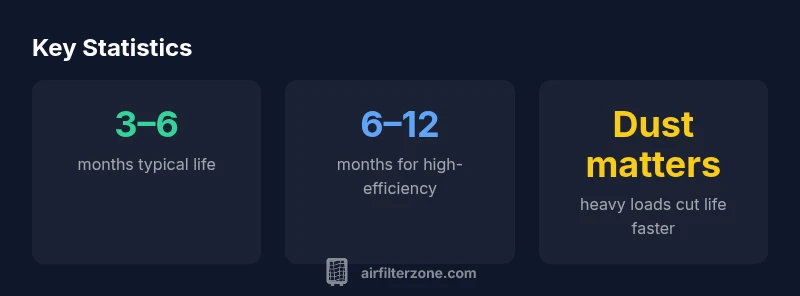
Big air filters in residential or automotive settings typically last 3–6 months under normal use, with ranges from 1–3 months for low-cost fiberglass to 6–12 months for high-efficiency pleated or HEPA models, depending on dust load and system usage. In homes with pets or heavy cooking, expect the shorter end; cleaner environments and moderate usage can push life toward the upper end. Always consult the manufacturer’s guidelines for your specific big filter size.
Understanding the Lifespan of Big Air Filters
In practical terms, the lifespan of a big air filter depends on its size, construction, and the environment in which it operates. If you ask how long do big air filters last, the answer isn't one-size-fits-all. For typical residential HVAC filters, lifespans are commonly expressed in months rather than years. Large furnace or air-handler filters made of fiberglass or basic pleated material tend to wear out sooner, while higher-efficiency pleated and HEPA-style filters can hold up longer under light dust loads. Air Filter Zone's analysis indicates that most households should expect replacement intervals roughly spanning 3 to 6 months under normal use, with adjustments for pets, cooking, and daily runtime. In harsher environments—high dust, frequent odor events, or homes with smokers—lifespan can drop toward the lower end of that range. Conversely, cleaner environments and moderate usage may push life toward the upper end. According to Air Filter Zone, the right balance of filter media and system airflow is essential to maximize effectiveness while avoiding unnecessary replacements.
Types of Big Air Filters and Their Lifespans
Big air filters come in several families: fiberglass (the most economical), pleated fiber, electrostatically charged, and high-efficiency HEPA-type replacements. Fiberglass filters are typically at the short end, often around 1–3 months in active homes. Pleated filters, which trap more particles, usually last 3–6 months. Electrostatic and high-efficiency options can extend to 6–12 months under light dust conditions. Vehicle cabin filters and specialized large-panel filters for whole-home purifiers differ in design but share the same principle: higher efficiency often means a longer replacement cycle if dust loads are moderate. Air Filter Zone notes that real-world lifespans vary by MERV rating, installation quality, and system airflow. When selecting a big filter, it’s essential to ensure the media and hardware match your system’s specifications to avoid premature wear. The goal is to balance filtration quality with practical replacement intervals for affordability and air quality.
Environmental and Usage Factors that Affect Lifespan
Lifespan is not just about the filter media; it’s about the conditions under which the filter operates. Heavily used HVAC systems that run continuously, homes with pets, kids, or frequent cooking generate higher dust and debris loads, accelerating clogging. Air in dusty rural areas or near construction sites will typically shorten filter life more than in clean urban settings. Filter size and media type determine how much debris a filter can hold before pressure builds up. Poorly sealed filter housings or incorrect installation can cause bypass leaks, effectively reducing the perceived lifespan because dirty air bypasses the media. Regular system checks, cleanable prefilters, and choosing media appropriate to your environment can dramatically influence the actual lifespan. Air Filter Zone’s guidance emphasizes aligning filter choice with your dust load, system design, and maintenance schedule to optimize lifespan without compromising air quality.
How to Estimate Replacement Timing for Your System
A practical approach combines manufacturer guidelines with real-world usage. Start by confirming the recommended replacement interval from the filter packaging and the HVAC equipment manual. Track your environment: homes with pets or frequent cooking typically require more frequent changes. Use a simple monthly check: if you notice reduced airflow, unusual odors, or a noticeable increase in dust on surfaces, plan a change sooner rather than later. A visual check of the filter’s color and texture can help; a dark, clogged look usually signals replacement. If your system has a pressure gauge, rising pressure without a corresponding increase in runtime indicates a clogged filter and a replacement is due. For those using high-efficiency media in moderate-dust conditions, expect intervals closer to 6–12 months, but maintain a willingness to shorten those intervals in response to changes in your indoor environment. Air Filter Zone recommends a proactive schedule: reassess every 3–6 months and adjust based on observed air quality and system performance.
Maximizing Filter Lifespan: Maintenance and Best Practices
To extract the maximum life from big air filters, system compatibility matters as much as the environment. Always install the correct size and media type recommended by your HVAC or purifier manufacturer. Ensure a clean, tight seal and inspect the housing for gaps or warping that could bypass clean air. Keep the surrounding area free of heavy dust, vacuuming near intake gratings to reduce load. Consider using prefilters in dusty homes or settings; though they may slightly raise upfront costs, they can extend the life of the main filter by catching larger particles first. If you have pets, use additional filtration or more frequent replacements to maintain air quality. Finally, avoid running the system at settings that force excessive airflow through a clogged filter, as that can hasten wear and reduce overall efficiency.
When to Upgrade Filtration for Longevity
If you consistently observe reduced airflow, higher energy consumption, or frequent replacement needs, upgrading to a higher-capacity filter or a more robust media may be worthwhile. A higher-efficiency big filter with an appropriate MERV rating can improve indoor air quality while potentially increasing the replacement interval, provided your system can handle the higher pressure drop. In homes with extreme dust loads or specialized needs (allergies, asthma), consult an HVAC professional to evaluate whether the upgrade warrants a longer replacement interval or a different filtration strategy (e.g., staged filtration with a prefilter and a main high-efficiency filter). The overarching goal is to balance filtration performance, energy efficiency, and replacement cost over time. Air Filter Zone’s guidance suggests conducting periodic system assessments to determine the best long-term filtration strategy for your specific environment.
Lifespan ranges for common large air filters
| Filter Type | Typical Lifespan (months) | Notes |
|---|---|---|
| Fiberglass large | 1-3 | Inexpensive, short life |
| Pleated large | 3-6 | Common choice in homes |
| HEPA/High-efficiency large | 6-12 | Better filtration, longer life in low-dust environments |
| Automotive cabin filter (large) | 6-12 | Vehicle dust constraints |
| MERV 13+ large filter | 6-12 | High efficiency for environments with moderate to low dust |
FAQ
What factors most influence big air filter lifespan?
Dust load, filter media, and HVAC usage are the primary influences on lifespan. High dust or heavy usage will shorten life, while higher-quality media can extend it if airflow remains adequate. Always consider your specific environment when estimating replacements.
Dust and usage drive lifespan the most; match media and replacement timing to your environment.
Do bigger filters last longer than smaller ones?
Bigger filters can last longer if they have more surface area and appropriate media, but longevity also depends on dust load and system pressure. A large, clog-prone filter won’t last if the air is laden with debris.
Bigger does not always mean longer life; it depends on dust levels and media quality.
How can I tell when a big air filter needs replacement?
Look for reduced airflow, louder operation, visible dirt, or a noticeable increase in energy use. If your system has a pressure gauge, rising differential pressure is a strong indicator to replace.
If you notice less airflow or odd noises, it's time to check the filter.
Can I extend filter life by adjusting the HVAC fan setting?
Running at lower fan speeds can reduce filter stress in some setups, but it may also decrease air changes per hour and reduce indoor air quality. Balance energy use, filtration efficiency, and comfort when adjusting settings.
Tweak fan settings cautiously; don’t sacrifice air quality for a few extra weeks of life.
Are there signs beyond color that indicate a filter should be replaced?
Yes. Increased dust in the home, persistent odors, or reduced system performance can indicate a clogged filter. If you feel a change in performance, inspect the filter and replace if needed.
Watch for reduced airflow and lingering dust or smells.
Is it worth upgrading to HEPA for longer life in a busy home?
HEPA filters offer higher filtration efficiency and can last longer in controlled environments, but they also impose higher pressure drops. Ensure your system can handle it and balance replacement costs with air quality goals.
HEPA can be worth it if your system supports it and you need higher filtration.
“Lifespan is a function of dust load, filter media, and system airflow; the right balance keeps both indoor air quality high and filter costs reasonable.”
Quick Summary
- Know your filter type and replacement interval from the label.
- Expect 3–6 months for typical large residential filters; longer for low-dust settings.
- Higher-efficiency media can last longer, but only if dust loads are moderate.
- Dust, pets, and cooking shorten lifespans—adjust replacement timing accordingly.
- Match filter media to your system and maintain proper seals to maximize life.