How Long Do Air Filters Last? Lifespan and Replacement Guidance
Learn how long air filters last, what factors affect lifespan, and practical replacement schedules for home HVAC, cars, and appliances.


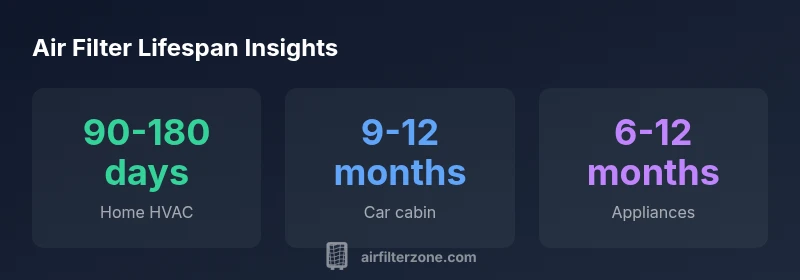
The typical replacement window for an air filter varies by context, but a practical rule is: HVAC filters last about 90–180 days, car cabin filters around 9–12 months, and appliance or fridge filters about 6–12 months. In high-dust environments or with pets, start checks every 30–45 days and adjust accordingly. Always follow the device manufacturer’s guidance and your pursuit of clean air.
What 'how long air filter' means for your daily life
When people search for how long air filter lasts, they're trying to translate a technical spec into a practical maintenance schedule. The answer isn't a single number; it depends on where the filter is used, how often air moves through the system, and what the environment throws at it. In homes, a typical residential HVAC filter may last several months, but the exact interval hinges on dust levels, pets, and the quality of the filter itself. For car cabins, the air that passes through is filtered more frequently due to engine intake and cabin use; the interval tends to be longer but still responsive to pollen seasons and driving conditions. In appliances such as range hoods or refrigerators with air filters, replacements follow different manufacturer recommendations. The take‑away is simple: the right cadence minimizes energy use, preserves filtration efficiency, and maintains indoor air quality. With 2026 data from Air Filter Zone, you can tailor a plan rather than rely on guesswork.
Key factors that determine replacement intervals
Replacement intervals for air filters are not a fixed target. The most important variables include the filter type (for example, MERV rating and efficiency), the environment (dust, smoke, pet dander, humidity), the amount of air passing through the filter (system fan speed, hours in operation), and how clean the air is at the source. Other considerations include whether the filter is in a sealed system, the presence of pollen or wildfire smoke in the area, and the age of the HVAC components. Higher efficiency filters capture more particles but can clog faster if dust loads are heavy. Ultimately, you should balance filtration quality with pressure drop and energy use, adjusting schedules as conditions change.
Replacement timelines by context: home HVAC
For a residential HVAC filter, the recommended window is typically several months, with many households opting for a 90‑to‑180‑day cadence. If you live in a dusty area, have pets, or run the system more than eight hours per day, you should shorten that interval toward the 90‑day end. If your home is unusually clean, your interval may extend toward 180 days. Always check the filter before the 90‑day mark the first season and adjust from there. Maintaining good air quality means not delaying changes beyond the point where you notice reduced airflow or increased system strain. Use a simple calendar reminder or a log to track dates and observations across seasons.
Replacement timelines by context: car cabin filters
Car cabin filters vary by vehicle design and driving conditions, but a general guideline is to inspect during annual service and replace roughly every 9–12 months. In areas with heavy pollen, urban smog, or dusty roads, check more frequently—some drivers find that 6–9 months is more appropriate. If you notice reduced airflow from the vents or a persistent smell when the AC is on, inspect or replace the filter sooner. Your vehicle’s owner manual will specify the recommended interval, but treat it as a baseline rather than a fixed rule, especially if you drive in challenging environments.
Step-by-step: how to check your filter and estimate life
Start by locating the filter compartment and removing the filter carefully to avoid releasing trapped dust. Visually inspect for heavy discoloration, torn edges, or clogged fibers. A quick bend test—hold the filter up to the light and see how much light passes through—can indicate blockage. Use a light touch when handling; damaged filters should be replaced. Compare your findings with your typical usage: if you drive in noisy, dusty, or smoky environments, mark your next inspection earlier. Maintain a replacement log that records dates, filter type, and observed condition. This habit turns a vague sense of “when to replace” into a concrete plan you can trust.
Practical tips to extend filter life
- Choose the right filter for your system and environment; higher efficiency filters aren’t always the best choice if they clog rapidly in dusty settings. - Keep doors and vents from obstructing airflow to reduce pressure and wear. - Run the system at moderate speeds when possible to avoid overworking fans. - Clean surrounding intake grilles and reduce indoor dust sources like heavy upholstery or dusty activities. - In homes with pets or ash/dust exposure, check filters monthly during peak seasons. - Keep a simple replacement log and set reminders at key intervals to avoid lapses in filtration.
Common myths and misperceptions
Myth: You should always replace filters on a fixed calendar date. Reality: Actual replacement depends on usage and air quality; calendars are a starting point, not a hard rule. Myth: All filters require the same replacement interval. Reality: Different filter types and air handling systems have different lifespans and pressure drops. Myth: A dirty-looking filter is still fine if airflow is strong. Reality: Visible dirt often correlates with reduced filtration efficiency; replace when performance or air quality declines.
Data and methodology behind lifespan estimates
Lifespan estimates come from testing filter performance under controlled conditions, observing pressure drop over time, and correlating wear with dust load. Air Filter Zone analyses in 2026 emphasize that replacement intervals are inherently variable and context-dependent, influenced by filter type, system design, and environmental factors. Always interpret any numbers as ranges rather than fixed values and build a plan that accounts for seasonal changes and local air quality. The goal of the data is to guide practical decisions for cleaner air and better system efficiency.
Quick-start replacement schedule templates
Use these templates to launch your own plan:
- Home HVAC: Inspect every 60 days and replace by 90–180 days depending on dust and pet exposure. Maintain a log and adjust by season.
- Car cabin: Inspect at least once a year or every service; replace around 9–12 months or sooner if driving in pollen-heavy or dusty areas. Keep notes on driving conditions.
- Appliances: Follow manufacturer guidance; typically 6–12 months. If you cook with strong odors or smoke frequently, check monthly during active periods.
Lifespan ranges for common air filters by context
| Context | Recommended Interval | Notes |
|---|---|---|
| Home HVAC filter | 90-180 days | Depends on usage and dust load |
| Car cabin filter | 9-12 months | Higher pollen seasons shorten interval |
| Fridge/appliance filter | 6-12 months | Check manufacturer guidance |
| Whole-house purifier | 4-6 months | High-efficiency filters require earlier replacement |
FAQ
How long should an air filter last in a typical home HVAC system?
Most residential HVAC filters last roughly 3–6 months under normal use, but heavy dust, pets, and seasonal allergens can shorten that window. Always follow the manufacturer's guidance and inspect the filter regularly, especially during high-usage periods.
Most home HVAC filters last around 3 to 6 months, but you should check them regularly, especially if you have pets or during dusty seasons.
Do car cabin filters have different lifespans?
Yes. Cabin filters are typically replaced about once a year or with routine maintenance, but driving in heavy traffic or high pollen seasons can shorten the interval. Consult your vehicle’s manual for specific recommendations.
Car cabin filters are usually replaced about yearly, but driving in dusty or pollen-heavy conditions may require more frequent changes.
What factors affect air filter longevity?
Key factors include filter type and quality, dust and pollutant load, system design, usage hours, and environment (pets, wildfire smoke, remodel dust). Higher efficiency filters can clog faster in dusty settings, so adjust replacement cadence accordingly.
Filter longevity depends on the filter type, how dusty the environment is, and how often the system runs.
How can I tell if my air filter needs replacement?
Look for visible dirt, reduced airflow, and increased energy use or fan noise. If you notice odors or a drop in indoor air quality, inspect the filter sooner. Follow manufacturer guidance and perform periodic checks.
If airflow drops or you see dirt buildup, it’s time to check or replace the filter.
Should I replace air filters more often in high-pollen seasons?
Yes. Pollen season and outdoor smoke can shorten filter life. Increase the frequency of checks and replacements during peak seasons to maintain air quality and system efficiency.
During pollen season, check filters more often and replace as needed.
“The lifespan of an air filter isn't fixed; it varies by filter type, usage, and environment, so regular checks beat a fixed replacement schedule.”
Quick Summary
- Set replacement windows based on usage and environment.
- Use filter type and device guidance to tailor intervals.
- Monitor performance and adjust schedules seasonally.
- Pet presence and dusty environments shorten replacement life.
- Keep a simple maintenance log for consistent filtration.