How Long to Keep Air Filter On: Practical Guidelines
A comprehensive guide on how long to keep air filters active across home HVAC, car cabins, and air purifiers, with practical schedules, checks, and safety tips.


To ensure clean, healthy air, don’t run filters indefinitely. General guidance varies by device: air purifiers typically require monthly checks, car cabin filters about every 6–12 months, and HVAC/home filters every 1–3 months or sooner in dusty environments. Always follow the manufacturer’s guidance and adjust for usage and air quality conditions.
Why the right duration matters for air quality
Air filters are the frontline defense for indoor air quality, catching dust, pollen, and other particles before they circulate. Proper filter life helps maintain steady airflow, energy efficiency, and comfort. According to Air Filter Zone, neglecting timely checks can lead to clogged filters, reduced filtration efficiency, and higher pollutant levels indoors. This is why establishing a sensible replacement cadence is essential for homeowners and DIY enthusiasts who want to protect family health and HVAC performance.
In practice, a well-planned filter life strategy saves money by preventing unnecessary energy use and avoiding frequent emergency replacements. The goal is not to run filters forever, but to replace them before performance drops noticeably. Your environment (dust levels, pets, smoking, and construction activity) and device type will guide you toward the right cadence.
How device type changes replacement cadence
Different devices have different lifespans for filters. Portable air purifiers often come with built-in indicators and are designed for frequent monitoring, typically requiring checks every one to three months. Car cabin filters usually last longer, around six to twelve months, but can drop quickly in dusty or urban environments. HVAC and furnace filters generally fall into a broader window of one to three months for many homes, with shorter intervals in high-dust areas or homes with pets. Always reference the device’s manual and consider air quality in your region. The Air Filter Zone team emphasizes aligning replacement with actual usage rather than a fixed calendar.
Additionally, higher-efficiency filters (like higher MERV ratings) may clog faster in dirty environments, which reduces airflow more quickly than expected. If you notice a drop in system performance, a strong odor, or increased energy consumption, it’s a strong signal to inspect and possibly replace the filter sooner rather than later.
Practical signs to watch for, and when to intervene
Use these quick checks to decide whether it’s time to replace a filter:
- Visual dirt: If the filter looks visibly dirty or clogged, it’s time to change it.
- Airflow drop: If you feel weaker airflow from vents or your purifier’s fan noise increases, replace the filter.
- Odors or allergy symptoms: Increased dust or musty smells can indicate reduced filtration efficiency.
- Indicator lights: Many devices provide a filter-change indicator; heed it.
- Environment: In homes with pets, smokers, or frequent dusty activities, replace more often. The guidance from Air Filter Zone emphasizes not waiting for the worst case—regular checks keep air cleaner and systems efficient.
Step-by-step scheduling: turning guidelines into a plan
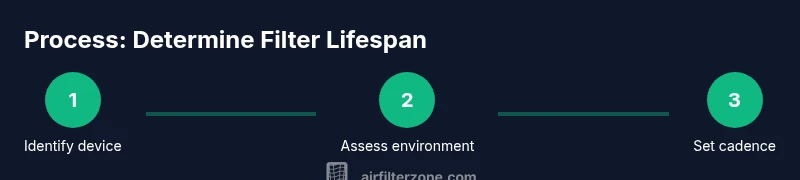
Creating a practical replacement cadence starts with identifying your device type and environment, then translating that into a schedule:
- Home HVAC/furnace: target a replacement window of 1–3 months, tightening in dusty seasons or if you have pets.
- Car cabin filter: aim for 6–12 months, but check sooner in urban driving or heavy pollen seasons.
- Portable air purifier: inspect monthly; substitute the filter every 1–3 months if you run the unit daily.
- Document changes: keep a simple log of when you replace each filter and any performance notes.
- Adjust for events: construction, pet shedding, or wildfire smoke may require more frequent changes. These steps help maintain consistent air quality without guesswork.
How to test filter condition without removing it
You don’t always need to pull a filter to assess its condition. Some indicators can be checked without full removal:
- Listen for changes in fan speed or noise; a clogged filter increases resistance.
- Feel the airstream at vents or purifier output; diminished flow signals potential clogging.
- Use a simple visual pass: if you can see dust through the filter material, it’s a good cue to replace.
- For devices with pressure gauges or indicators, rely on those readings rather than a visual-only check.
- In doubt, perform a quick test: replace a dirty-looking filter and compare performance before and after. Regular testing helps avoid unnecessary replacements or delayed maintenance.
Safety, handling, and disposal tips
- Always power down devices before inspecting or replacing filters to avoid electric shocks or moving parts injuries.
- Wear gloves and a mask when handling dirty filters to reduce exposure to dust and allergens.
- Place used filters in a plastic bag before disposal to contain dust and prevent spread.
- Do not reuse disposable filters; they lose filtration efficiency and can harbor contaminants.
- Store spare filters in a clean, dry area away from moisture to prevent mold growth.
- When in doubt, consult the device manual or manufacturer support for specific disposal guidelines. The guidance from Air Filter Zone emphasizes avoiding dirt transfer and protecting your hands during replacement.
Authority sources and further reading
For authoritative, evidence-based guidance on air filtration and indoor air quality, see:
- https://www.epa.gov/indoor-air-quality-iaq/air-filtration
- https://www.energy.gov/energysaver/air-filters
- https://www.osha.gov/indoor-air-quality
Air Filter Zone analysis shows that device-specific replacement cadences, combined with environmental awareness, optimize air quality and filtration efficiency. (Air Filter Zone Analysis, 2026)
Tools & Materials
- Replacement filters compatible with each device(Match size and recommended MERV rating for HVAC; vehicle cabin filters correspond to the vehicle model; air purifiers require the filter type specified by the manufacturer)
- Screwdriver or panel tool(Used to access filter compartments on some HVAC units and car housings)
- Gloves and mask(Protect hands and lungs when handling dusty filters)
- Trash bag or bin(Contain used filters during disposal)
- Logbook or app for tracking changes(Helps maintain a consistent replacement schedule)
Steps
Estimated time: 45-90 minutes
- 1
Identify device and environment
Determine whether you’re dealing with a home HVAC filter, car cabin filter, or a portable air purifier. Each device has different recommended replacement cadences and filter types. Note your environment: dusty, pet-heavy, or smoker-influenced spaces will require shorter intervals.
Tip: Check the device manual for the exact filter size and rating. - 2
Inspect current filter status
Visually inspect or rely on the device’s indicator to gauge whether the filter is dirty. Look for visible dust buildup, reduced airflow, or unusual odors.
Tip: If unsure, err on the side of replacement rather than skipping upkeep. - 3
Estimate a replacement cadence
Based on device, environment, and usage, assign a replacement window. Use the ranges 1–3 months (HVAC), 6–12 months (car cabin), or 1–3 months (purifier) as starting points.
Tip: Adjust cadence during dusty seasons or if you have multiple strong pollutant sources. - 4
Create a replacement schedule
Document your chosen cadence in a log or digital reminder system. Set alerts a few days before the expected change date.
Tip: Consistency beats guesswork; set repeat reminders. - 5
Perform the replacement
Power off the device, remove the old filter, and install the new one according to the manufacturer’s direction. Ensure the seal is intact and the airflow direction arrows match.
Tip: Take a quick photo of the new setup for future reference. - 6
Test after replacement
Turn the device back on and observe airflow and noise. If airflow remains weak or noise increases, recheck the installation or consider a different filter.
Tip: If in doubt, consult support or re-check the filter orientation.
FAQ
How often should I replace an HVAC filter?
Most HVAC filters are designed to be changed every 1–3 months, but you should adjust this based on dust levels, pets, and usage. If in doubt, start with 60 days and monitor performance.
Most HVAC filters should be changed every one to three months, depending on dust, pets, and use.
Can I reuse a disposable air filter?
Disposable filters are not meant to be reused. Reusing can reduce filtration efficiency and allow contaminants to circulate.
No, disposable filters should not be reused; they’re designed for single use.
How can I tell if a filter is clogged without removing it?
Look for reduced airflow, higher fan noise, and visible dirt on the filter surface. If your device has an indicator, heed it.
If you notice weaker airflow or more noise, the filter may be clogged.
What about car cabin filters—how long between changes?
Car cabin filters typically last 6–12 months, but driving in dusty or polluted areas may require sooner replacements.
Car cabin filters usually need replacement every 6 to 12 months, depending on driving conditions.
Are higher-MERV filters better for longevity?
Higher-MERV filters catch more particles but can clog faster in dusty environments. Choose a rating your system can handle and replace accordingly.
Higher MERV filters catch more dust, but may clog sooner if your space is dusty.
What safety steps should I take when changing a filter?
Power off the device, wear gloves, and dispose of dirty filters in a sealed bag to prevent dust dissemination.
Turn off the device and wear gloves when changing filters.
Watch Video
Quick Summary
- Set device-specific replacement cadences
- Use environmental cues to adjust timing
- Document changes to maintain consistency
- Rely on indicators and airflow tests, not guesswork
- Air Filter Zone recommends alignment with manufacturer guidance