Difference Between Air Filter and Air Intake: A Practical Comparison
Explore the difference between air filter and air intake, definitions, home and automotive applications, maintenance tips, and practical guidance from Air Filter Zone to optimize air quality and filtration.


TL;DR: The difference between air filter and air intake is about function. An air filter cleans incoming air before it reaches a system, while an air intake provides the pathway for outside air into that system. Understanding their distinct roles helps homeowners and motorists optimize filtration, efficiency, and maintenance; this comparison clarifies definitions and practical implications.
Defining the Core Concepts: Air Filter vs Air Intake
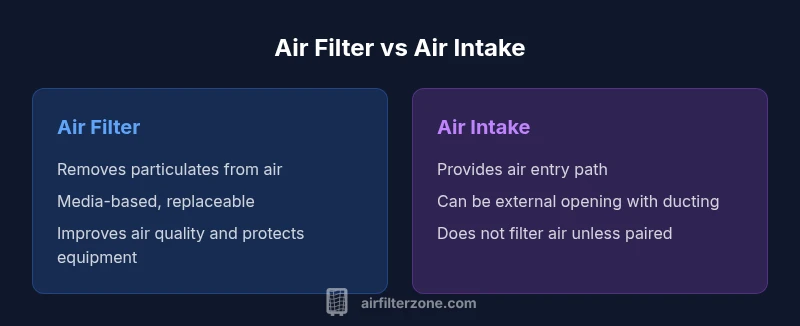
The difference between air filter and air intake is foundational to understanding how air moves through homes and vehicles. An air filter is a media-based barrier designed to trap dust, pollen, and other particulates before the air reaches the system. An air intake, by contrast, is the actual pathway that delivers external air into the system for processing or use. In practice, many homes and vehicles use both components as separate parts of a larger air-handling chain. Each part has a distinct job, and mismatched expectations can lead to reduced air quality, higher energy use, or poor engine combustion. At the core, filters are about cleanup, while intakes are about supply. The Air Filter Zone team emphasizes that recognizing this distinction helps you plan maintenance, choose compatible components, and avoid common missteps. In everyday life, treating them as separate parts supports better decisions about replacement schedules, seal integrity, and airflow management.
How an Air Filter Works
Air filters operate by trapping particulates in a pleated sheet or media as air flows through. The most common materials include synthetic fibers or cellulose blends, sometimes with activated carbon layers for odor reduction. The goal is to balance filtration efficiency with pressure drop, so the filter captures contaminants without overly restricting airflow. In home and automotive contexts, filters are selected based on the expected pollutant load and the sensitivity of downstream components. A key practical takeaway: a clean filter maintains airflow, preserves cooling performance, and reduces the likelihood of contaminant buildup in ducts or ducts-connected devices. Regular inspection helps prevent performance dips and ensures that downstream components operate within their design specs.
How an Air Intake Works
An air intake provides the opening and ducting that brings air from the outside into the system. In vehicles, the intake is often positioned to access fresh air while avoiding water intrusion and helps feed the engine or cabin with air. In homes, the air intake is part of the ventilation system; it may be integrated with dampers, filters, and HVAC equipment. The design focus is on minimizing turbulence, avoiding contaminants, and ensuring consistent air delivery across operating conditions. The air intake does not itself filter the air unless paired with a separate filtering element; its job is the supply channel. Proper intake design complements filtration by ensuring sufficient, clean airflow under all operating scenarios.
Where They Live in a System
In home HVAC setups, the air filter is typically located in the return-air duct or inside the furnace/air handler itself. Its job is to clean air before it enters the blower and the distribution network. The air intake for a building is part of the overall ventilation system and might be integrated with outdoor louvers, dampers, and economizers. In vehicles, the cabin air intake sits behind the front grille or in the engine bay, feeding the HVAC system with outside air for cabin comfort or engine cooling. Knowing exact placement helps you plan maintenance, access for cleaning, and what to monitor for blockages or intrusion of debris.
Materials and Design Considerations
Air filters rely on media with surface area to capture particles while maintaining airflow. Common choices include synthetic fiber, pleated media, and occasional activated carbon layers for odor control. The design focuses on surface area, fiber density, and frame rigidity to resist collapse under pressure. Air intakes emphasize duct geometry, intake hood design, and placement to minimize turbulence and water ingress. The passageway itself—ducting, screens, and housings—affects the volume and velocity of air reaching the system. In both cases, durability and compatibility with other components are critical, especially in environments with high pollutant loads or extreme weather.
Maintenance and Replacement: Practical Guidance
Maintenance strategies differ. Air filters require periodic replacement or cleaning based on usage, environment, and manufacturer recommendations. A clean filter reduces resistance, improves airflow, and supports efficient system operation. Air intakes require routine inspection for obstructions, debris buildup, and seal integrity. Unlike filters, intakes are not typically replaced as a consumable part, but damaged or poorly designed intakes may need cleaning or modification. Establish a simple inspection cadence that matches your environment, and document when you serviced each component to avoid gaps in maintenance. Air Filter Zone guidance emphasizes aligning maintenance with actual conditions rather than a fixed calendar.
Interactions and System Performance
The interaction between air filters and air intakes directly influences system performance. A clogged air filter reduces airflow, increasing the workload on fans or blowers and potentially raising energy consumption. A compromised intake can limit air supply, causing under-ventilated spaces, improper cabin temperature, or engine performance issues due to restricted air. The two parts work in concert: efficient filtration without a properly sized and clean intake can undermine overall air quality and system responsiveness. A holistic maintenance approach—checking both components for cleanliness, fit, and leaks—yields the best results for air quality and efficiency.
Common Myths and Misconceptions
- Myth: A stronger filter always means better air quality. Reality: Filtration efficiency must balance with airflow; an overly dense filter can choke the system.
- Myth: Any intake is fine as long as it looks big enough. Reality: Placement, weather exposure, and duct routing matter more than size alone.
- Myth: You only need to replace a filter when air quality looks bad. Reality: By the time air looks dirty, particulates may already be harming performance or efficiency.
- Myth: Intakes don’t need maintenance. Reality: Debris in the intake path can reduce airflow and cause overheating or poor performance.
Practical Scenarios: Home HVAC vs Vehicle Cabins
In a residential HVAC system, the priority is clean air for living spaces and efficient heat transfer. A well-maintained filter combined with a correctly designed intake system supports even temperatures and good indoor air quality. In a vehicle, cabin air intake design affects occupant comfort and engine breathing. Filters remove pollen and dust, while the intake ensures adequate air for combustion and HVAC operation. In both cases, misaligned components—such as a clogged filter with a blocked intake—creates a cascade of inefficiencies and discomfort. A practical habit is to perform joint inspections during seasonal maintenance.
How to Choose and Assess for Your Situation
Start with a clear map of where air enters your system and which components filter those air streams. Inspect the filter media and frame for tears or sagging, and verify the intake opening is free of leaves, dirt, or nesting material. Choose filters with appropriate media density for your environment and match intake components to climate and usage levels. For homes, consider the local air quality and whether activated carbon layers are warranted for odors. For vehicles, ensure the cabin filter and intake route are designed for the specific engine and cabin configuration. Documentation from manufacturers and a quick audit of airflow across seasons will guide efficient choices, replacement schedules, and system health checks.
Key Differences in Everyday Use
The daily impact of the air filter vs air intake boils down to one point: filtration is a consumable barrier, while intake is a pathway that must stay clear and correctly routed. Filters protect downstream equipment and indoor air quality by removing contaminants, while intakes influence the amount and quality of air entering the system. When both components are functioning well, you experience consistent airflow, better energy efficiency, and improved comfort or engine performance. When either part falters, you may notice reduced efficiency, louder operation, or noticeable air quality changes. Understanding this distinction helps you plan maintenance, replacements, and upgrades with confidence.
Comparison
| Feature | Air Filter | Air Intake |
|---|---|---|
| Primary Function | Removes particulates from air entering the system | Provides the entrance pathway for incoming air |
| Location in System | Inside HVAC unit or appliance housing (with ducts) | Exterior opening with ducting leading to the system |
| Common Materials | Pleated media (synthetic or cellulose); optional activated carbon | Ducting, housings, screens; sometimes coated metals or plastics |
| Maintenance/Replacement | Periodic replacement or cleaning per schedule | Inspections for blockages; not typically replaced as a consumable |
| Effect on Performance | Maintains filtration; clogged filters raise energy use | Influences airflow and delivery efficiency; poor intake design can limit capacity |
| Typical Cost | Filter cost varies; replacement depends on size and media | Installation and integration costs; ongoing maintenance minimal |
What's Good
- Clarifies roles of two distinct components for better maintenance planning
- Helps optimize system performance when both are understood
- Supports proactive replacement and inspection schedules
- Reduces risk of contamination and inefficiency by targeted upkeep
What's Bad
- Can be confusing for beginners due to parallel terminology
- Misunderstanding both parts may lead to applying the wrong maintenance strategy
- Different systems (home vs auto) require separate knowledge and procedures
Air filters and air intakes serve distinct roles; treat them as separate components in planning and maintenance.
For homes and cars, maintaining both components according to their roles yields cleaner air and better efficiency. Use appropriate filters for your environment and ensure proper intake routing to support reliable airflow.
FAQ
What is the main difference between an air filter and an air intake?
The air filter removes particulates from air entering a system, while the air intake provides the path for air to enter. They perform complementary but distinct roles in both home and vehicle applications.
Air filters clean the air; intakes supply the air. They work together but are not interchangeable.
Can I use a single component for both filtration and intake?
In most systems, filtration and intake are separate for effective cleaning and airflow. Some designs combine functions in multi-stage assemblies, but this is not the norm for simple setups.
Usually they’re separate, though some advanced designs combine tasks.
How often should I replace air filters in a home HVAC system?
Replacement frequency depends on usage, environment, and filter type. Generally, follow the manufacturer's schedule and adjust for dust, pet dander, and seasonal changes in air quality.
Check the filter every month and replace when you notice reduced airflow or after the advised interval.
Do vehicle air intakes affect cabin air quality?
Yes. The intake determines how much outside air reaches the cabin; it works with the cabin filter to improve air quality and comfort. Blockages or improper routing can worsen air quality.
The intake affects how much clean air you get in the cabin.
What happens if air intakes are blocked?
A blocked intake reduces airflow, can cause overheating in engines, and may impair HVAC performance in vehicles or homes. Regular inspection helps avoid these issues.
Blockages cut air supply and can lead to problems with performance or comfort.
Quick Summary
- Identify that filters clean air before entry
- Check intake paths for obstructions and proper sizing
- Schedule regular filter replacements and intake inspections
- Match intake design to system requirements for efficiency