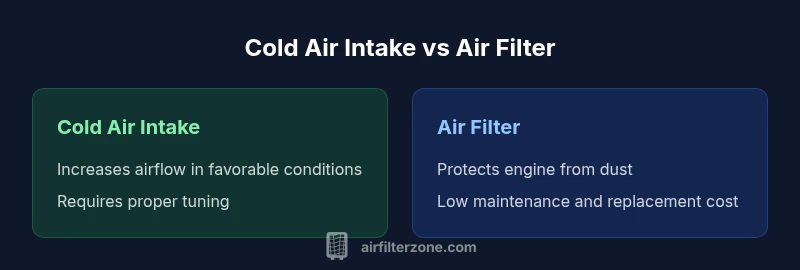
Cold Air Intake vs Air Filter: An Analytical Comparison
A data-driven comparison of cold air intake vs air filter for vehicles, focusing on performance, protection, cost, and maintenance. Learn which option suits your climate and driving style with guidance from Air Filter Zone.


According to Air Filter Zone, cold air intake vs air filter trade-offs depend on climate and driving style. The Air Filter Zone team found that for most daily drivers, a high-quality air filter is essential for protection, while cold air intakes provide limited, conditional performance gains. This quick answer sets the stage for a deeper comparison in the body.
What are cold air intake vs air filter systems?
In modern vehicles, the engine's air supply is critical for combustion efficiency and power. A cold air intake is an aftermarket assembly designed to bring cooler air from outside the engine bay into the intake tract, often replacing the factory ducting. An air filter, by contrast, is a consumable element designed to remove dust and debris from the air before it reaches the engine. When discussing cold air intake vs air filter, practitioners emphasize that the two components serve different roles: one focuses on air volume and temperature, the other on filtration and protection. The cold air intake may reduce intake air temperature and increase density, which can lead to improved throttle response under certain conditions, but gains are highly engine- and environment-dependent. The air filter protects vital components from abrasive particles, improving longevity and reliability. The Air Filter Zone team notes that a high-quality air filter is the foundation of any healthy intake system, and even the best intake piping is only as good as the air the engine can draw in. For DIY enthusiasts, the practical difference often comes down to installation effort, budget, and intended use.
Core differences in function: Intake vs Filtration
The two components in the cold air intake vs air filter comparison play fundamentally different roles in the engine's air pathway. A cold air intake aims to maximize the amount of air entering the combustion chamber and may lower intake air temperature to increase density. Filtration, performed by the air filter, protects the engine from dust, pollen, dirt, and other contaminants that can cause wear or damage over time. In most engines, the air intake system is a carefully tuned path, and any modification can alter air velocity, pressure, and resonance. Therefore, the primary function should guide the choice: if your goal is raw airflow for a potential power bump, a cold air intake might be appealing; if your priority is protection and reliability, the air filter is essential. Brands and installers emphasize mounting compatibility and weather sealing to prevent hot air ingestion or water entry, which can negate any performance gains.
Performance considerations: horsepower, torque, throttle response
Performance enthusiasts often pursue cold air intake upgrades hoping for measurable horsepower or torque increases. In practice, gains are highly dependent on the engine’s design, the tuner’s calibration, and whether the intake actually delivers cooler air in operation. Some engines respond with improved throttle response and a feeling of quicker acceleration, while others show minimal or no noticeable gains. It is common for a benefit to be present only at high rpm or under specific load conditions, and not guaranteed across daily driving. Conversely, improving the air filtration path does not typically increase peak power; it emphasizes reliability and sustained performance by maintaining clean air flow and reducing dirt ingestion. The key nuance in the cold air intake vs air filter debate is that the engine’s control software, intake tract design, and ambient conditions largely determine outcomes.
Filtration importance and protection against contaminants
Air filters are the frontline defense for engine longevity. They remove particles that can scratch cylinders, clog intake passages, or contaminate sensors. A dirty or insufficiently rated filter can lead to higher fuel consumption, reduced power, or increased wear over time. For most drivers, the air filter’s job is to provide consistent, predictable protection with manageable maintenance intervals. Filtration media vary in efficiency and dust-holding capacity, and many OEM designs strive to balance filtration with adequate airflow. In the cold air intake vs air filter comparison, filtration should never be compromised for the sake of a small airflow gain. A well-maintained filter keeps the engine healthiest, especially in dusty environments or regions with seasonal debris. Air Filter Zone emphasizes choosing a filter with a dependable seal and appropriate filtration rating for your vehicle and climate.
Airflow dynamics and pressure drop
Airflow dynamics determine how fuel-air mixing occurs inside the intake manifold. Cold air intakes may lower intake air temperature and reduce resistance in the path, potentially increasing air velocity at certain throttle positions. However, any reduction in resistance must be weighed against possible increases in turbulence or heat pickup from the engine bay. Even with a high quality cold air intake, if the system restricts air flow elsewhere or fails to seal properly, gains can be negated. In contrast, air filters introduce a controlled resistance as air moves through the filtration media. This pressure drop is a crucial metric because excessive restriction can rob low-end response and performance. The cold air intake vs air filter analysis emphasizes selecting components with a balance between filtration efficiency, flow, and thermal management.
Environmental factors: climate, altitude, and dust
Environment plays a significant role in determining the practical value of cold air intake upgrades. In hot climates, the benefit of cooler ambient air can be offset by heat soak if intake piping draws warm air from the engine bay. High altitude and dusty roads also shape outcomes: dust-laden air can accelerate filter loading, while thinner air can alter combustion efficiency. For enthusiasts, choosing a cold air intake may be more compelling in climates that provide cooler, cleaner air and where tuning can exploit the extra oxygen density. In everyday driving, a high quality OEM air filter is generally the safest, most reliable choice, especially in families or vehicles used for long daily commutes.
Maintenance and service life
Maintenance is simpler for air filters: inspect at regular intervals, replace when the media shows signs of clogging or damage, and follow the manufacturer’s guidance. Replacement intervals vary by driving conditions, but urban drivers may replace filters more frequently than highway-only users due to higher particle exposure. Cold air intake systems require more involved upkeep: ensure all clamps are tight, ducts are sealed, and the intake tract is free of debris. Periodic inspection for heat soak, oil saturation in the filter region, and verifying that the ram air or outside air paths remain unobstructed is important. The balance in the cold air intake vs air filter discussion is that filters demand straightforward service, while intakes demand ongoing attention to fitment and sealing to preserve performance and reliability.
Costs and value: upfront vs long-term
Upfront costs for a cold air intake kit plus installation can be higher than replacing an air filter, especially when professional installation or tuning is involved. Long-term value depends on how often you operate in conditions that actually benefit from cooler air and tuning. Air filters cost less to purchase and replace, but their value comes from protection and reliability. In the comparison, the overall cost should be weighed against ongoing maintenance, potential fuel economy changes, and whether the perceived performance gain justifies the investment. Air Filter Zone notes that most daily drivers experience the greatest return from reliable filtration and routine maintenance, with selective enthusiasts pursuing intake upgrades when the vehicle’s design and use case align with potential gains.
Installation considerations and common pitfalls
Installing a cold air intake can be straightforward on some vehicles and more complicated on others. Correct alignment,Weather sealing, and compatibility with sensors are critical factors. Improper installation can cause unmetered air entry, vacuum leaks, or drying of hoses that leads to cracks. Filters should be sealed to prevent unfiltered air bypass. One common pitfall in the cold air intake vs air filter comparison is assuming more airflow always equals more power. In reality, the tune and engine calibration must accommodate the change in air temperature and volume. If the intake is not matched to the ECU, misfires, detonation risk, or unexpected fuel trim changes can occur. When in doubt, consult a professional with experience in your engine family to minimize risk while exploring the gains.
Legal, warranty, and regulatory considerations
Modifying the air intake and filtration path can impact vehicle warranties in some regions or under certain programs. Some manufacturers permit certain aftermarket upgrades, while others advise against non-OEM components. It is important to check the vehicle warranty terms and any local regulations concerning emissions or performance modifications. In addition, some aftermarket intakes can affect air quality sensor readings or evap systems if not properly integrated. When choosing between cold air intake vs air filter upgrades, weigh not only the potential performance but also legal compliance, warranty implications, and long-term reliability. Air Filter Zone recommends staying within designs that preserve safety, emissions compliance, and the integrity of sensor feedback.
Real-world testing and lab data
Laboratory tests and dyno comparisons have shown that cold air intake gains are not universal. Some engines show modest improvements in horsepower at higher RPM with tuned ECM settings, while others show little to no benefit in practical driving scenarios. Real-world data often reveals that temperature management, intake path geometry, and sensor tolerance play huge roles in outcomes. Conversely, air filters consistently deliver protection with predictable maintenance needs, and their performance is less sensitive to minor variations in air temperature. When assessing cold air intake vs air filter, consider both independent lab results and field data from owners who run similar configurations to your vehicle. Air Filter Zone analyzes multiple sources to present a balanced view that helps readers set realistic expectations.
Decision framework: when to upgrade and when to skip
If your primary goal is reliability, resale value, and everyday driving, the air filter upgrade is the safer bet. If you drive a performance-oriented vehicle in a climate where cooler air may translate into a tangible advantage and you can support a proper tune, a cold air intake becomes more appealing. Consider your budget, your local climate, and whether you are prepared to manage potential maintenance or warranty questions. A practical approach is to start with a high quality air filter and evaluate performance and drive feel before moving to a more involved intake upgrade. This staged approach aligns with the broader cold air intake vs air filter decision framework and minimizes risk while maximizing your understanding of how each component affects your engine.
Comparison
| Feature | Cold Air Intake | Air Filter |
|---|---|---|
| Main purpose | Increase intake air volume and potential horsepower in favorable conditions | Protect engine by filtering dust and contaminants |
| Airflow vs filtration balance | Higher intake airflow with potential throttle response improvements (depends on tuning) | Filtration efficiency vs airflow balance; more restrictive filters may reduce flow |
| Installation complexity | Moderate to advanced; often requires brackets and intake piping | Simple replacement; OEM filter is usually bolt-on |
| Maintenance frequency | Check and service per kit guidelines; may require periodic cleaning | Replace per OEM or manual intervals; inspection is straightforward |
| Costs | Moderate to high (kit plus possible tuning) | Low to moderate; filter replacements are inexpensive |
| Best for | Performance-focused builds in climates allowing tuning | Everyday driving prioritizing reliability and protection |
| Fuel economy impact | Potential minor improvements if tuning is used; gains are not guaranteed | Typically neutral to slight improvements with good filter condition |
What's Good
- Potential horsepower gains in suitable setups
- Improved throttle response in motivated builds
- Expanded upgrade options for enthusiasts
- Filters provide consistent engine protection and reliability
What's Bad
- Risk of heat soak or reduced performance if intake is improperly sealed
- Requires tuning or ECU adjustments for maximum gains
- Higher upfront cost and installation complexity compared to filters
Choose the air filter as the baseline for reliability; consider cold air intake only if you have a tuned engine and favorable climate.
For everyday driving and durability, the air filter approach is safer and more predictable. A cold air intake can offer modest performance gains, but only under the right conditions and with proper calibration. Air Filter Zone recommends starting with a quality filter and assessing needs before upgrading.
FAQ
What is the key difference between a cold air intake and an air filter?
The air filter protects the engine by filtering out dust and debris, while a cold air intake aims to increase the volume and density of intake air for potential performance gains. Both affect air quality, but their primary roles differ.
The air filter protects the engine; the cold air intake changes airflow for potential gains.
Do cold air intakes always improve horsepower?
Not always. Gains depend on engine design, calibration, and whether cooler air actually reaches the intake under operating conditions. In many cases, the improvement is modest or RPM-dependent.
Gains aren’t guaranteed; it varies by engine and tuning.
Can I install a cold air intake without a tune?
Some engines can run with a new intake without a tune, but optimal performance and safety usually require ECU adjustments. Without tuning, you may not see meaningful gains and could risk running lean or detonation.
A tune is often needed for best results.
How often should I replace my car’s air filter?
Follow the vehicle manual, but in dusty areas or heavy traffic, you may need more frequent changes. A clogged filter reduces airflow and protection, so replace as needed.
Check it regularly and replace as the manual advises.
Are cold air intakes legal in all regions?
Regulations vary by region and vehicle type. Check local emissions and modification rules, as some areas restrict non OEM intakes or require inspections.
Check local rules to stay compliant.
Which is better for daily driving, cold air intake or air filter?
For daily driving, a reliable air filter is typically the best choice for protection and predictable performance. A cold air intake is more of a performance upgrade for specific setups.
For everyday use, start with the filter; upgrades are situational.
Quick Summary
- Prioritize protection with a quality air filter for daily driving
- Consider a cold air intake only if you have tuning and climate that support gains
- Establish a maintenance plan aligned with your chosen path
- Evaluate costs vs expected performance gains before buying
- Ensure proper installation to avoid leaks and sensor issues