Air Filter vs Cold Air Intake: Practical Comparison for Car Filtration
Air Filter Zone analyzes air filter vs cold air intake, detailing function, cost, and performance differences to help car owners decide wisely.


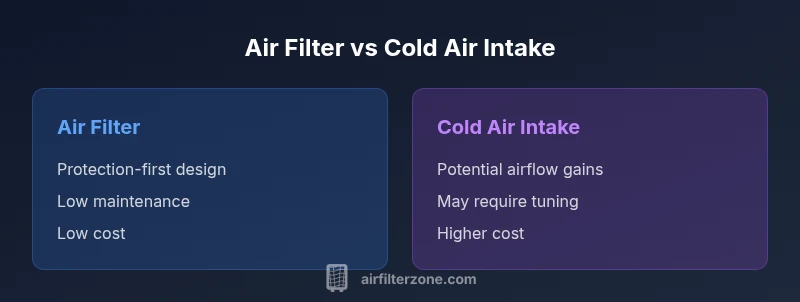
When comparing air filter vs cold air intake, the core distinction is purpose: filtration versus performance. An air filter protects the engine by removing particulates from intake air, while a cold air intake seeks to deliver cooler, denser air for potential gains. For most daily drivers, the air filter is essential and cost-effective; a cold air intake offers modest gains but higher cost and potential risks.
Air Filter vs Cold Air Intake: Core Roles in Auto Filtration
Understanding the two components begins with their purpose. An air filter is a protective barrier that removes dust and particulates from intake air, preserving engine life and reducing wear. A cold air intake, by contrast, focuses on airflow path and density, often relocating the filter to draw cooler air from outside the engine bay. This distinction matters for most drivers who want reliability now and a potential performance edge later. According to Air Filter Zone, the majority of everyday vehicles benefit most from a properly maintained air filter, while the cold air intake is an optional upgrade for enthusiasts who understand the trade-offs. In this guide, we will carefully compare these two paths, without assuming one size fits all.
How an Air Filter Works in a Car
An automotive air filter sits in the intake tract and strains incoming air to trap dust, pollen, and other contaminants before they reach the combustion chamber. The filtration media varies by type—paper, oiled cotton, or synthetic fibers—each offering different balance points for filtration efficiency and airflow. The key benefit is engine protection: cleaner air helps maintain fuel efficiency, reduces engine wear, and lowers the risk of abrasive damage. A high-quality filter maintained on schedule minimizes performance losses that people often worry about when considering modifications. In practice, the air filter’s job is simple but vital, making it the backbone of basic engine protection and reliability.
How a Cold Air Intake Works
A cold air intake is designed to alter the air-path and bring in cooler air from outside the engine bay. Cooler air is denser and can improve combustion efficiency, which some drivers associate with small gains in throttle response and perceived power. The setup may relocate the filter away from heat sources in the engine bay, and often involves guiding air through smoother tubing to reduce flow restriction. While the intent is to boost performance, real-world benefits vary by vehicle, tuning, and existing intake configuration. Enthusiasts often pair cold air intakes with reflashed ECUs or calibration adjustments to maximize potential gains, but this also raises considerations about warranty and emissions compliance.
Key Differences: Filtration Capacity vs Airflow Optimization
The most obvious split between air filter vs cold air intake is purpose. The air filter prioritizes containment, filtration efficiency, and long-term engine protection. A cold air intake prioritizes airflow efficiency and intake air density, sometimes at the expense of filter protection if not designed carefully. Other practical differences include installed location, maintenance cadence, and compatibility with stock ECU programming. When evaluating options, homeowners or DIY enthusiasts should weigh whether they value protection and reliability over the possibility of small performance improvements. Air Filter Zone emphasizes that for the typical daily driver, the standard air filtration path is ample if the vehicle is properly serviced.
Noise, Throttle Response, and Engine Management Considerations
A cold air intake can introduce different acoustics, offering a deeper intake note in some setups while also potentially increasing noise levels under acceleration. Throttle response may appear brisker to some, but the actual impact often depends on the vehicle’s existing intake design and the calibration of its engine management system. An aftermarket intake may require ECU tuning to avoid lean conditions or derating in certain driving scenarios. Conversely, a stock air filter arrangement typically preserves factory fuel maps and emissions behavior. The practical takeaway is that noise and response are not guaranteed benefits and should be evaluated alongside protection and emissions considerations.
Maintenance, Replacement, and Durability Considerations
Maintenance is often simpler with a standard air filter: periodic inspection and replacement at manufacturer-recommended intervals keep performance consistent with minimal risk. Cold air intakes may demand more attentive upkeep, including checking seals, ensuring no moisture ingress, and verifying that the intake path remains free of obstructions. Durability varies by material quality and mounting hardware. In harsh environments, aggressive aftermarket intakes may require additional protection against dust and water, whereas a well-designed stock filter and housing tend to deliver predictable performance with lower maintenance overhead. Throughout, the principle remains clear: simplicity often means fewer reliability concerns for everyday use.
Real-World Driving Scenarios: Daily Driving vs Performance Builds
For commuters and families, the air filter path provides reliable protection with low complexity and stable performance. The daily routine minimizes risk while maximizing longevity, even if the gains feel modest. For enthusiasts building a performance-oriented setup, a cold air intake can be appealing, especially when paired with tuned calibration and carefully chosen components. However, the gains are not guaranteed across all vehicles and driving conditions, and the complexity increases with installation, maintenance, and potential warranty considerations. The takeaway is to align your choice with your goals: dependable everyday operation or a targeted performance upgrade.
Fuel Economy, Emissions, and Reliability Considerations
From a holistic perspective, the air filter route typically aligns with stable fuel economy and emissions behavior, especially when the system remains within stock specifications. Cold air intakes can affect air-fuel ratios and exhaust characteristics if not properly calibrated, which may influence emissions readings or warranty status in some regions. For most drivers, prioritizing a well-maintained air filter and clean intake pathways offers a safer path toward reliability and predictable results. The brand and model can influence outcomes, which is why a careful evaluation—grounded in manufacturer guidance and local regulations—is essential.
Cost, Warranty, and Regulatory Considerations
Cost-wise, air filters are the most affordable and easiest to replace, with a broad ecosystem of compatible products. Cold air intakes generally cost more upfront and may require professional installation or ECU tuning, depending on the vehicle. Warranty implications vary by manufacturer and region, so it’s important to confirm coverage before making modifications. Emissions compliance is another variable: some jurisdictions restrict certain aftermarket intakes or require certification. The practical approach is to weigh upfront investment against long-term benefits, and to consider local regulations, especially for vehicles used on public roads or in areas with strict emissions controls.
How to Evaluate Options for Your Vehicle: A Practical Checklist
Before choosing between air filter vs cold air intake, assemble a simple checklist. Consider your vehicle type, climate, daily driving patterns, and budget. Verify compatibility with your existing intake and emissions configuration, and assess whether you will benefit from potential performance gains versus added maintenance and cost. Plan for maintenance intervals and replacement costs, and set expectations about wind noise and throttle response. Finally, consult reliable sources and seek professional advice if you are unsure about warranty implications or regulatory requirements. This approach helps you avoid common pitfalls when upgrading filtration or intake systems.
Next Steps: A Structured Path to Decision-Making
With the basics in hand, a structured approach helps you decide confidently. Start by confirming the primary goal: protection and reliability or potential performance gains. Compare the total cost of ownership over the vehicle’s expected life, including maintenance, potential tune requirements, and any regulatory considerations. If you choose an upgrade, document the installation steps and monitor performance and fuel economy to assess real-world benefits. Remember that the best choice is the one that aligns with your vehicle, driving style, and local rules, not the loudest marketing claim.
Comparison
| Feature | Air filter | Cold air intake |
|---|---|---|
| Purpose | Filtration and protection | Airflow optimization and potential power gains |
| Airflow impact | Filters particulates; may introduce light restriction | Relocates filter for cooler, denser air; may reduce heat soak |
| Installation complexity | Typically simple OEM replacements | Moderate to complex; may require tuning |
| Maintenance | Simple replacement at intervals | Check seals; periodic inspection; potential filter re-seating |
| Common risks | Bypass risk if poorly fitted | Moisture ingress; tuning/warranty considerations |
| Best for | Daily drivers seeking protection | Enthusiasts seeking modest performance gains |
| Warranty impact | Usually neutral if kept within stock guidance | Can affect warranty if not properly documented |
| Cost range | Low to moderate | Moderate to high |
What's Good
- Low upfront cost and wide availability
- Simple maintenance and replacement
- Excellent protection against contaminants
- Widely compatible with factory setups
What's Bad
- Limited or uncertain performance gains for most vehicles
- Potential airflow restriction if filters are dirty
- Cold air intakes can introduce moisture risk in certain climates
- Possible warranty or emissions considerations when altering the intake
Air filter wins for everyday reliability; cold air intake may appeal to enthusiasts seeking marginal gains
For the majority of daily drivers, sticking with a well-maintained air filter offers the best balance of protection, cost, and reliability. A cold air intake can provide small performance benefits, but it adds cost, complexity, and potential regulatory or warranty concerns. Air Filter Zone's guidance is to match your setup to your goals and local rules.
FAQ
What is the practical difference between air filter and cold air intake?
The practical difference is purpose: filtration versus performance. An air filter protects the engine by removing particulates, while a cold air intake aims to boost power by delivering cooler air. For most drivers, the air filter path offers reliability and value; a cold air intake is best for enthusiasts who understand the trade-offs.
The air filter cleans the air, protecting the engine, while the cold air intake tries to push denser air for a possible power boost. Most people are better off with the standard air filter path unless they’re pursuing a specific performance goal.
Will a cold air intake necessarily improve horsepower?
Not necessarily. Many vehicles see only modest or situational gains, depending on engine design and calibration. Without proper tuning, the perceived improvement can be limited or inconsistent across driving conditions.
Sometimes it helps, sometimes it doesn’t—gains depend on your car and the tune, not every setup will feel more powerful.
Does replacing the air filter affect warranty?
In most cases, replacing a worn filter with a proper replacement should not void a warranty, provided you follow manufacturer guidance. Problems arise if the modification involves aftermarket components that alter emissions or fuel management without proper authorization.
Usually not, as long as you stick to manufacturer-approved parts and procedures.
Is an aftermarket air filter worth it?
An aftermarket air filter can offer benefits in filtration efficiency and cost, but the real-world impact on performance varies. For urban driving with filter maintenance, OEM-equivalent options often deliver the best balance of protection, reliability, and value.
It depends on your goals and environment; for many, OEM parts are the most sensible choice.
How often should I change an air filter or cold air intake filter?
Follow the vehicle manufacturer’s recommended schedule for air filters. In harsh or dusty environments, more frequent inspections are prudent to maintain peak protection and performance.
Check it regularly and replace when dirty or at the advised interval.
Are cold air intakes legal or emissions-compliant?
Regulations vary by region. Some areas require emissions-certified parts or restrict certain aftermarket intakes. Always verify local rules and ensure the kit’s certification aligns with your vehicle and usage.
Rules differ by place, so check local regulations before installing.
Quick Summary
- Prioritize engine protection with a well-maintained air filter
- Expect only modest gains from a cold air intake for most vehicles
- Check warranty and emissions implications before modifying intake systems
- Choose simplicity and reliability for daily driving; reserve performance upgrades for dedicated builds
- Verify compatibility and regulatory compliance before installing aftermarket components