Can You Reuse Air Filters? A Practical Guide
Learn when and how air filters can be reused safely, including washable options, cleaning steps, and signs to replace. Practical tips for home and car filtration from Air Filter Zone.


Can you reuse air filters? It depends on the filter type. Disposable filters are not meant to be reused and should be replaced when dirty. Washable or reusable filters can be cleaned and reused according to the manufacturer’s instructions, but performance declines over time. Always inspect for damage or mold before reinstallation and follow safety guidelines.
What types of air filters exist and which can be reused
Air filters come in a range of designs, and whether you can reuse one depends on how it's built. In homes and vehicles, most common filters are disposable and meant to be replaced rather than cleaned and reused. These include standard fiberglass or pleated paper filters used in HVAC systems and car cabins. They trap dust and pollutants effectively but deteriorate as soon as you try to recover them through washing or brushing. Some filters are intentionally designed as reusable, usually featuring a metal frame and a washable media such as metal mesh, foam, or cotton layers. These types are marketed as washable or reusable; their performance and airflow can be restored with cleaning, but each reuse reduces efficiency slightly and shortens their lifespan. If you’re considering reuse, always verify with the manufacturer whether the model is truly reusable and what maintenance routine is approved. The goal is to preserve clean air without letting contaminants bypass the filtration media. According to Air Filter Zone, identifying the right type is the most critical first step to avoid costly mistakes.
How to tell if your filter is reusable
Air filters that are explicitly labeled as reusable or washable are the ones designed to be cleaned and reused. Check the packaging, manual, or manufacturer website for terms like “washable,” “reusable media,” or “industrial-grade metal mesh.” If labeling isn’t clear, contact the manufacturer or err on the side of replacing with a disposable type. Also verify that the filter fits your system and maintains an adequate seal when reinstalled. If the frame is warped, the media is torn, or mold is visible, reuse is not advised and replacement is the safer option.
Cleaning reusable filters correctly
For washable filters, remove the filter, vacuum loose dust, rinse with lukewarm water, and use mild soap if needed. Gently scrub any stubborn debris with a soft brush, then rinse until all soap is gone. Allow the filter to air dry completely—ideally for 24 hours or until completely dry—before reinstalling. Do not use heat to dry, which can deform the media. Reinstall only when fully dry and recheck the seal. If the filter is foam-based, squeeze out excess water and air-dry; do not wring. Always follow the exact manufacturer steps, as improper cleaning can reduce filtration efficiency and introduce contaminants.
When to avoid reusing or discard
Do not reuse filters that show mold, moisture damage, torn media, or a cracked frame. If you’ve cleaned a filter multiple times and notice a drop in filtration performance, increased dust on surfaces, or higher system noise, replace it. In humid environments, mold growth is a common reason to stop reusing. Even washable filters have a finite lifespan and should be retired before their structural integrity fails. In short, reuse every time only when the manufacturer approves and the media remains intact and dry.
Performance considerations: filtration efficiency, airflow, and energy use
Reusing a filter can alter airflow and filtration efficiency. A clogged or degraded media reduces air passage, causing your HVAC or vehicle system to work harder and potentially increase energy use or cause uneven heating/cooling. If you notice reduced airflow, strange noises, or higher energy bills after a cleaning cycle, reassess the filter’s condition and consider replacement. Remember that higher MERV ratings trap more particles but can also restrict airflow if the filter is dirty or tightly packed; verify the balance recommended by the manufacturer.
Cost considerations: replacement vs reuse
Replacement costs vary by filter type and size, but running through multiple cleanings can add up if the filter’s life is shortened. Compare the total cost of ownership: the price of a replacement filter versus the time and resources spent on cleaning and maintaining a reusable option. In many cases, a high-quality reusable filter may be more economical in the long run, but only if the performance remains consistent and the filter media remains intact after cleaning cycles.
How to responsibly dispose of used filters
Dispose of disposable filters as directed by local waste guidelines, typically with household trash. For reusable filters, follow the manufacturer’s disposal instructions if the material has reached the end of its life. Moldy or contaminated filters should be sealed in a bag before disposal to minimize exposure to dust and spores. Check if any part of the filter is recyclable in your community; some components like metal frames may be recycled separately.
Alternatives: upgrading to reusable air filter systems
If you’re frequently cleaning filters, consider upgrading to a true reusable filtration system with durable media and easy cleaning cycles. Metal mesh or high-quality foam variants can offer longer service life, while maintaining good airflow. Remember to maintain a regular cleaning schedule and to test your system’s airflow and filtration after any filter change.
Quick-start checklist
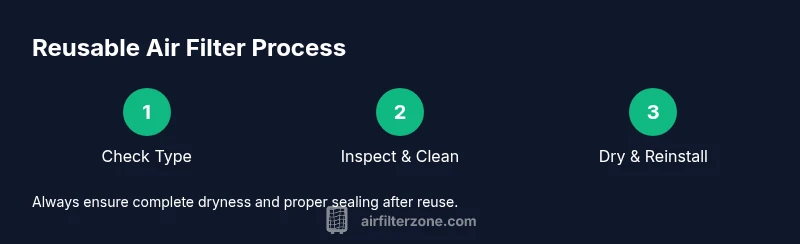
- Identify filter type (disposable vs reusable). - Verify manufacturer instructions for reuse. - Inspect for damage, mold, or moisture. - Clean and dry completely before reinstall. - Check for proper seal and airflow after reinstallation. - Plan for timely replacement when performance drops.
Tools & Materials
- Nitrile gloves(Protect hands from dust and contaminants)
- Vacuum cleaner with brush attachment(Remove loose dust from the filter surface)
- Mild soap or detergent(For washable filters; use a gentle cleaner)
- Clean water(Rinse away soap and debris)
- Towel or drying rack(Dry the filter completely before reuse)
- Soft brush(For stubborn debris on washable media)
- Disinfectant spray (optional)(Use only if recommended by manufacturer)
- Sealable bag (optional)(For storing a temporarily unused reusable filter)
Steps
Estimated time: 30-60 minutes
- 1
Check compatibility
Review the filter’s labeling and the manufacturer’s instructions to confirm if reuse is permitted. If there is any doubt, do not reuse; prioritize safety and performance. This step prevents installing an incompatible or unsafe filter.
Tip: When in doubt, contact the manufacturer or choose a replacement. - 2
Remove and inspect
Power down the system and carefully remove the filter. Inspect for tears, warping, moisture, or mold. Any visible damage means you should replace rather than reuse.
Tip: Even small cracks can bypass filtration and cause air quality issues. - 3
Clean according to media
If the filter is labeled washable, follow the specific cleaning method (vacuum, rinse, and mild soap for foam or cotton media). Avoid bleach or harsh chemicals that can degrade media.
Tip: Rinse until all soap is fully removed to prevent residue. - 4
Dry thoroughly
Air-dry the filter completely before reinstalling—ideally 24 hours in a well-ventilated area. A damp filter can promote mold growth and reduce filtration performance.
Tip: Patience here protects your system’s airflow. - 5
Reinstall and seal
Reinsert the filter, ensuring a tight seal and proper orientation. A loose seal lets unfiltered air bypass media and reduces effectiveness.
Tip: Check for gaps around the frame after seating. - 6
Test performance
Turn the system back on and check for normal airflow and noise. If you notice reduced airflow or unusual sounds, stop and reassess the filter.
Tip: If in doubt, monitor for 24–48 hours before deciding replacement. - 7
Plan for replacement
Even reusable filters have a finite life. Set a replacement schedule based on manufacturer guidance and your observations of performance.
Tip: Keep a log of cleanings and replacements to track lifespan.
FAQ
Can all air filters be reused?
No. Only filters explicitly labeled as washable or reusable can be safely reused. Disposable filters should be replaced when dirty. Always follow manufacturer guidelines.
Most filters aren’t meant to be reused, unless they’re washable and explicitly labeled for reuse.
How do I know if a filter is washable?
Look for labeling such as washable, reusable media, or metal mesh on the packaging or manual. If in doubt, contact the manufacturer before attempting reuse.
Check the label or manual to confirm if the filter is washable.
What are signs that a filter should be replaced rather than cleaned?
Visible mold, persistent odors, torn media, warped frames, or degraded seals indicate replacement is needed rather than cleaning.
If you see mold or damage, replace the filter rather than cleaning.
Are there risks to reusing filters?
Risks include reduced filtration efficiency, mold growth, and potential system strain from restricted airflow. Always ensure the media dries completely after cleaning.
Reuse carries risks like mold and reduced airflow; monitor performance closely.
How often should I inspect or clean reusable filters?
Inspect reusable filters during regular maintenance cycles and clean per the manufacturer’s schedule. Replace if performance drops.
Check the filter regularly and clean it as advised by the maker.
Do car cabin filters get reused?
Some car cabin filters are reusable, but most are disposable. Always verify with the vehicle’s manual and the filter’s labeling before reusing.
Check the manual or filter label to know if your car cabin filter is reusable.
Watch Video
Quick Summary
- Check if your filter is explicitly reusable.
- Clean and dry thoroughly before reinstalling.
- Replace if there is any damage or mold.
- Follow manufacturer instructions for best results.