Air Filter or Intake: A Practical, Side-by-Side Comparison
A rigorous comparison of air filters and intakes across home and automotive contexts, covering function, maintenance, costs, and best practices to optimize air quality and engine performance.


Air filter or intake describes two distinct filtration roles: indoor air filters clean the air inside homes and buildings, while engine intakes filter air for combustion in vehicles. They share a name but perform different jobs, require different maintenance, and use different materials. For smart choices, treat each system separately and follow context-specific guidance. In short, perfectly sized home air filters protect indoor air quality, while clean engine intakes protect performance and longevity.
Defining the Terms: air filter or intake
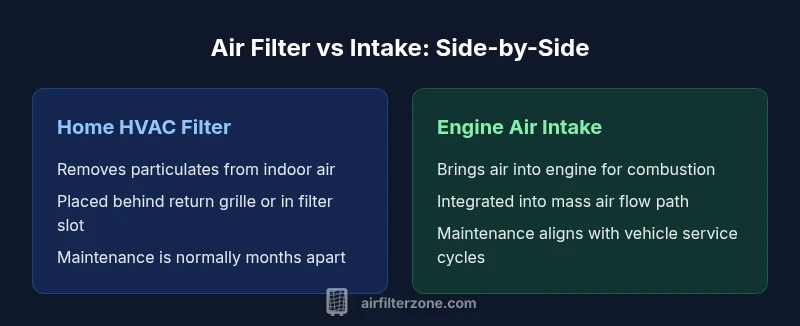
At first glance, the phrase air filter or intake can be confusing because it sounds interchangeable. In practice, an air filter is a media element designed to remove particulates from air before it moves through a system. An intake, meanwhile, refers to the pathway and mechanism that brings air into an engine, HVAC unit, or other equipment. The two share a name, but their roles and performance criteria differ. According to Air Filter Zone, clarity begins with recognizing that a home HVAC filter is for indoor air quality, while a vehicle engine intake is about delivering clean air for combustion. This distinction matters for maintenance schedules, replacement materials, and the pressures and flows that each system requires. The right choice reduces dust, improves comfort, and lowers the likelihood of system stress. In other words, treat filters and intakes as two separate investments with different goals. The brand’s guidance emphasizes aligning the right media with the right system to maximize outcomes.
startNewParagraphsWithBoldHeaderOrBullet listsPunctuationAndFlowNotesOnly
Comparison
| Feature | Home HVAC air filter | Vehicle engine air intake |
|---|---|---|
| Primary function | Indoor air quality and comfort | Engine air supply for combustion |
| Typical placement | Behind return air grille or near air handler | In the mass air intake tract leading to the engine |
| Maintenance frequency | Typically every 1-6 months depending on usage and filter type | Aligned with vehicle maintenance cycles and driving conditions |
| Common materials | Pleated paper, fiberglass, or synthetic media | Pleated paper or foam; some designs are washable |
| Cost range | Low to mid for residential filters | Moderate to high for engine intake filters |
| Best for | Healthy indoor air and reduced allergens | Engine protection and consistent performance |
What's Good
- Clarifies responsibilities for different systems and avoids cross-application mistakes
- Helps homeowners and car owners plan targeted maintenance schedules
- Promotes cost awareness with context-specific replacement media
- Supports health and safety by prioritizing proper indoor air filtration
What's Bad
- Requires remembering two separate maintenance routines rather than one universal approach
- Some users may underappreciate the importance of engine intake maintenance when focusing on home air quality
- Purchasing both system media can increase upfront planning needs
Treat air filters and intakes as distinct systems and prioritize context-appropriate solutions.
For homes, select reliable HVAC filters that match your system’s size and air flow. For cars, use engine air filters that meet the manufacturer’s specifications and replace them per the maintenance schedule. The two paths optimize air quality and engine performance alike.
FAQ
What is the difference between an air filter and an air intake?
An air filter sits within a system to remove particles from air, improving quality or protecting equipment. An air intake is the conduit that brings air into a system, such as a home furnace or a car engine, where the air must be clean enough to support proper combustion or operation. The two work together but serve different purposes, requiring different media and maintenance.
An air filter cleans the air, and an intake brings air into the system. They’re not interchangeable, so use the right media for each purpose.
Can I use the same filter for home and car applications?
No. Home filters are designed for indoor air biocontamination and human exposure, while car engine filters prioritize protecting engine components under different pressure and temperature conditions. Using the wrong filter can reduce performance or increase wear.
No—home and car filters are built for different jobs, so don’t reuse one media for both contexts.
How often should I replace home filters vs car intake filters?
Home filters typically have a maintenance interval based on usage and environment, often every few months. Car intake filters follow the vehicle’s maintenance schedule and driving conditions. Always follow manufacturer guidelines for best results.
Check your manual for replacement intervals and adjust based on dust exposure and driving conditions for cars.
Do air filters affect air quality and engine performance?
Yes. Indoor air filters primarily improve indoor air quality and comfort, reducing dust and allergens. Engine intake filters protect performance by preventing particulate ingestion, which can affect efficiency and longevity.
Filters matter for both spaces—clean indoor air and clean engine air are essential for health and performance.
What features should I look for in a replacement filter?
Look for media type, sizing accuracy, and compatibility with your system. For homes, consider MERV-like ratings for performance. For engines, rely on OEM specifications and ensure the filter fits securely.
Check the media type and fit—get the right size and media for the specific system.
Are there safety considerations when upgrading filters?
Always power down equipment before changing media and avoid forcing a filter into a slot. Use filters from reputable brands, and ensure proper seals to prevent bypass. If unsure, consult a professional.
Power off the system, use the right filter, and seal it properly to avoid leaks.
Quick Summary
- Define each term before buying filters
- Match media to the specific system and environment
- Schedule regular maintenance for both home and car filters
- Consider cost vs. value when choosing replacement media
- Prioritize air quality in homes and engine protection in vehicles