What to Spray on Air Filter: A Practical Guide
Learn safe, practical guidance on whether to spray anything on air filters, and discover manufacturer-approved options for reusable filters, with step-by-step actions and common-sense safety tips.


Do not spray liquids on most disposable air filters. If you have a reusable filter, always check the manufacturer’s guidance first. According to Air Filter Zone, spraying unapproved liquids can damage filtration media and void warranties. The Air Filter Zone team found that water mists or cleaners not designed for filters often leave residues that reduce airflow. When in doubt, replace the filter rather than spray.
Understanding the risks of spraying on air filters
Spraying liquids directly onto an air filter, especially a disposable one used in home HVAC or automotive applications, can create more problems than it solves. Most standard disposable filters use a pleated paper or synthetic media designed to capture particles by physical interception and diffusion. When you introduce moisture, you can warp the media, degrade the adhesive seals, and encourage mold growth behind the filter where it is hard to see. In HVAC systems, moisture can also encourage growth on the coil or inside ductwork, reducing efficiency and possibly triggering maintenance calls. Some sprays leave residues that alter the surface characteristics of the filter, changing how air flows and reducing filtration effectiveness. Even a small amount of liquid can cause the filter to sag and create bypass channels, letting unfiltered air around the filter. That is why most manufacturers advise against applying liquids to disposable filters. The bottom line: avoid spraying unless you have explicit guidance from the filter manufacturer for a specific reusable product.
When spraying is ever appropriate
Spraying liquids on air filters is rare and should only occur under strict conditions. For washable, reusable filters made from cloth, foam, or other durable media, manufacturers may approve certain cleaning liquids or light water rinses. Car cabin filters and some specialty HVAC components may also tolerate controlled damp cleaning when the manufacturer provides clear instructions. Always start by identifying the exact model and checking the product manual or the manufacturer’s website. If there is any doubt, do not spray. The goal is to preserve media integrity, not to chase odors or temporary freshness with improvised sprays. When a manufacturer approves a spray, follow label directions exactly, including dilution, application method, and drying times.
Types of air filters and how they react to liquids
Air filters come in several materials and designs, and each type responds differently to moisture. Disposable pleated filters—often made from cellulose or synthetic fibers—are designed to capture particles without liquids; moisture can distort the pleats, reduce pore size uniformity, and compromise the seal against the housing. HEPA-rated filters, while efficient at particle capture, are built with very tight media and can trap moisture, leading to airflow resistance or mold growth if damp. Washable/reusable filters, including those made from cotton, foam, or specialized synthetics, are labeled as washable and designed to tolerate occasional damp cleaning or water rinses; however, many washable filters require air drying completely and proper replacement schedules. In cars, cabin air filters are mostly disposable, so moisture or sprays should be avoided unless the manufacturer explicitly allows cleaning with a mild solution on a washable variant. Understanding the filter type is the first step in deciding whether spraying is ever appropriate and which liquids, if any, you may apply.
What to spray on air filter: recommended options
If you search for what to spray on air filter, you will quickly learn that there is no one-size-fits-all answer. The safe approach is: 1) consult the owner’s or product manual; 2) use only liquids or cleaners approved by the filter maker; 3) avoid oils, fragrances, solvents, and household cleaners not labeled for filters. For reusable washable filters, mild, approved cleaners or just water (when permitted) are often acceptable. What you spray should be specifically intended for filter media and for the type of system. Avoid applying degreasers or detergents that might degrade the media or alter airflow. In many cases, simply rinsing with water or using the filter’s own cleaning process is sufficient. When in doubt, replace rather than spray. In short, the question of what to spray on air filter should be answered by the filter’s own guidance rather than by generic household products.
What not to spray: things to avoid
Never spray oils, fragrances, solvents, WD-40, or household cleaners not labeled for filter use. Oils can clog the media and reduce airflow, while solvents may dissolve adhesive bonds or media laminations. Fragrances can mask signals of mold or moisture problems and often create residues that trap more dust. Even water-based cleaners may cause issues if the filter is not designed to tolerate moisture. Always read the label and respect the manufacturer’s warranties. If you notice odors rather than performance issues, it’s usually a sign to replace the filter or consult a professional rather than attempting a spray-based fix.
Spraying in home HVAC vs car filters
Home HVAC filters and car cabin filters differ in construction and maintenance expectations. In residential systems, most disposable filters are not designed for any spray; dedicated cleaning procedures exist only for certain reusable media. Car cabin filters are often disposable, making spraying generally inappropriate. In both domains, the safest path is to follow the manufacturer’s cleaning and replacement schedule. If a filter is labeled as washable, you may use approved water or a mild cleaner, ensuring complete drying before reinstallation. Always avoid moisture on sealed components that could promote microbial growth in confined spaces.
Step-by-step decision flow before spraying
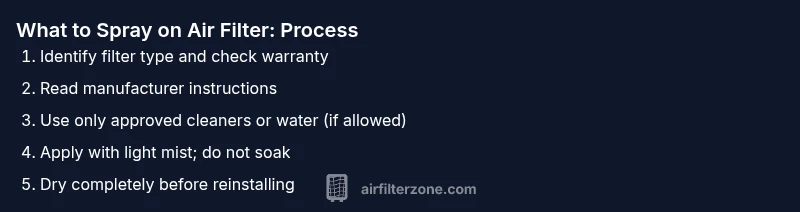
Creating a quick decision flow helps prevent mistakes. First, identify the exact filter model and read the manual. Second, verify whether the filter is disposable or reusable. Third, confirm whether the manufacturer allows any liquid. Fourth, select an approved cleaner or water rinse if allowed. Fifth, perform a small test on a hidden portion or a spare sample, wait for complete dry time, and inspect for any media damage. Sixth, reinstall only after the filter is fully dry and re-secure the housing. If any doubt remains, skip spraying and replace.
Maintenance alternatives: cleaning, deodorizing, and replacement
Sometimes odors or dust buildup tempt quick fixes with sprays. A better approach is to clean using manufacturer-approved methods, deodorize with non-residue agents designed for filters, and prioritize replacement on a regular schedule. Regular inspection can catch early signs of moisture damage, such as staining, swelling, or odd odors. For reusable filters, consider periodic deep cleaning and thorough drying rather than relying on sprays. Replacements should follow the recommended service life; premium filtration often costs more upfront but can save energy and improve indoor air quality over time. In all cases, consider air quality goals, energy efficiency, and system longevity when deciding whether to spray or replace.
Safety considerations and DIY rationale
Safety matters when handling air filters. Always wear gloves and eye protection when cleaning or spraying, ensure good ventilation, and avoid inhaling any mist or dust. Keep liquids away from electrical components and avoid forcing moisture into tight seals. The rationale for careful handling is simple: moisture can degrade media, promote mold, and reduce filter effectiveness. If your DIY project involves difficult-to-understand instructions or warranty concerns, consult the filter manufacturer or a qualified technician. The goal is to protect health and improve indoor air quality while extending the life of your filtration system.
Tools & Materials
- Personal protective gear (gloves, safety glasses)(Nitrile gloves; safety glasses advised)
- Fine-mist spray bottle(6-12 oz capacity; adjustable nozzle for a light mist)
- Water (lukewarm)(Only if manufacturer allows dampening; otherwise skip)
- Manufacturer-approved filter cleaner(Use only if specified by filter maker)
- Microfiber cloth(Used to blot and wipe surface after cleaning)
- Mask or respirator(Optional for dusty environments)
Steps
Estimated time: 15-25 minutes
- 1
Identify filter type and warranty status
Locate the model number on the filter frame or housing. Check the owner’s manual or manufacturer website for whether liquids are approved. If the filter is disposable and not explicitly washable, do not spray.
Tip: If the manual is unclear, assume no liquids and plan for replacement rather than risking damage. - 2
Read manufacturer instructions
Before applying any liquid, locate the official cleaning or maintenance section. Follow dilution ratios, application methods, and drying times exactly as specified.
Tip: Manufacturer guidance is the safest baseline; deviations can void warranties. - 3
Decide if spraying is appropriate
Evaluate whether the filter is reusable and whether a spray is permitted. If not permitted, stop here and proceed with cleaning/decomposition methods allowed by the manual.
Tip: When in doubt, choose replacement to preserve filtration integrity. - 4
Gather approved products
Assemble the cleaners or water according to the manual. Do not mix cleaners unless the manual allows it; some combinations create harmful reactions.
Tip: Only use a single approved product to minimize risks. - 5
Test on a hidden area
If permitted, apply a tiny amount to a discreet portion or spare sample. Observe for media distortion or color changes before broad application.
Tip: A test patch helps avoid full-scale damage. - 6
Apply with minimal moisture and dry completely
Spray from a distance to achieve a light mist; avoid soaking. Allow ample time for the filter to dry fully according to the manual before reinstalling.
Tip: Never reinstall a damp filter; moisture encourages mold and odors. - 7
Reinstall and inspect
Reinsert the filter securely, run the system briefly, and inspect for proper airflow. If you notice reduced performance, replace instead of trying further sprays.
Tip: Document the maintenance action for future reference.
FAQ
Is it safe to spray water on a disposable air filter?
No. Water can compromise the media and seals, leading to reduced efficiency and potential mold growth. Only follow the manufacturer’s guidance for washable filters.
No, water on disposable filters can damage the media and seals. Follow the manufacturer’s guidance for washable variants.
Can I spray fragrance or deodorizer on an air filter to mask odors?
Fragrances and deodorizing sprays can leave residues that trap dust and may irritate the system. Replace the filter or use manufacturer-approved deodorizers if specified.
Fragrances on filters can cause residues and odors—better to replace or use approved deodorizers if the manufacturer allows.
What about using commercial air fresheners or oils on filters?
Oils and many commercial sprays are not compatible with standard filter media and can impede airflow. Avoid unless the manufacturer explicitly approves.
Oils and many sprays are not safe for typical filters; only use approved products.
How do I know if my filter is reusable?
Check the filter labeling and manual. Reusable filters are typically designed to be cleaned and dried; disposable ones should be replaced when dirty.
Look at the label and manual to see if the filter is reusable; disposable means replace.
What is the safe way to clean a reusable filter?
Rinse with clean water or use a manufacturer-approved cleaner, rinse again, and allow to air dry completely before reinstalling.
For reusable filters, rinse or use approved cleaners, then dry fully before reinstalling.
If in doubt, should I spray or replace?
If the guidance is unclear, replacing the filter is the safer option to maintain air quality and system performance.
If unsure, replace the filter to ensure air quality and performance.
Watch Video
Quick Summary
- Identify filter type before any spray.
- Follow manufacturer guidance to the letter.
- Avoid liquids on disposable filters; prefer replacement.
- Use only approved cleaners for reusable filters.
- Dry completely before reinstalling.