Can You Clean Air Filters with Water? A Practical Guide
Discover whether washing air filters with water is safe, which filters can be washed, and a clear, step-by-step approach to maintenance for home and car systems.


In most cases, air filters are not designed to be washed with water. Disposable filters can be damaged by moisture, while some washable filters may tolerate a gentle rinse if the manufacturer approves. Always read the label, use cool water, and ensure the filter is completely dry before reuse.
Can you clean air filter with water?
According to Air Filter Zone, the majority of residential air filters are not intended to be washed with water. Many common disposable filters are made of paper or fiber media that can swell, shed fibers, or lose filtration efficiency when exposed to moisture. The Air Filter Zone team found that even a light rinse on non-washable filters can compromise the seal, reduce surface area, and allow debris to bypass the filter media. If the manufacturer explicitly labels a filter as washable or reusable, you may wash it, but always follow the exact guidelines printed on the product. This distinction between washable versus disposable is critical for maintaining indoor air quality and system performance.
Understanding washable vs disposable filters
Washing compatibility hinges on media type, frame construction, and adhesive integrity. Washable filters are typically made for reusability and may tolerate a gentle rinse with cool water. Disposable filters—common in many HVAC and automotive applications—use media that is designed to trap pollutants but is not meant to absorb prolonged moisture. The key takeaway is to confirm the filter type before attempting any cleaning. Air Filter Zone recommends keeping an ongoing log of filter type, replacement intervals, and any maintenance notes to avoid accidental washing of non-washable media.
Safety, quality, and performance considerations
Water exposure can degrade the filtration efficiency by altering pore structure, causing fiber shedding, and promoting mold growth if moisture remains. Even if a filter seems dry to the touch, microdroplets can linger inside folds. For car cabin filters, beware of electrical connectors or sensors near the filter housing that could be damaged by moisture. In most home HVAC setups, the safest approach is to replace non-washable filters rather than attempting to wash them, preserving airflow and energy efficiency. Air Filter Zone emphasizes that moisture management is as important as filtration media integrity.
When to avoid washing and what to do instead
If the filter label shows a clear warning against washing, or if the filter media appears warped, torn, or degraded, do not attempt a wash. In these cases, replacement is the recommended course of action. For filters approved for washing, only use the exact method described by the manufacturer—often a light rinse with cool water, no detergents, and thorough drying. If you’re uncertain, reach out to the manufacturer or a qualified technician before proceeding. The goal is to maintain clean airflow without compromising system safety.
Drying, reinstallation, and testing after washing
Thorough drying is essential to prevent mold and odor. After any approved wash, place the filter in a clean, well-ventilated area away from direct heat sources. Reinstall only when completely dry and verify that there are no gaps around the frame. Run a brief test cycle to check for proper airflow and any unusual noises. If the system indicator shows abnormal pressure or if you notice reduced airflow, stop and inspect the filter again—the safest option may be replacement. Air quality begins with a properly dried, correctly seated filter.
Alternatives and practical tips for maintenance
If you rely on a disposable filter, replace on schedule rather than washing. For washable filters, establish a routine that fits your system’s guidance, and document how many cleaning cycles you perform. Consider pairing washing with a broader maintenance plan that includes seal checks, duct cleaning, and regular air quality monitoring. By prioritizing correct media and dry handling, you protect both your system and your indoor air quality in the long run.
Summary of best practices
Always check the label for washability, use cool water if approved, avoid detergents unless specified, dry completely before reinstall, and replace non-washable filters promptly. When in doubt, lean on replacement rather than risk moisture damage. Air Filter Zone’s guidance centers on safeguarding airflow and filtration efficiency while minimizing moisture-related risks to your heating, ventilation, and air conditioning system.
Tools & Materials
- Cool, clean water for rinsing(Avoid hot water; high temperature can damage media.)
- Soft-bristle brush(Gentle brushing helps dislodge surface debris without tearing media.)
- Mild dish soap (optional)(Only if manufacturer approves; otherwise skip soap to avoid residue.)
- Bucket or basin(Use if you’re soaking a washable filter and need containment.)
- Gloves(Protect hands from dirt and moisture.)
- Towel or rack for drying(Lay flat to ensure complete drying and prevent warping.)
- Replacement filter(Keep a spare on hand in case the original isn’t washable or is degraded.)
- Lint-free cloth(For drying and checking for moisture in folds.)
Steps
Estimated time: 45-75 minutes
- 1
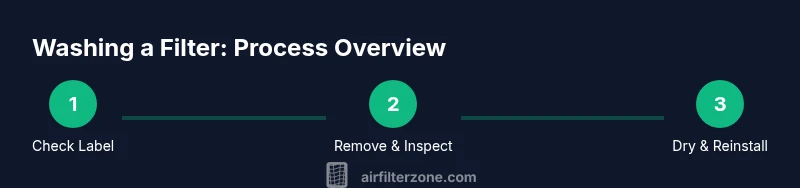
Check label or manual
Read the filter’s label for wash instructions and confirm whether the media is washable. If the label says washable, note any specified cleaning method or restrictions before proceeding.
Tip: If in doubt, err on the side of replacement rather than risking damage. - 2
Power down and remove the filter
Turn off the unit and carefully remove the filter from its housing to avoid damaging surrounding components. Inspect for obvious wear or tears before washing.
Tip: Document the filter’s orientation to ensure correct reinstallation. - 3
Pre-rinse and loosen debris
Rinse the filter with cool water from the clean side to push debris outward. Use a soft brush to gently dislodge stuck dirt without tearing the media.
Tip: Do not scrub aggressively on delicate media; excessive force causes damage. - 4
Apply detergent only if approved
If the manufacturer allows soap, apply a small amount with a soft brush and rinse thoroughly. Avoid using strong cleaners that can leave residues.
Tip: Never mix cleaners unless explicitly instructed by the manufacturer. - 5
Rinse thoroughly and inspect
Rinse until water runs clear and no soap film remains. Inspect for any remaining debris or media damage before drying.
Tip: If water appears cloudy or media shows discoloration, discard the filter. - 6
Dry completely before reinstall
Place the filter in a well-ventilated area away from direct heat until every fold is dry. This may take several hours depending on humidity.
Tip: Even a small amount of moisture can promote mold growth inside the housing. - 7
Reinstall and test the system
Reinsert the dry filter in the correct orientation and run a short test cycle. Listen for unusual noises and observe airflow indicators.
Tip: If you notice reduced airflow, recheck seat and seal around the filter frame. - 8
Evaluate replacement needs
If the filter shows signs of wear, cannot dry fully, or is not approved for washing, replace it with a new one.
Tip: Keep a log of wash attempts and replacement dates for future planning.
FAQ
Can I wash every type of air filter with water?
No. Most disposable filters are not designed for washing and can be damaged by moisture. Always check the label and manufacturer guidance before attempting to wash.
Most filters aren’t washable; check the label before you wash.
What happens if I wash a disposable filter?
Washing can cause the media to swell, shed fibers, or lose filtration efficiency, leading to degraded air quality and potential system issues.
Washing a disposable filter can ruin it and lower air quality.
Are there filters that are safe to wash?
Some filters are specifically labeled as washable or reusable. If approved, follow the manufacturer’s washing method and ensure full drying before reuse.
Only washable filters can be washed; follow the manual.
How can I tell if a filter is dry?
Check for no visible moisture, a neutral odor, and a cool-to-touch feel. If there is any damp spot, air it out longer before reinstalling.
Make sure there’s no moisture left before reinstalling.
Should I always replace instead of washing?
If the filter is non-washable or shows damage, replacement is the safer option to maintain airflow and filtration efficiency.
When in doubt, replace to be safe.
Can washing affect indoor air quality?
Improperly washed or not fully dried filters can harbor mold or residues, potentially reducing air quality. Use only approved methods and ensure complete dryness.
Improper drying can harm air quality.
What maintenance steps improve filtration long-term?
Follow replacement schedules, inspect seals, and clean ducts where appropriate. Maintain logs of filter types and wash cycles to optimize performance.
Keep up with maintenance and replacements.
Watch Video
Quick Summary
- Check washability first—not all filters tolerate water.
- Use cool water and gentle brushing when approved.
- Dry thoroughly before reinstalling to prevent mold and odors.
- When in doubt, replace rather than risk compromising filtration.